Home Blog Page 26

Gov. Newsom must release more people from prisons to protect Californians and save lives

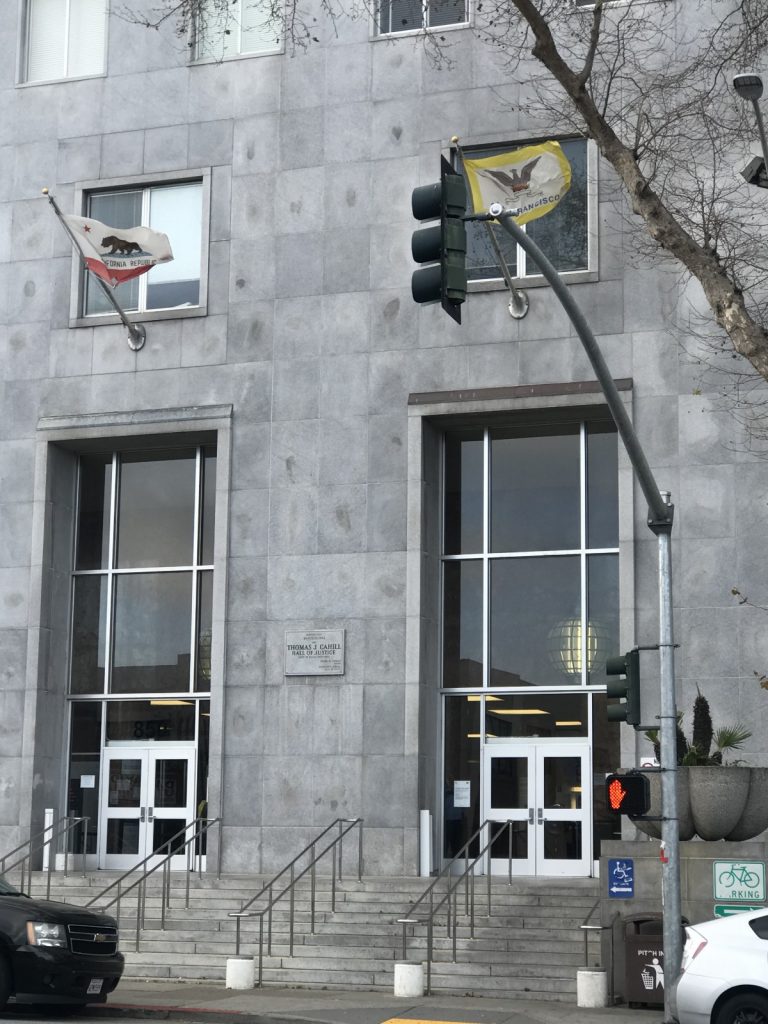
This Op Ed – Gov. Newsom must release more people from prisons to protect Californians and save lives – was co-authored by Danica Rodarmel, the statewide policy director of the San Francisco Public Defender’s Office, and James King, the State Campaigner at the Ella Baker Center for Human Rights who was formerly incarcerated inside San Quentin. Here, the authors argue to remove the stigma and fear of releasing human beings from prison in the midst of a deadly pandemic.

“Let us be clear – nobody wants harm to happen, but talk of ‘violent and serious offenders’ and ‘non-non-non’s’ prevents a responsible plan that centers the most vulnerable. Data has consistently shown that people who have been convicted of serious or violent crimes have the lowest recidivism rates. As we teeter on the brink of an uncontrollable outbreak, we can’t afford to let fear or bias drive policy, when science proves that conviction alone says nothing about who that person is today or their readiness to reenter society.”

Broad Coalition of Legal and Medical Experts Urge SF Courts to Restore ‘Zero Bail’ Amid Growing Number of COVID-19 Cases in SF Jails

Broad Coalition of Legal and Medical Experts Urge SF Courts to Restore ‘Zero Bail’ Amid Growing Number of COVID-19 Cases in SF Jails 

SAN FRANCISCO – San Francisco County jail has seen a 40% increase in positive COVID-19 cases since June 18, 2020.  This surge prompted a broad coalition – including the Bar Association of San Francisco’s Criminal Justice Taskforce (BASF-CJRTF), the Public Defender, the District Attorney, San Francisco Pretrial Diversion Project, and Jail Health Services – to send a joint letter (see below) to the San Francisco Superior Court, urging it “in the strongest possible terms,” to restore the zero bail policy in San Francisco to help reduce the jail population during the ongoing pandemic. 

The California Judicial Council implemented an emergency bail schedule on April 13 to help reduce jail populations to help guard against the fatal consequences of outbreaks in overcrowded jails. It specified zero dollar bail amounts for people charged with low-level offenses to be quickly released from custody without having to post bail.  

When the Judicial Council repealed the emergency bail schedule on June 10, it allowed local jurisdictions to continue using it to protect the health of the incarcerated, jail staff, courts, and the community. Several major counties have continued using the zero dollar bail schedule – including Los Angeles, Sacramento, Contra Costa, Alameda, San Diego, Santa Barbara, Santa Clara and Fresno.  

San Francisco Superior Court decided not to continue using the zero dollar bail schedule. This has led to an increased number of people remaining in jail longer, even as new cases of COVID-19 are on the rise. In San Francisco county jail, twenty people have tested positive for COVID-19 since the jail started testing people upon arrival on April 18, with eight confirmed cases of COVID-19 since June 18. 

Dr. Lisa Pratt, Director of the Department of Public Health Jail Health Services, emphasized the importance of keeping the jail population low in order to prevent the spread of COVID-19. “Social distancing is already challenging in a jail, but San Francisco jails have successfully avoided a major outbreak of COVID by listening to medical experts and keeping the jail population low,” she explained.  “The decision to revoke the zero-bail policy fails to prioritize the real public health concerns of a spread of the virus in jail—and puts everyone who lives and works in jail—as well as those who interact with them—at higher risk of the virus.”

“Removing zero bail signals an assumption that our current public health crisis is over, which is clearly not the case,” said San Francisco Public Defender Mano Raju.As the crisis at San Quentin State Prison and in other overcrowded jails and prisons across the country makes abundantly clear, we can’t control the spread of the virus without dramatically reducing the incarcerated population. San Francisco Superior Court’s decision to move away from this policy means that people with low level, non-violent offenses eligible for immediate release just last month, are now being booked and held in jail before a judge can review their case. This increases the risk of spreading COVID-19 throughout the jail population and community. San Francisco should follow the lead of other counties throughout the state and act in accordance with the recommendations of public health officials.”

“Any additional time spent in custody because of the lack of Zero Bail increases the risk to individuals in the jail, our staff, community partners and Sheriff and Court employees,” said David Mauroff, CEO of San Francisco Pretrial Diversion Project. “Reinstating Zero Bail supports our shared public health priorities and reduces jail exposure and the number of people in jail.”

“We are disappointed with the San Francisco courts for moving away from an effective public health policy despite the fact that the overwhelming majority of people released on zero bail did not re-offend, and many were never even charged with a crime,” said District Attorney Boudin.  “Our office stopped seeking bail in San Francisco long before this policy went into effect precisely because forcing people to post bail does not protect public safety and merely criminalizes the poor.  With the revocation of the zero-bail policy, many people will sit in jail even before seeing a judge—putting them and everyone around them at risk.”

“Incarceration during the coronavirus pandemic is a racial justice issue, and people of color are facing worse health outcomes and higher risk of death from coronavirus,” said Yolanda Jackson, Executive Director and General Counsel of the Bar Association of San Francisco. “Elimination of Zero Bail further perpetuates the racial disparities of both pretrial incarceration and the public health crisis, and will also take a financial toll on economically vulnerable communities of color.”

Letter to Governor Newsom: Recommendations for Reducing the Prison Population and Protecting People in California Prisons

0

July 6, 2020

Dear Governor Newsom,


This is an immeasurably difficult time. With 2,419 incarcerated persons with active cases of
COVID-19 in California prisons statewide and over 1,500 people who are incarcerated or work in
San Quentin testing positive, I am strongly urging you to exercise your authority to release people
from California’s overcrowded prisons and to take additional steps to improve the health and
wellbeing of incarcerated people, prison staff, and the broader community as outlined below.


At this point, the only way we can protect the lives, dignity, and wellbeing of people in San Quentin
and other prisons across the state is to dramatically reduce the prison population as quickly as
possible. I stand with incarcerated people1 and their family members2 across the state. Recently,
the ACLU and the Prison Policy Initiative gave California an F+3 in the state’s responses to
COVID-19 in jails and prisons. We must do better. While we have missed the opportunity to
prevent the most harm, we can still change course and strive to reduce further harm going forward.

On March 27, District Attorney Chesa Boudin and I first wrote to you regarding our concerns
and recommendations for decarceration. Our recommendations included encouraging local
jurisdictions across the state to expedite 1170(d) cases that have been referred for resentencing,
as we have done here in San Francisco. We also recommended that the Governor, CDCR, and
wardens use their authority under Government Code section 8658 to effectuate releases. I am
heartened to learn that the CDCR Secretary has exercised his authority under this code section,
but I remain concerned that more has not been done to dramatically reduce the prison population.
I again urge you to include individual wardens at institutions in making determinations regarding
releases and to encourage them to use their powers under GC 8658.


The widespread support for releases is unprecedented: public health experts, judges, and elected
officials across the state have joined the repeated calls of incarcerated people, their families, and
advocates. Below, I offer my office’s insight, expertise, and resources regarding how you can
make this happen quickly and responsibly.

  1. Release without categorical exceptions.
    We are aware that CDCR expedited releases for those nearing the end of their sentences in April,
    as well as the new Supervised Release Program, and we encourage the creation of cohorts to
    facilitate mass release, but we do not believe that release decisions should stop there. This is
    because cohorts are generally created in ways that exclude people with violent and serious
    convictions. We are concerned that continuing to support these exclusions actually works against
    your commitment to close three prisons in the next two years. This goal will not be possible
    without releasing more than just the “non-non-non’s,” and we must take steps to change both our
    rhetoric and our actions in this moment.
    We strongly believe that release decisions should also be made on an individual basis, based on
    who the incarcerated person is today and their readiness to return home. Many people who are
    serving life sentences have robust reentry plans and can be safely and easily released. This is in
    line with comments made by Judge Tigar during the recent Case Management Conferences in the
    Plata v. Newsom case. We understand and are sensitive to concerns that those released will have
    inadequate support and nowhere to go, but we know this is not true across the board, and we
    would be happy to share information and strategize about how to ensure that people are properly
    supported upon release.
  1. Grant immediate release to those found suitable for parole.
    California is one of only a small handful of states that allows for the Governor to review and
    reverse parole board grants. As you know, being granted parole in the first place is incredibly
    difficult, with the California Board of Parole Hearings granting parole to only about 20% of
    people who are eligible for parole each year. We urge you to refrain from using your authority to
    review parole grants, both during this crisis and beyond. This will help to speed up the process of
    release for those who have earned a parole grant as well as free up resources within your office
    to review and expedite additional commutation and pardon applications. As you have done with
    the moratorium on the death penalty, we believe this is the right, bold, and just decision with the
    benefit of also being based in sound public policy.
  1. Order CDCR to immediately stop cooperating with ICE.
    Senator Weiner raised this issue during the Senate Public Safety Hearing, during which Secretary
    Diaz stated that they would continue to provide information to ICE regarding releases from
    CDCR custody. We urge you to issue an Executive Order halting this practice immediately and
    permanently. We echo the demands of the large coalition of advocates who have been fighting
    vigorously on this issue.
  1. Proper care and protections for those who remain inside.
    We would like to echo the following demands made by those currently incarcerated:
    ● COVID-19 has forced CDCR to shut down all in-prison programming, halting credit-earning opportunities for incarcerated people that would allow them to accelerate their
    release dates. CDCR should expand credit-earning opportunities during the pandemic to
    allow incarcerated people to participate in programming and work toward accelerating
    their release date.
    ● CDCR must provide adequate personal protective equipment (PPE), sanitizer, hygiene
    products, and other essential goods (stamps, envelopes, food) for free, now through the
    end of the pandemic. Note from incarcerated people on Death Row: Sanitizer should be
    distributed daily, not once every 5 days.
    ● All visiting has been suspended since the pandemic began three months ago, cutting off
    contact between incarcerated people and their families and communities. As we know,
    ongoing connections with outside community and family members is an essential support
    system to incarcerated people and their loved ones during these times and always. We
    urge CDCR to provide free tele-visiting privileges, a timeline for resumption of noncontact visits for the general population in the scaling up to modified contact visiting, the
    installation of existing JPAY email kiosks in housing units without CDCR facilitating
    communication between loved ones, and a timeline to reinstate family visiting.
    ● Phone access should be expanded immediately. CDCR should not attempt to (further)
    monetize these calls. All phone calls should be free, beginning now and continuing at
    least through the duration of the pandemic.

Again, I am acutely aware that the work to reduce incarcerated populations does not happen in a
vacuum, and that in order to be successful, we must be sensitive to a myriad of overlapping
issues — including housing, healthcare, employment, and the concerns of survivors of all kinds,
especially those who have suffered family violence. However, the crisis that is currently
unfolding in San Quentin and other prisons across the state requires aggressive, bold, and
human-centered measures. I welcome the opportunity to collaborate with you on just and
thoughtful plans to address the current crisis and to offer whatever support I, along with my
office, can provide.

Sincerely,
Manohar Raju
San Francisco Public Defender

1 http://bit.ly/StopSQOutbreakDemands
2 http://bit.ly/sqifcc19
3 https://www.prisonpolicy.org/reports/failing_grades.html

S.F. Immigration Lawyers Cut ICE Detention Centers Population by Two-Thirds

Nuala Bishari reported for the SF Public Press on how S.F. Immigration Lawyers Cut ICE Detention Centers Population by Two-Thirds. This article features the work of the San Francisco Public Defender’s Office Immigration Unit to protect people being held in immigration detention, specifically during the COVID-19 pandemic. Through several joint legal actions, the population of two California immigration detention centers has dropped by two-thirds, reuniting families and protecting detained people from the congregate living settings that have been a hotbed for the spread of the coronavirus. In doing so, the unit has exposed the lies and mismanagement of I.C.E. and the GEO group, the private prison contractor that operates Mesa Verde Detention Center in Bakersfield, CA.

SF Public Defender’s Office Mobilizing to Release People from San Quentin Amid Escalating COVID-19 Outbreak

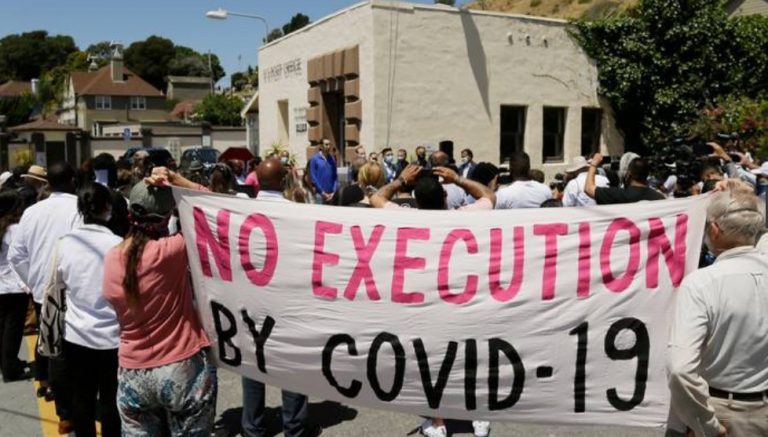
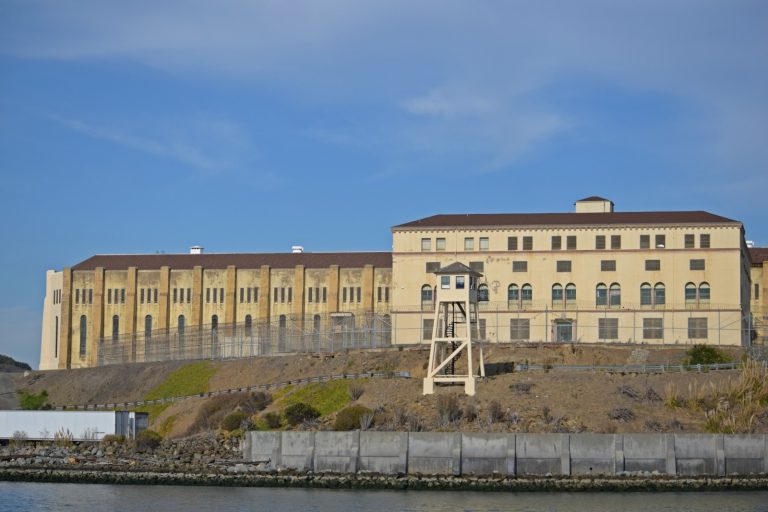
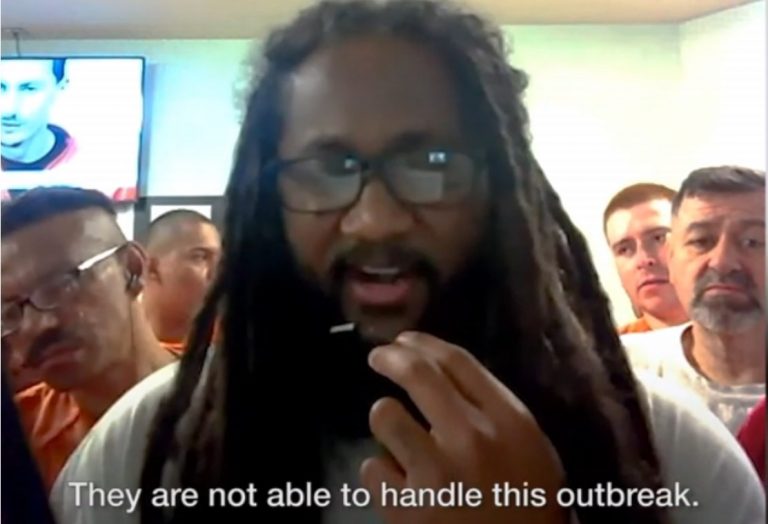
SAN FRANCISCO – With 2,582 incarcerated persons with active cases of COVID-19 in California prisons statewide, and over 1,100 people incarcerated in San Quentin testing positive, the San Francisco Public Defender’s Office is mobilizing to free people as quickly as possible to prevent the continuing spread. The outbreak at San Quentin came after CDCR transferred 121 men from the CA Institute for Men (CIM), a known hotspot for the virus where 16 people have already died. 

“At this point, the only way we can protect the lives of people at San Quentin and the larger public is to reduce the prison population as quickly as possible,” said Public Defender Mano Raju. “San Quentin is cited as the premier example of a rehabilitation- and redemption-focused institution. It is time to honor that image by releasing people based on who they are today, not based on what they may have done years or decades ago.”

“My office stands with the Incarcerated people inside San Quentin, as well as the San Quentin Inmate Family Council, and incarcerated people and their loved ones across the state, and fully supports their demands to the Governor and CDCR,” said Raju. “Not only is the treatment of incarcerated people inside California’s prisons unconscionable, but so is the lack of information and transparency regarding the outbreak,” he said.  

To address this crisis head on, the Integrity Unit at the San Francisco Public Defender’s Office, which handles, among other things, post-conviction relief work, has mobilized to reach out to people in San Quentin who may be eligible for resentencing and reduced sentences under the law. “Many people incarcerated in California have served many years in prison and have worked towards personal growth through education, self help programs, and gaining professional skills. Many living in San Quentin, and prisons across the state, are over 55, deemed low risk, and most have medical conditions that increase their risk of complications from COVID-19. My office has reached out to people in prisons throughout the state and intends to continue outreach to all who may be eligible,” said Raju.

Those who are released will be supported in their reentry plans, including support finding housing, additional community support, healthcare, employment options, cell phones and care packages. Public defender reentry staff will also assist with applying for benefits like health insurance and social security, obtaining state identification and a driver’s license, and continued job search as needed. 

“We are committed to safe release and reentry for as many people as possible – made relatively easy when we see the phenomenal programming and work records of those in San Quentin,” said Danielle Harris, Managing Attorney of the Integrity Unit. “We are acting because neither the Governor nor the CDCR are addressing the emergency conditions in San Quentin or around the state, despite their broad authority. Knowing it is a matter of life and death for some, we are using whatever legal tools we have to urgently help these men and their families.” 

SF Public Defender Manohar Raju Talks Cases Around The U.S., Defunding Police, And More

0

SF Public Defender Mano Raju spoke on the Sana G Morning Show on KMEL in the wake of nationwide calls to defund the police as the Black Lives Matter movement and millions of Americans took to the streets in the wake of recent police killings, including the Minneapolis police killing of George Floyd, and the Louisville police killing of Breonna Taylor. Mano Raju discusses the deeper systemic flaws that can lead to police brutality and “no-knock warrants.”

Public Defenders Call for Major Statewide Police Reform

Public Defenders Call for Major Statewide Police Reform

June 25, 2020 – Public Defenders sent this letter to Governor Newsom and California Lawmakers today calling for major statewide police reforms, seeking “meaningful, radical change” in line with the movement of the moment. 

Download the full letter here:

ICE Confirms Medical Provider at Mesa Verde Detention Center Tests Positive for COVID-19 – Exposing ICE’s Continued Failure to Protect Health During Pandemic

ICE CONFIRMS MEDICAL PROVIDER AT MESA VERDE DETENTION CENTER TESTS POSITIVE FOR COVID-19, EXPOSING ITS CONTINUED FAILURE TO PROTECT HEALTH DURING PANDEMIC

SAN FRANCISCO – On June 19, 2020, government lawyers disclosed that a medical provider at the Mesa Verde Detention Center in Bakersfield, CA, tested positive for COVID-19. The disclosure came at a hearing in connection with a class action lawsuit challenging conditions of confinement in ICE detention facilities during COVID-19. Federal District Court Judge Vince Chhabria ordered ICE to present by Monday at 5pm what ICE has done and will do in response.

“Today, ICE dropped the bombshell news that a medical provider at its privately run detention center in Bakersfield tested positive for COVID-19. It is incomprehensible that, amidst a global pandemic, ICE has failed to take even the most minimal steps to ensure access to testing,” said Emi MacLean, an attorney in the San Francisco Public Defender’s Office. “It is outrageous that ICE is doing virtually nothing to protect people from the threat of COVID-19 despite the extraordinary risks the pandemic poses for people in detention. There are no excuses. ICE detention in this context is unconscionable.”  

Despite being several months into the pandemic, ICE has not mandated testing in its facilities, and has tested no staff or detainees at the Mesa Verde Detention Center. ICE reported that the medical provider in question obtained a test independently. ICE did not disclose any measures it was taking to ensure the health and safety of its other staff and the people in ICE custody.  

“Enough is enough. We demand accountability. We also join with key leaders and organizations throughout California to insist that the state launch an independent investigation into the practices of GEO and ICE during this pandemic, which have put lives at risk,” says Francisco Ugarte, Manager of the Immigration Defense Unit at the SF Public Defender’s Office. 

SF Public Defender Mano Raju Applauds SF Police Commission Budget Vote – Echoes Public Call for Fundamental Change

0

SF Public Defender Mano Raju Applauds SF Police Commission Budget Vote – Echoes Public Call for Fundamental Change 

“I was very glad to see our San Francisco Police Commissioners unanimously voting to reject the police budget at 2:30am this morning after 9 hours of public comment, over 99 percent of which featured San Franciscans of all ages and backgrounds demanding SFPD be defunded and disbanded. 

However, we also learned in the meeting last night that so far, the police department is only being asked to cut 3 percent (or $23 million) of their nearly $700 million budget.  Moreover, these cuts would come from vacant positions alone, leaving unaltered the number of officers on the streets and SFPD’s policing methods and structure; in other words, it would be business as usual. 

Meanwhile, as caller after caller pleaded with the Commission for meaningful, urgent change, records of discipline proceedings against Sergeant Justin Erb for killing Jessica Williams, an unarmed black woman in a car in 2016, were finally made public and told a grim story. The Department of Police Accountability (DPA) initially recommended Erb be fired for shooting and killing Williams in violation of numerous department policies, but Chief Scott  wanted to impose no punishment at all. The Commission disregarded both recommendations and imposed a 45-day suspension in a split vote. Two commissioners who voted for that brief suspension instead of termination are still on the Commission; Commissioner Dion-Jay Brookter and Commissioner Damali Taylor. 

DPA is only as powerful as the commissioners allow it to be. Commissioners who reject the recommendations of the independent oversight body have no place on the Commission when the public they represent so clearly wants violent officers out of SFPD.

The public call for transformative change is urgent. The rejection of what amounts to an invisible budget cut is the very least we must do to answer this call. The real work must now begin, in the form of fresh leadership on the police commission, and concrete ideas and implementation of plans to reinvent and reduce policing in San Francisco, led by the values we all hold, and the communities most impacted. 

Mayor Breed and Supervisor Walton’s calls to re-direct  funding from the SFPD to support the African-American and other marginalized communities is an important first step. A much smaller, much altered police department and policing model is what San Franciscans are calling for and the current moment demands nothing less.”

Judge Orders ICE to Maintain Pandemic Protections at Detention Centers

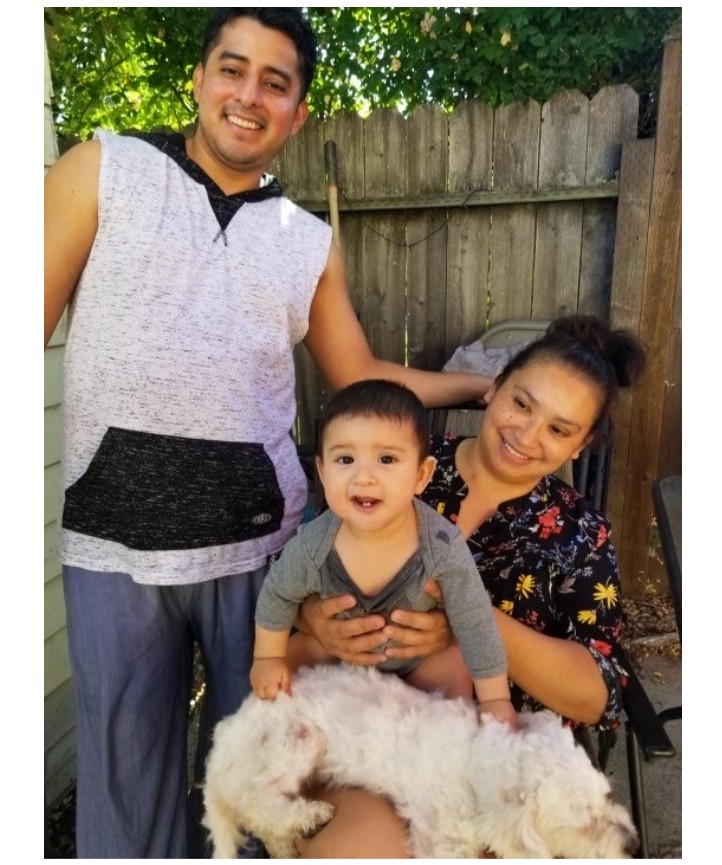
Photo: Donis with his youngest of three children and his wife, following his release by court order.

Judge Orders ICE to Maintain Pandemic Protections at Detention Centers

SAN FRANCISCO — This afternoon a federal judge granted a preliminary injunction in response to a class action legal challenge by immigrants detained at two California immigration detention centers where conditions are rife for the spread of COVID-19.

Having already issued a series of individual release orders to reduce population levels, the Court ordered ICE to “at a minimum, lock in place the safety improvements achieved in recent weeks.” The two facilities, Mesa Verde Detention Facility in Bakersfield and the Yuba County Jail in Marysville, currently hold 200 people, which is less than half the population at the time the case was filed on April 20. The facilities held 427 people at the facilities on April 25.

Judge Vince Chhabria of the U.S. District Court of Northern California in this order criticized ICE’s “obstinance” in opposing release of individuals “on a blanket basis” in “positions that are downright irrational, not to mention inhumane.”

“Release to me has meant everything; a person can’t stay healthy, can’t stay safe in there,” said Livia Pinheiro, who was released May 26. “My girlfriend is still detained; she’s suffering and she’s also at high risk. I want to be part of that fight for her, the same way people fought for me.”

The order provided that, “ICE’s conduct and attitude towards its detainees at Mesa Verde and Yuba County Jail since the pandemic began have shown beyond doubt that ICE cannot currently be trusted to prevent constitutional violations at these particular facilities without judicial intervention.”

“In my final days there, I had just had an operation, and the jail put me inside a dirty cell in which I didn’t have water,” said Jose Luis Lopez Guevara, a 78-year-old who underwent heart surgery in ICE custody, and who the Court ordered released over ICE’s opposition. “There are still so many people in the jail, suffering in the same conditions, and they must be released too.”   

Judge Chhabria also noted that ICE has provided at least one misrepresentation to the court. Contrary to ICE’s assertions that it was quarantining people transferred into the two facilities, ICE transferred at least two people from a facility with dozens of confirmed COVID-19 cases and released them directly into dormitories.

A coalition of legal organizations is representing the plaintiffs, including the San Francisco Public Defender’s Office, the American Civil Liberties Union Foundations of Northern California and Southern California, the Lawyers’ Committee for Civil Rights of the San Francisco Bay Area, and the law firms of Lakin & Wille LLP and Cooley LLP.

Quotes from Co-Counsel

“Today a federal court confirmed that ICE cannot be trusted to protect the health and safety of those in its custody,” said Mano Raju, the elected Public Defender of San Francisco, and co-counsel in the litigation. “We are pleased with the decision, and our Immigration Unit will not stop fighting until every person is released from these inhumane conditions.”

“The Court’s order lays bare ICE’s utter disregard for both the law and the safety of people in its custody,” said Bree Bernwanger of the Lawyers’ Committee for Civil Rights of the San Francisco Bay Area. “The need for court intervention is a sign of systemic failure: we cannot trust law enforcement agencies to protect the value of human life.”

“This result represents a major step toward protecting our clients from COVID-19 and shielding the healthcare systems in surrounding communities,” said Martin Schenker, Cooley LLP partner. “ICE must not remain indifferent to the health of detainees under its control.”

“Today’s decision affirms a truth our clients have lived with for months: ICE cannot be trusted to responsibly address the deadly threat of COVID-19 to immigrants in its custody,” said Jordan Wells, staff attorney at the ACLU of Southern California.

“Judge Chhabria rightly rejected the government’s assertions that district courts lack the authority to remedy ICE’s constitutional violations and release individuals during a life-threatening pandemic. That is plainly false,” said Judah Lakin of Lakin & Wille LLP.

“This order is a critical first step in keeping in place the protections that our clients have fought hard for, and we will continue that fight alongside them,” said Angélica Salceda of the ACLU Foundation of Northern California.