Home Blog Page 24

Attorney General asks California Supreme Court to restore Humphrey bail-reform ruling

Robert Salonga interviewed SF Public Defender Mano Raju for the San Jose Mercury article: Attorney General asks California Supreme Court to restore Humphrey bail-reform ruling. California Attorney General Javier Beccera sent a letter asking the Calfornia Supreme Court to restore a landmark 2018 appellate ruling in the Humphrey case – which requires judges to take ability-to-pay into consideration when setting cash bail – before the CA Supreme Court makes its final ruling.

Excerpt:

Kenneth Humphrey was charged with stealing a bottle of cologne and $5 from an elderly neighbor at a San Francisco residential hotel in May 2017. Humphrey’s bail was initially set at $600,000, and later reduced to $350,000, but still well beyond his ability to pay or post bond.

On appeal, the First District court sided with Humphrey’s counsel — the San Francisco Public Defender’s Office and nonprofit Civil Rights Corps — and in its 2018 decision wrote that Humphrey was “entitled to a new bail hearing at which the court inquires into and determines his ability to pay, considers nonmonetary alternatives to money bail, and, if it determines petitioner is unable to afford the amount of bail the court finds necessary, follows the procedures and makes the findings necessary for a valid order of detention.”

San Francisco Public Defender Mano Raju said in a statement Wednesday that implementing the Humphrey decision is an “an essential safeguard.”

“Without this protection, poor people — many of whom are Black and Brown — will languish in custody instead of having the opportunity to live free, fight their case and participate in effective programming, if necessary, while awaiting their day in court,” Raju said. “Making this decision binding on all California courts is essential to ensuring fairness in the criminal justice system.”

Lawyers for nearly 50 men incarcerated at San Quentin sue over ‘botched transfer,’ demand release

By Lisa Fernandez, KTVU FOX 2, August 17, 2020

As of Monday, San Quentin had about 3,100 people in custody and San Francisco Asst. Public Defender Danica Rodarmel said she wanted that number to drop to at least 1,550. To date, 26 people at San Quentin have died of coronavirus. 

“It’s time the California Department of Corrections and Rehabilitation be held accountable for the harm that they have caused – just like the 100,000-plus people in its custody have been,” Rodarmel said. “It is unacceptable to allow the state to avoid responsibility for their actions, when they have led to more collective harm, human suffering and devastation than any single incarcerated person in the state of California has caused.” 

The Marin County filing revealed that San Quentin ignored the advice of Marin County Public Health Officer Matthew Willis and that the California Department of Corrections and Rehabilitation issued letters to local health officials claiming that state prisons are exempt from local health orders.

Dana Simas, a spokeswoman for CDCR, said that it’s important to note that the number of positive patients at San Quentin is now is 76, with more than 2,000 identified as resolved or recovered, so “there has been significant progress due to aggressive response efforts.”

She said San Quentin is now offering testing every seven days to the incarcerated population who have previously tested negative or who have refused a test in the past, and that the prison hands out N95 masks. 

Simas did not address the specific call in the lawsuit to reduce the prison population by half or address the earlier call by Willis that coronavirus could easily spread at San Quentin.

No matter what the prison staff has done to prevent or curb coronavirus, Juan Moreno Haines, who is a plaintiff in the lawsuit and an incarcerated person at San Quention, wrote: “Since I’ve had COVID-19, I’ve lived with three different people, unsure of whether or not that person had the virus or not. The problem that we have at San Quentin is that it’s overcrowded [and] it’s the perfect environment for the virus. It’s the perfect environment for people to die in. To solve this problem, I only suggest to follow the science.” 

Hadar Aviram, professor at the University of California Hastings College of the Law, along with 17 other criminal justice and corrections scholars and the ACLU of Northern California, have weighed in as “amici curiae” or “friends of the court.” 

They argue that state and prison officials had ample warning a health crisis of this magnitude could occur at San Quentin, from decades of federal court criticism about the prison healthcare system generally and from specific warnings about COVID-19 from public health experts.

They are urging the court to act and warn of a considerable possibility of a recurrence of the outbreak at San Quentin, as has already happened in other prisons. 

Last month, Marin County Superior Court Judge Geoffrey Howard issued the first order in the now two consolidated cases of 157 petitioners. The court ordered the state to respond urgently to petitioners’ requests for immediate release from their incarceration at San Quentin State Prison, filed between June and August. 

The petitions come after CDCR in late May transferred 121 people from the California Institution for Men in Chino – then the state prison with the highest COVID-19 rate in California – to San Quentin.

There were no confirmed cases of COVID-19 at San Quentin before the transfer.

As a result of the transfer, more than 2,000 people living and working at San Quentin have tested positive for COVID-19 and 26 have died- making it the worst outbreak in the country.

The crisis has led to severe staffing shortages, indefinite lockdown, and a state of extreme fear for those trapped inside and their families, the lawyers allege.

Currently, the COVID-19 infection rate in San Quentin is 68.5% while California’s infection rate is 1%. 

The cases were filed individually as “habeas corpus” petitions – an emergency motion asking the courts to determine whether a person’s incarceration is lawful. 

The petitions allege violation of the U.S. Constitution’s 8th Amendment prohibition against “cruel and unusual punishment” and request immediate release to escape the deadly conditions caused by CDCR.

Half of All Detainees at Bakersfield ICE Facility Have Tested Positive For COVID-19

0

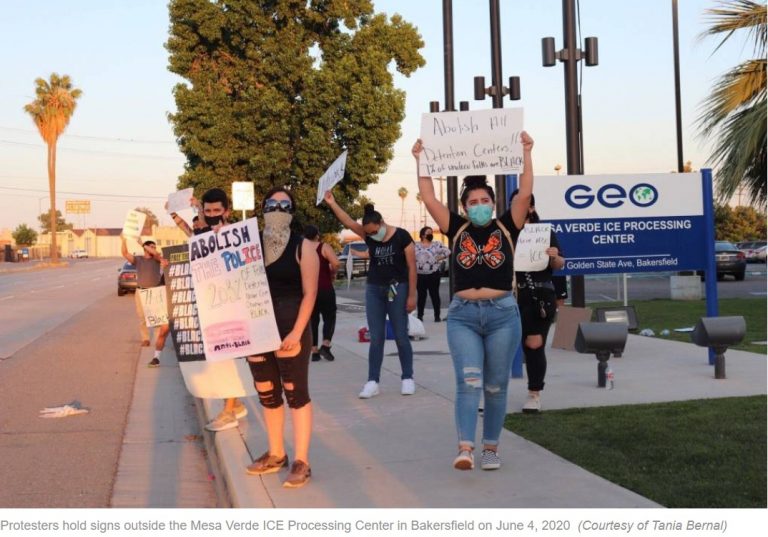
KQED’s Farida Jhabvala Romero interviewed Deputy Public Defender Emi MacLean for the report: Half of All Detainees at Bakersfield ICE Facility Have Tested Positive For COVID-19. This outbreak was discovered after a federal judge ordered weekly coronavirus testing at the Mesa Verde immigrant detention center.

But immigration officials opted for slower testing that did not provide results for days, said Emi MacLean, a plaintiff lawyer with the San Francisco Public Defender’s Office. The delay meant people who later were confirmed with COVID-19 slept in dorms with dozens of others, she added.

“They made all of these excuses about why they couldn’t use them, that it was too burdensome for their health care staff,” MacLean said. “If that is not a sign of callous disregard for the lives of people in their custody, I don’t know what is.”

Petitioners Allege CDCR Purposefully Ignored Marin County Health Official Warnings about Dangers at San Quentin; Over 400 pages of Evidence Presented

August 17, 2020

PRESS CONTACT: SF Public Defender’s Office – (628) 249-7946 – Valerie.Ibarra@sfgov.org

Petitioners Allege CDCR Purposefully Ignored Marin County Health Official Warnings about Dangers at San Quentin; Over 400 pages of Evidence Presented 

Habeas petitions allege CDCR actions causing explosive and deadly Covid-19 outbreak at San Quentin constitute “cruel and unusual punishment” 

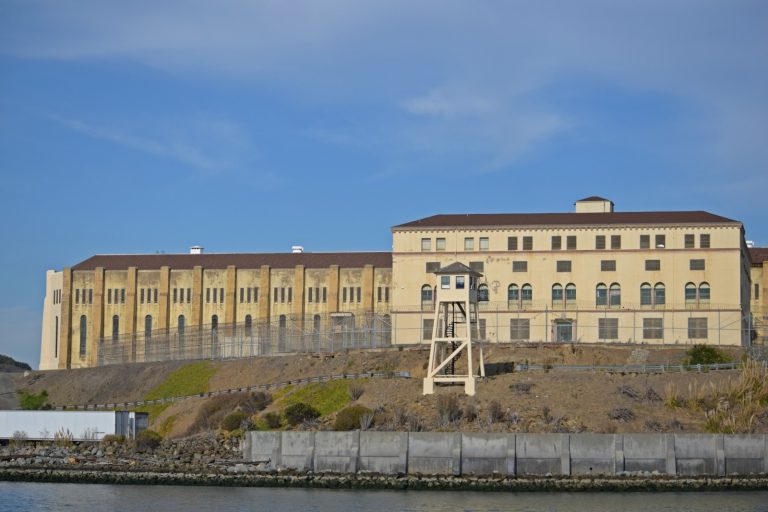
SAN FRANCISCO – Last week, in the case against San Quentin State Prison (SQ) and California Department of Corrections and Rehabilitation (CDCR) for the infamous botched transfer and handling of the resulting outbreak of COVID-19 at the prison, lawyers for 42 people incarcerated in San Quentin filed over 400 pages detailing failures by CDCR and SQ that have now led to 26 deaths at the prison and immeasurable suffering inside and out. 

Marin County Superior Court Judge Geoffrey Howard, who is overseeing the case, issued an order on August 12 allowing a second consolidated case involving 115 more petitioners to move forward. The First District Court of Appeal is also considering a case by a man incarcerated at SQ, which was filed prior to the transfer and outbreak, but identified the prison’s unique vulnerabilities and correctly predicted what would occur if the virus made its way inside the prison. 

The recent Marin filing revealed that San Quentin ignored the advice of Marin County Public Health Officer Matthew Willis and that CDCR issued letters to local health officials claiming that state prisons are exempt from local health orders. Dr. Willis wrote to Judge Howard independently, emphasizing, “[T]he role of immunity— that is, protection for someone who has been infected from subsequent infection and illness— is still unknown. If immunity after infection is short-lived, or weak, another outbreak of this scale could reoccur. In that case all inmates, regardless of past infection, would be at risk if fundamental measures to prevent spread were not significantly improved.”

In response to calls to reduce the prison population by 50%, incarcerated journalist, and Petitioner Juan Moreno Haines stated, “Since I’ve had COVID-19, I’ve lived with 3 different people, unsure of whether or not that person had the virus or not. The problem that we have at San Quentin is that it’s overcrowded [and] it’s the perfect environment for the virus. It’s the perfect environment for people to die in. To solve this problem, I only suggest to follow the science.” 

“It’s time the California Department of Corrections and Rehabilitation be held accountable for the harm that they have caused – just like the 100,000+ people in its custody have been. It is unacceptable to allow the state to avoid responsibility for their actions, when they have led to more collective harm, human suffering and devastation than any single incarcerated person in the state of California has caused,” said Danica Rodarmel, an attorney at the San Francisco Public Defender’s Office. 

Hadar Aviram, Professor of Law at University of California Hastings College of the Law, along with seventeen other prominent criminal justice and corrections scholars and the ACLU of Northern California have weighed in as “amici curiae” or “friends of the court.”  They argue that state and prison officials had ample warning a health crisis of this magnitude could occur at San Quentin, from decades of federal court criticism about the prison healthcare system generally and from specific warnings about COVID-19 from public health experts. “In addition to the botched transfer from Chino to San Quentin, prison authorities failed to provide basic preventative measures, such as testing, protective equipment, and cohorting, even though they received not only advice, but offers of assistance.” They urge the court to act, warning of a considerable possibility of a recurrence of the outbreak at San Quentin, as has already happened in other prisons. 

Veronica Jackson, wife of Petitioner Arthur Jackson, said, “I told my husband on the day we got married that I wouldn’t excuse the man he was, but that I will embrace the man he is now. That is what we are asking the people in power to do – to please treat him according to who he is today, and allow him to come home.”

Last month, Judge Howard issued the first order in the now two consolidated cases of 157 petitioners, with more likely on the way. The court ordered the state to respond urgently to petitioners’ requests for immediate release from their incarceration at San Quentin State Prison, filed between June and August. 

The petitions come after a fateful decision by CDCR in late May to transfer 121 people from California Institution for Men (CIM) – then the state prison with the highest COVID-19 rate in California – to San Quentin. There were no confirmed cases of COVID-19 at San Quentin before the transfer. As a result of the transfer, over 2,000 people living and working at San Quentin have tested positive for COVID-19 and 26 have died – making it the worst outbreak in the country. The crisis has led to severe staffing shortages, near total and indefinite lockdown, and a state of extreme fear for those trapped inside and their families. Currently, the COVID-19 infection rate in San Quentin is 68.5% while California’s infection rate is 1%. 

The cases were filed individually as “habeas corpus” petitions – an emergency motion asking the courts to determine whether a person’s incarceration is lawful. The petitions allege violation of the U.S. Constitution’s 8th Amendment prohibition against “cruel and unusual punishment” and request immediate release to escape the deadly conditions caused by CDCR. The cases were subsequently joined together and will be heard by Superior Court Judge Howard. Attorneys for petitioners include Charles Carbone, the Marin County Public Defender, the San Francisco Public Defender, and the Alameda County Public Defender.

Filings in the case are available here and the exhibits can be accessed here.

After Judge Ordered ICE to Test All Detainees and Staff at Mesa Verde, Fifty Percent of Detainees Test Positive for COVID-19

August 15, 2020

PRESS CONTACT: San Francisco Public Defender’s Office – (628) 249-7946 – pubdef-mediarelations@sfgov.org

After Judge Ordered ICE to Test All Detainees and Staff at Mesa Verde, Fifty Percent of Detainees Test Positive for COVID-19

SAN FRANCISCO — In an emergency order late yesterday, federal District Court Judge Vince Chhabria ordered the U.S. Immigration and Customs Enforcement (ICE) to test all detained people and staff at the Mesa Verde ICE Processing Center for COVID-19. As of today, of the 104 detained people at the facility, at least 54 tested positive for the virus. 

This comes after a lawsuit against ICE was filed April 20 by the San Francisco Public Defender’s Office, the ACLU Foundations of Northern California and Southern California, Lawyers’ Committee for Civil Rights (LCCR) of the San Francisco Bay Area, Lakin & Wille LLP, and Cooley LLP.

As a result of that lawsuit, two-thirds of the population at Mesa Verde were released.  For those that remain, the conditions have only worsened.

“This is precisely why we’ve been fighting so hard to release people from custody. People who continue to be held inside congregate spaces like prisons and detention centers in California are in serious risk of contracting this devastating illness, as are their communities”, said Mano Raju, the San Francisco Public Defender.

Judge Chhabria emphasized the urgency of a situation that has quickly spiraled out of control: “I’m ordering that it be done immediately,” the judge said in the oral order, “and nobody stop working until they’re completed.” 

The judge cited the “deliberate indifference” of ICE and private company GEO Group, Inc. that manages the facility. “There’s no question that this outbreak could have been avoided,” he said.

He ordered that a rapid test be used to give near immediate results. Documents filed in a class-action lawsuit against ICE show that rapid test units had been sent to the facility, but ICE refused to use them on detainees. Instead, when it ultimately did tests, it used one that took days to show results. This created a highly a dangerous situation with people who are positive mixed with the general population. 

“We are really scared that we will never return to our families outside,” said Hugo Lucas, who is currently detained at Mesa Verde. “I have my daughter who is 14 years old, and I can’t tell her what’s going on because I’m too scared for her.”

An emergency status report was requested of the court on Friday, resulting in the court order.

Chhabria’s order also directed that the approximately 140 staff members at Mesa Verde be also tested immediately, beginning with their next shift and weekly thereafter. Documents filed in the case showed that ICE intentionally did not test staff for months to avoid impeding immigration enforcement.

“The situation for those at Mesa Verde is dire. There is no other way to say this: we are in crisis,” said Emi MacLean, a deputy public defender at the San Francisco Office of the Public Defender. “And ICE is clearly unwilling or unable to do what needs to be done to protect people in its custody from the threat of a deadly pandemic.”

“If ICE and GEO can’t guarantee the basic safety of the people in their custody, through regular testing and adequate medical care, we need to consider whether they should be allowed to detain anyone at all,” said ACLU NorCal Senior Staff Attorney Sean Riordan.

“As the Court rightly recognized, ICE and GEO cannot be trusted to protect the health and lives of detained immigrants,” said Bree Bernwanger of the LCCR. “ICE continues to detain people during a deadly pandemic, yet has repeatedly refused to take even basic measures to protect their lives.”

Read the emergency status request here: https://www.aclusocal.org/sites/default/files/dkt._551_emergency_status_report.pdf

SF Public Defender Wins Acquittal in First Trial since COVID-19 Crisis

August 14, 2020

PRESS CONTACT: SF Public Defender’s Office – (628)249-7946 – Valerie.Ibarra@sfgov.org

SF Public Defender Wins Acquittal in First Trial since COVID-19 Crisis

SAN FRANCISCO – On August 13, a man who was held in custody for over a year pre-trial was found not guilty of residential burglary.  This was  the first completed jury trial in San Francisco Superior Court since March. Deputy Public Defender Sierra Villaran successfully argued that David Brown, 30, had not burglarized an apartment near Folsom and 5th Streets last August.

On the morning of August 5, 2019, Mr. Brown was suffering from being homeless for the first time in his life. He had recently been laid off, evicted, and separated from his long-time partner. He relapsed and found himself homeless in San Francisco.  That morning he was found surrounded by trash in an apartment building near Folsom and 5th Streets. He had been hoping to find a pair of discarded shoes since his own had been stolen the night before. He was escorted from the building, and hours later police arrested Mr. Brown, who was still in the area, in possession of a bag of items that had been reported stolen from a residence in the same building. The DA charged Mr. Brown with burglary despite no direct evidence that he had entered the residence that had been burglarized. 

Villaran argued that Mr. Brown had only been in the building a few minutes before he was escorted out by a security guard, and the timing made it impossible for him to have been the person who committed the burglary. Mr. Brown told police on multiple occasions that he had found a bag of belongings outside and picked it up. She filed several bail motions to try to get him released in advance of the trial that was set for March 2020. Due to the onset of the Coronavirus pandemic and subsequent shelter-in-place orders, the trial was postponed, resulting in Mr. Brown spending an additional 5 months in SF county jail. This was despite the fact that Mr. Brown has a supportive family in Oakland willing to house him during the pandemic. 

“Mr. Brown had to spend a year in jail as a result of being accused of a burglary he did not commit.” said Villaran. “I am grateful that the jury understood the facts and saw that he was a young man in a desperate need of help, not a burglar. I am also glad that he will be able to continue his recovery out of custody and with the support of his family.”

The jury found Mr. Brown not guilty of the felony burglary charge, which could have led to years in prison. While they did find him guilty of a misdemeanor for receipt of stolen property, he was released last night — having already served more than the maximum sentence possible for the lesser offense.

“This is an extremely challenging time to be a public defender,” said San Francisco Public Defender Mano Raju. “And yet, even with all of the difficulties that the current COVID-19 courtroom environment presents, Sierra Villaran and her team were able to do an excellent job of defending our client, and proved Mr. Brown’s innocence in this burglary case.” 

This was the first San Francisco trial to be held in criminal court since mid-March when all trials were put on hold due to the pandemic. Villaran and her team therefore faced a unique set of challenges to ensure Mr. Brown’s right to a fair trial while also balancing the health and safety concerns of calling a jury during COVID-19. 

For example, Villaran had to figure out a way to communicate with Mr. Brown from six feet away. Being in trial can be disorienting and overwhelming for someone accused of a crime, and people rely on their lawyers to help explain what is going on in real time. Usually, this is done through whispering back and forth. In this trial, laptops with messenger apps were set up to allow for this communication. Additionally, in advance of the trial, Villaran successfully convinced the court of the importance of jurors being able to see witnesses’ facial expressions to be able to judge their credibility, and Judge Puri subsequently ruled that transparent face masks would be provided to the witnesses. But there were other human elements that were missing, such as the physical presence of family members and supporters. 

“Mr. Brown’s mother really wanted to be present for him, but because the public was not allowed in the courtroom, even during breaks, and no public live-streaming channel was made available, she had to sit in a satellite courtroom and watch the proceedings through Zoom. Luckily, a deputy was kind enough to let her sit right up front so she and her son could see each other occasionally through the computer screen, but I know it was painful for both of them not to be in the courtroom together,” said Villaran. “It was also hard for me to be in trial without the support of my colleagues, including my direct managers. Usually, in criminal proceedings, public defenders come out to watch one another, for support, and also to give feedback at the end of the day. This was a much more isolating experience.”

“While we see this case as a victory, it is also emblematic of the deep income inequalities in our society and the difficult lives people are living. Mr. Brown’s crime was poverty – that he had to rely on scavenging through garbage to find a pair of shoes, after his had been stolen,” said Raju. “Furthermore, he should never have spent a year in jail awaiting trial, especially in the midst of this pandemic. Unfortunately there are many more people sitting in jail right now charged in non-violent cases like this one, waiting for months for their trial to begin. As we did in this case, my team will continue to fight for people’s right to justice, and for their right to pretrial release.”

San Francisco Public Defender Successfully Frees Client; Fights Back Against a Life-in-Prison Charge

FOR IMMEDIATE RELEASE: August 11, 2020

CONTACT: pubdef-mediarelations@sfgov.org

***PRESS RELEASE***

San Francisco Public Defender Successfully Frees Client; Fights Back Against a Life-in-Prison Charge

SAN FRANCISCO – Yesterday, the San Francisco Public Defender’s Office secured freedom for a man who spent nearly 5 months in jail for an incident wherein he acted in self-defense. The agreed upon plea arrangement to a misdemeanor charge allowed the man to avoid a potential life in prison sentence and to immediately gain release from jail, where the risk of contracting Covid-19 remains high.

The charges arose from an incident where Anthony Prater, 53, fought a man he said pulled a knife on him on March 26. Police arrested Mr. Prater, primarily because the other man had suffered a cut to his leg during the struggle. Unbeknownst to police at the time, the alleged victim had a history of violence and threatening behavior.

Mr. Prater was charged with assault with a deadly weapon, considered a strike under California’s three-strikes law, and premeditated attempted murder. The legal defense team led by Deputy Public Defender Kathleen Natividad successfully negotiated a lesser misdemeanor assault charge after beginning the trial when prosecutors admitted they could not prove their case. “Mr. Prater accepted the plea deal, despite professing his innocence, so that he could immediately be released from custody,” said Natividad.

“We are pleased Mr. Prater escaped a charge wherein he was facing life in prison, but are disappointed the case was not dismissed in its entirety,” said Public Defender Mano Raju. “The result speaks for itself; the case was over-charged from the beginning. Pleas often happen despite innocence when people cannot fight their cases from out of custody.”

Several attempts to get Mr. Prater released from jail prior to trial, where the threat of contracting COVID-19 was a major concern, were unsuccessful.

On Wednesday, Mr. Prater will be released to supportive housing that was coordinated by social workers at the Public Defender’s Office.  Prater’s attorney “Kathleen Natividad and her team worked extremely hard and did an extraordinary job with this case. I believe she would have secured a not guilty verdict if they had completed the trial.” said Raju.

###

Judge orders Bakersfield immigration holding facility to test all detainees weekly

Bob Egelko of the San Francisco Chronicle reported: Judge orders Bakersfield immigration holding facility to test all detainees weekly.

San Francisco Public Defender Mano Raju, whose office also represents the detainees, said ICE “continues to demonstrate its failure to act to prevent a COVID crisis, which has devastating consequences to those in its custody.”

ICE deliberately limited testing at Bakersfield immigration facility with COVID-19 outbreak

0
Andrea Castillo of the LA Times reported: ICE deliberately limited testing at Bakersfield immigration facility with COVID-19 outbreak. The San Francisco Public Defender’s Office is part of a class action suit against ICE and GEO Group for conditions in immigration detention centers during the COVID-19 pandemic, in partnership with the ACLU of Northern and Southern California, the Lawyers Committee for Civil Rights, Lakin & Wille LLP, and Cooley LLP. Attorneys for the plaintiffs issued a joint press release after they discovered email exchanges showing that ICE and GEO Group deliberately avoided testing people for coronavirus to avoid having to properly re-house those who would test positive.

“ICE continues to demonstrate its failure to act to prevent a COVID crisis, which has devastating consequences to those in its custody,” said San Francisco’s Public Defender Mano Raju. “This is particularly unconscionable as Mesa Verde is currently facing an entirely preventable COVID outbreak.”  – press release 8/6/20

Judge Orders ICE to Provide COVID-19 Testing – Emails Reveal ICE Had Refused to Test People at Mesa Verde Out of Fear of What They Would Uncover

FOR IMMEDIATE RELEASE 

August 6, 2020 

Media Contacts 

Sam Lew, Lawyers’ Committee for Civil Rights of the San Francisco Bay Area slew@lccrsf.org, 415-272-8022 

Valerie Ibarra, San Francisco Public Defenders valerie.ibarra@sfgov.org, 628-249-7946

American Civil Liberties Union of Northern California press@aclunc.org, (415) 621-2493

American Civil Liberties Union of Southern California communications@aclusocal.org, (626) 755-4129

***PRESS RELEASE***

Judge Orders ICE to Provide COVID-19 Testing – Emails Reveal ICE Had Refused to Test People at Mesa Verde Our of Fear of What They Would Uncover

SAN FRANCISCO — This morning, a federal judge granted extraordinary relief — weekly rapid testing, no new intakes, and a dorm for COVID-positive detainees — for all immigrants detained at Mesa Verde Detention Facility in the wake of a COVID-19 outbreak that hospitalized two detainees and infected at least 7 others.

Federal District Court Judge Vince Chhabria, in his order, affirmed that “The documentary evidence shows that the defendants have avoided widespread testing of staff and detainees at the facility, not for lack of tests, but for fear that positive test results would require them to implement safety measures that they apparently felt were not worth the trouble.”

There are at least 8 detainees currently infected with COVID-19 at Mesa Verde as well as 14 staff infected in recent weeks. Two detainees have been hospitalized: one elderly and medically vulnerable man was taken to the emergency room and released from ICE custody after a COVID-positive diagnosis on Saturday. All detainees at the facility are housed in dorms of more than 20 people with limited capacity for social distancing. In recent days, because of a shortage of space at the facility given the COVID outbreak, individuals have been detained in the bathrooms of intake cells. And now, at least half of the detainees at the facility are on lockdown because of COVID infections confirmed in two of the four dorms.  

Incriminating e-mails between ICE and GEO Group, Inc., the private corporation that manages the detention facility, obtained through the lawsuit, reveal that the two parties rejected a plan to universally test detained people because they would be unable to adequately isolate those who tested positive. In a May 21 email, ICE Assistant Field Office Director Alexander Pham recorded that ICE’s San Francisco management team decided: “due to constraints that the IHSC guidelines would put on our housing resources we will be limiting the scope of testing as much as possible.” After ICE Headquarters proposed identifying Mesa Verde as one of four pilot sites nationwide that would implement universal testing, ICE’s San Francisco Field Office objected, with Field Office Director David Jennings expressing “some concerns about being a test place – in short we have no place to cohort anyone who refuses, is positive, etc.”

Another e-mail revealed that ICE refused to test contract staff due to fear that positive tests could force them to change the manner in which they detain immigrants. GEO’s Mesa Verde Warden Nathan Allen wrote that ICE’s Assistant Field Office Director “mentioned he would rather not have staff testing as they may also impact ERO functions, i.e., an asymptomatic person testing positive would require possible dorm cohorts and detainee testing protocols.” 

“These emails show a staggering disregard for human life on the part of ICE and GEO,” said Bree Bernwanger, senior staff attorney at the Lawyers’ Committee for Civil Rights of the San Francisco Bay Area. “ICE chose to risk the outbreak that is now gripping Mesa Verde.”

“ICE continues to demonstrate its failure to act to prevent a COVID crisis, which has devastating consequences to those in its custody,” said San Francisco’s Public Defender Manohar Raju. “This is particularly unconscionable as Mesa Verde is currently facing an entirely preventable COVID outbreak.” 

“We reached this dire point because ICE failed to take measures to prepare for an outbreak, even when the signs showed one was imminent,” said Sean Riordan, senior staff attorney at ACLU of Northern California. “This order is a step towards a system that will protect the people detained at Mesa Verde.” 

“Now that the outbreak has arrived, and in the face of ICE’s callous disregard for detainees in its custody, today’s court order provides essential safeguards necessary to protect the health and safety of detainees housed at Mesa Verde and residents of the surrounding community,” said Martin Schenker, a partner at Cooley LLP. 

“What these last few weeks have revealed without a shadow of a doubt is that a government agency, and those with whom they contract, are deliberately indifferent with respect to the health and safety of the human beings they incarcerate. It’s infuriating, heart wrenching and, quite frankly, frightening,” said attorney Judah Lakin of Lakin & Wille LLP.

A coalition of legal organizations is representing the plaintiffs, including the San Francisco Public Defender’s Office, the ACLU Foundations of Northern California and Southern California, Lawyers’ Committee for Civil Rights of the San Francisco Bay Area (LCCRSF), Lakin & Wille LLP, and Cooley LLP. 

E-mails between ICE and GEO Group can be viewed here

Read the order here

Review the original announcement of class action suit filed on 4/21/2020 here.