Home Blog Page 47

Report: Inmates Forced Into Gladiator-Style Fights

0

Statement of Ricardo Palikiko GarciaSan Francisco, CA — A San Francisco Sheriff’s Deputy who was the subject of a past sexual assault lawsuit has been accused of an array of misconduct, including forcing inmates to fight in gladiator-style matches while he and his colleagues bet on the outcomes, San Francisco Public Defender Jeff Adachi announced today.

Adachi launched the investigation, conducted by the independent private investigation firm Simon Associates, after an inmate’s father alerted his son’s public defender to the abuse March 12. Several other inmates subsequently came forward with reports of abuse. The Public Defender released the report today after learning deputies were planning another inmate fight.

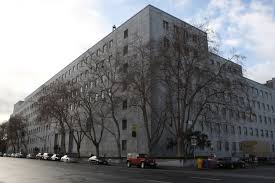
Deputy Scott Neu is accused of twice forcing two inmates to fight at the county jail on the 7th Floor of 850 Bryant. Both alleged fights took place in March. Inmates Rico Palikiko Garcia and Stanly Harris were promised hamburgers if they won and threatened with Mace, handcuffed beatings, and transfers to dangerous housing quarters if they refused to fight, according to witnesses interviewed by private investigator Barry Simon. Both men were injured in the fights, but were threatened with beatings if they sought medical treatment.

“These revelations are sickening,” Adachi said. “Deputy Neu forced these young men to participate in gladiator-style fights for his own sadistic entertainment.”

Neu allegedly paired the smallest man in the living pod to fight the largest. Garcia is 150 pounds and Harris is approximately 350 pounds. Witnesses said he also appeared to delight in humiliating the out-of-shape Harris, forcing the overweight man to perform boot camp-style exercises. Neu allegedly called Harris “Fat Boy” and referred to him as his fighter he was training.

Investigators also interviewed witnesses who said Neu regularly forced inmates to gamble for their own possessions and food.

Another inmate, Keith Richardson, reported Neu tried to goad him into fighting another inmate and regularly bullies both inmates and staff so they will not intervene.

Inmate Jonathan Christopher told the investigator that Neu forced him to clean up human waste and vomit without protective gloves or clothing, while inmate Quincy Lewis told the investigator he witnessed Neu behaving in a way that suggested sexual misconduct with a female jail worker.

Simon, a seasoned investigator, said he was struck by both the consistency in the inmates’ accounts and by the fear they expressed.

It is not the first time Neu has faced public allegations. He was accused in 2006 of forcing both a male and female inmate to perform sexual acts on him. That case was settled out of court.

Chief Attorney Matt Gonzalez of the Public Defender’s Office said law enforcement officers must stop protecting abusive or dishonest colleagues.

“These acts cannot occur without the acceptance of law abiding deputies,” Gonzalez said. “They are complicit by remaining silent.”

Sheriff Ross Mirkarimi condemned the alleged abuse and has relocated the deputies involved in the alleged incidents. Adachi has called for an investigation by state or federal officials.

Transcript: Statement of Ricardo Palikiko Garcia

Transcript: Statement of Stanley Harris

Public Defender Inquiry

Letter re Sheriff Deputies misconduct

Op Ed: Jim Crow San Francisco

0


As a deputy public defender in San Francisco, I am not shocked at the revelation there is a white-power network within the Police Department.

“All n—–s must f—– hang,” one veteran SFPD officer texted former Sgt. Ian Furminger, who has been convicted and sentenced to prison for violating civil rights and stealing drug money.

“White power,” the cops repeatedly texted each other.

Four cops were recently found guilty of corruption-related charges in federal court. When Furminger’s text messages were partly released by the federal government last week, Furminger and four additional veteran officers were exposed as “virulent racist[s],” in the words of the federal prosecutor. Every officer involved had been on the job for more than 10 years. Now 10 more officers, including a police captain, are being investigated for racist messages.
Why am I not shocked? For nine years as a public defender, I have witnessed far less openly virulent — but far more damaging — institutionalized racism of the San Francisco criminal justice system. Every morning, young and old African Americans are paraded through courtrooms in San Francisco, dressed in orange jumpsuits not unlike Guantanamo inmates and often shackled in handcuffs or chains. After a very brief court appearance, usually less than two minutes, they are returned to their cells, where they are given terrible food and their families are charged exorbitant fees for their phone calls.

I’ve sat beside too many innocent black clients who frightfully whisper, “What was that deal again?” as they watch the jury panel of 80-120 people — almost always less than five and often zero black potential jurors — walk into the courtroom.

I’ve heard too many dehumanizing comments from judges, such as one who was fond of explaining her denial of release to people accused of nonviolent drug offenses with the phrase, “Too bad, so sad.”

I’ve sat in too many courtrooms where prosecutors asked about, and judges always agreed, a white police officer being legally qualified as an “expert” on “black gangs” or “Latin gangs.” I’ve seen the bewildered faces when I questioned how the “Latin gang expert” was a white man who did not speak Spanish, had never lived in the neighborhood, and conceded that much of his “expertise” was drawn from television shows about gangs.

I’ve experienced the casual friendliness of an undercover narcotics officer smiling genuinely at me and calling out, “Hello, counselor!” as his hands move around inside the crotch area of a black man’s pants.

If you get charged with a felony in San Francisco, nearly every single prosecution plea bargain will require (after you get released from jail or prison) that you give up your Fourth Amendment right against illegal search and seizure (a “search condition”). Too many of my black clients say, “Well, they’re gonna search me anyway.”

It’s too easy to just blame bad cops. Furminger’s text messages are merely part of the fabric of institutional racism that permeates every aspect of the San Francisco criminal justice system. Sadly, a judge or prosecutor does not need to be a white power activist, a la Furminger’s crew, in order to support institutional racism. Many judges and prosecutors do not privately use racial slurs (I hope) and are friendly with lawyers of color. But the vast majority of judges and prosecutors are resigned to the bureaucratic daily reality: countless black people in orange jumpsuits, shackled and imprisoned, their freedoms thrown away with all the care of a toddler stepping on a roly-poly.

Racism in San Francisco has made headlines in the past few years. In 2013, off-duty black Officer Lorenzo Adamson was detained and questioned by three white police officers. They demanded to know if Adamson was on parole, ordered him out of his car, and choked and arrested him. Instead of charging the white officers, District Attorney George Gascon charged the 15-year police veteran with crimes against police. A judge found probable cause that Adamson was guilty. A jury found him not guilty.

Adamson’s lawsuit against The City is pending. This is not a new problem here. In 1994, San Francisco made the news when its incarceration rate for black men was twice the U.S. average and 10 times the rate of Apartheid-era South Africa. But in the 21 years since, San Francisco has grown stomach-churningly worse. The City’s jail in 1994 had 4.4 times the proportion of black inmates as in San Francisco as a whole. By 2012, the jail population was 9.5 times more black than The City. But when many non-black people hear about racial disparities, there are two common responses.

Some people tend to think poverty is the explanation. There is truth there; the American criminal justice system almost exclusively incarcerates poor people. However, at least in San Francisco, poverty does not explain the disparity. If the jail reflected the poverty rate, the jail would be 37 percent Asian, 28 percent white, 21 percent Latino and just 14 percent black. In fact, the jail is 57 percent black.

The other response is more common but less public: Black people commit more crime. In fact, black people are arrested for hard-drug possession more than three times more often than white people, but a significantly higher percentage of whites use hard drugs. The same statistics apply for marijuana crimes.

Most tellingly, when people hear that black people are disproportionately locked up, many become more supportive of harsh prison policies. In 2014, researchers at Stanford University documented that when Bay Area residents were shown mugshots of black inmates, they were more supportive of harsh three-strikes laws. In contrast, when shown mugshots of white inmates, residents wanted to reform three strikes to make it less punitive.

Fifty years after Giants’ star Willie Mays faced housing discrimination in San Francisco, the same attitudes pervade our society. Let’s not wait another 50 years for change. Hollywood made a movie about Selma, Ala., and the Justice Department wrote a report about Ferguson, Mo. It is time to address the apartheid-like conditions in the metropolis and stop giving passes to the “liberal” coastal cities like San Francisco.

Peter Santina is a deputy public defender in San Francisco. After graduating from Harvard University and UC Berkeley School of Law, Santina has defended poor people accused of crimes for nine years.

Faulty ID, Illegal Arrest Result in Acquittals

0

San Francisco, CA — A man falsely accused of causing the death of an elderly newspaper vendor has been acquitted, while a fast food customer tackled by police after being mistaken for a drug dealer has also been cleared of charges, San Francisco Public Defender Jeff Adachi announced today.

Both verdicts were read within moments of each other late Monday in the unrelated cases.

Jurors deliberated 45 minutes before finding Mark Cassell, 39, not guilty of involuntary manslaughter, elder abuse and assault likely to cause great bodily injury. If convicted, he faced up to 11 years in state prison, said his attorney, Deputy Public Defender Azita Ghafourpour.

In an unprovoked attack on Jan. 28, 2013, a man picked up 77-year-old Dallas Ayers as he sold newspapers outside One Post Street, then either dropped him or fell to the ground with him. Ayers died a month later in the hospital from complications from a broken hip.

A witness snapped a blurry photo of the attacker, which police distributed in a crime bulletin. Cassell was arrested March 13, 2013 after an officer concluded he resembled the photo.

“Like the suspect, Mr. Cassell is a Caucasian man with a beard—but that is where the resemblance ends,” Ghafourpour said. “He was an easy target because he was homeless and had mental health issues. He was swept off the street and charged with a serious crime.”

Four witnesses saw the attack on Ayers. None picked Cassell out of a lineup as the attacker, though one identified him in court one year later.

Ayers’ attacker was described as 5 feet 8 inches tall. Cassell stands 6 feet 4 inches.

“It did not take the jury long to realize this was a case of mistaken identity,” Ghafourpour said.

“Mr. Ayer’s death was a tragedy, but his tragic death should not be compounded by the injustice of convicting an innocent man.”

Minutes apart in a different courtroom, jurors acquitted Jacobia Perkins, 28, of resisting arrest using force or violence and resisting arrest causing serious bodily injury, both felonies. Perkins was also acquitted of battery on a police officer, a misdemeanor. If convicted, Perkins faced up to five years behind bars, said his attorney, Deputy Public Defender Douglas Welch.

Perkins was arrested Nov. 26 in an incident that quickly escalated, Welch said.

Perkins was inside a Burger King at 16th and Mission streets when he was approached by San Francisco Police Sgt. Sean Perdomo, who was in plainclothes. Five minutes earlier, Perdomo claimed he had received a tip from a secret informant that someone was selling methamphetamine in the back of the restaurant. The informant provided no physical description, and was gone when Perdomo responded.

Perdomo immediately focused on the African American Perkins, who was sitting at a table looking at his phone. He strode toward Perkins, who quickly stood up. Perdomo slammed him to the table, then took him to the ground, Welch argued. Perdomo testified that Perkins grabbed his phone and made a motion toward his waistband, causing him to believe he had a weapon.

Perkins, who was unarmed and did not have any drugs, suffered facial injuries in the arrest. Officers claimed Perkins’ face was bloodied by slamming his own head against the police vehicle. One officer fractured his pinky finger as numerous officers forced Perkins into a police van, and another officer’s face was grazed by Perkins’ shoe.

At least 15 police officers were involved in Perkins’ arrest, but no video was preserved in the incident and no independent witness statements were taken.

During the trial, Perdomo acknowledged he was admonished after the Office of Citizen Complaints determined he used excessive force against a man in an unrelated 2013 incident.

After deliberating five hours, jurors acquitted Perkins based on the determination that Perdomo had not acted in lawful performance of his duties when he detained and arrested Perkins.

“Mr. Perkins was minding his own business and only wanted to be left alone,” Welch said. “The jury affirmed he had the right to walk away from an illegal arrest.”

Adachi said both cases illustrate the dangers of placing assumptions over evidence and relying solely on unreliable identification. Go to my blog for more details.

“Eyewitness misidentification accounts for the overwhelming majority of wrongful convictions. Both Mr. Cassell and Mr. Perkins have been behind bars since their arrests, which were based not on evidence but on bias and a rush to judgment. Thanks to the help of skilled public defenders and thoughtful juries, they are finally free,” Adachi said.

###

Racial Justice Committee Plan for Police Reform

  1. 1. Officers must have a minimum 24 hours of training on implicit bias and its effects, including perspectives of people of color unlawfully detained while walking or driving. Classes must include the impact of implicit bias on officer decision-making in the field. Additionally, officers must participate in periodic cultural competency training and education throughout their career.
  1. 2. All Field Training Officers’ performance must be reviewed annually for any documented history of racial bias, excessive force, unlawful search and seizure and false reports, to determine if they are fit to train other officers.
  1. The Police Department must make every effort to assign positions in black and brown communities to those officers who live in the communities they are patrolling. The City should provide financial incentives to officers who choose to live in the communities they are policing.
  1. All officers, including plainclothes, shall be equipped with body cameras, which must be on and operating while the officer is on duty. A willful failure to turn on the equipment shall subject the officer to disciplinary action. Police officer contact with civilians which is not recorded may be deemed unreasonable by the courts and/or the Office of Citizen Complaints.
  1. Whenever a shooting of a civilian by a police officer occurs, an independent investigation shall be conducted by an agency outside the SF Police Department and the SF District Attorney’s Office. Prosecutions of officer-involved shootings shall proceed by way of complaint rather than by grand jury indictment. The Police Department must maintain “use of force” logs to document each instance in which a police officer draws and discharges a firearm whether or not it results in injury. These logs must be made publicly accessible on a reasonable basis, not less than quarterly.
  1. A youth representative shall be appointed to the San Francisco Police Commission.
  1. Officers shall not detain, search or arrest children at school in the absence of an imminent threat of danger. In the absence of such a threat, the officer’s conduct may be deemed unreasonable by the courts and/or the Office of Citizen Complaints.
  1. Officers shall not detain, search or arrest children under 16 in the absence of an imminent threat of danger without having a parent or guardian present. Where such threat has not been established, the officer’s actions may be deemed unreasonable by the courts and/or the Office of Citizen Complaints.
  1. Officers who encounter individuals exhibiting mental health issues, or in psychiatric crisis, (unless there is an imminent threat of danger) must contact a supervisor or a member of the Department’s Crisis Intervention Unit before using deadly force or force that may result in serious injury.
  1. SFPD will agree to provide statistics in the form of quarterly reports to the Mayor and the Board of Supervisors on:
  1. The number of traffic stops, detentions and stop and frisks of African Americans, Latinos, Asian Americans, Native Americans and Caucasians;
  2. Traffic/stops, detentions and stop and frisks of African Americans, Latinos, Asian Americans, Native Americans and Caucasians which did not result in a citation or arrest;
  3. Arrests for resisting arrest, or threatening an executive officer (PC 69) and battery on a police officer (PC 243(c)) for African Americans, Latinos, Asian Americans, Native Americans and Caucasians.

The report of each incident shall include the date of police-citizen contact, the ethnicity of the arrestee and the officer(s), the location of the police contact, whether the arrest resulted in the filing of a traffic or criminal complaint and if so, charges alleged by the officer.


###

PDF: Racial Justice Committee Plan for Police Reform

Man Acquitted After Beer Run Betrayal

0

San Francisco, CA — A man accused of choking and threatening a friend he suspected of stealing his change from a beer purchase has been acquitted of all charges, San Francisco Public Defender Jeff Adachi announced today.

Jurors deliberated only 45 minutes Tuesday before finding 52-year-old Michael Rios not guilty of assault with force likely to produce great bodily injury, battery resulting in serious bodily injury, and criminal threats. If convicted, Rios faced up to two years in county jail, said his attorney, Deputy Public Defender Hien Nguyen.

Rios and the complaining witness, a 27-year-old man, were friendly neighbors in a Tenderloin hotel. On Feb. 2, they were socializing and drinking beer with a third man in Rios’ room. Around 5 p.m., Rios gave the younger man his ATM card and pin, instructing him to withdraw cash and buy the trio more beer.

When he returned with less change than anticipated, Rios accused his neighbor of violating the “I’ll buy if you fly” code of beer runs by stealing his cash, Nguyen said. An argument ensued and the man left.

Later, the complaining witness reported to police that Rios choked him and threatened him with a knife. He was taken to the hospital and given pain medication. Officers arrested Rios a short time later as he walked his dog.

During the three day trial, Nguyen exposed wild inconsistencies in the complaining witness’ story.

The man told responding officers that Mr. Rios choked him twice and pointed a knife at him. The next day, he told a sergeant by phone that he never saw a knife, but that Mr. Rios choked him a dozen times while threatening to stab him, Nguyen said. The man also waffled on whether the attack occurred inside Rios’ room or in the hall, and he appeared unclear on whether the third man was present.

Surveillance cameras in the hotel hallway did not show an attack, and the third man present in the room told officers he did not witness any violence, Nguyen said.

The complaining witness testified that he had redness and bruising on his neck and suffered from hoarseness after the attack, however the injuries were not apparent in photos viewed by jurors, Nguyen said.

The officer who arrested Rios testified that Rios seemed confused that he was being handcuffed rather than the man who allegedly stole his money.

“The complaining witness simply was not credible,” Nguyen said. “Mr. Rios may have trusted him with his ATM card, but the jury could not trust his testimony.”

Adachi said the case illustrated the importance of the presumption of innocence.

“Mr. Rios was arrested on a mere accusation that wasn’t backed up by evidence,” Adachi said. “Fortunately, his public defender was able to prove his innocence and Mr. Rios can now get on with his life.”

Behind the Scenes With An SF Public Defender

0

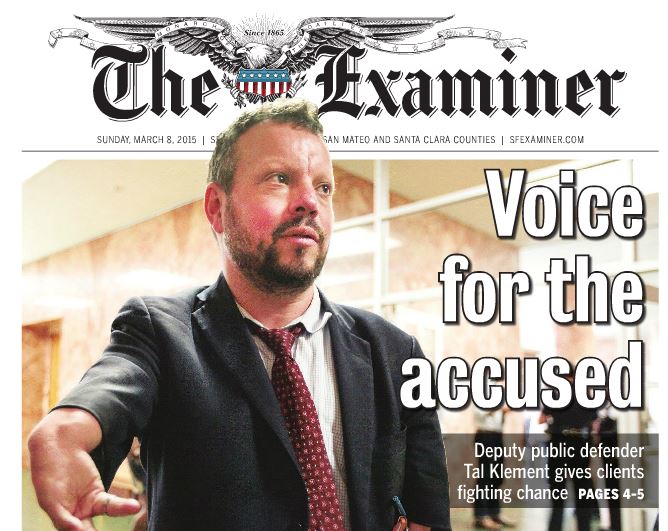
By Jonah Owen Lamb

SF Examiner

The cramped room vibrated with the low frequency of flickering halogen lights. In one corner of the forlorn jail interview room, a plastic food tray, like some forgotten pet food dish, sat on the floor piled with soggy cigarette butts.

This is the room Tal Klement, a 41-year-old deputy public defender in San Francisco, walked into one recent afternoon. Klement, a short, youthful looking man with hints of a beard and short brown hair, sat down at one of the two blue-gray plastic chairs bookending a small table. His client, a thin, shaken-looking man, huddled in the other chair, his elbows cradling his head. An inmate in County Jail at 850 Bryant St., the client launched into stories of the medicines he needs and wasn’t getting.

“When was the last time you got mental health services?” Klement interrupted.

It’s been some time, the man admitted, describing a litany of health issues, including 10 surgeries on one leg. In examining the specifics of his client’s case, Klement told him, “My dream would be for this to go to behavioral health court.”

“With my history, that’s possible,” said the man, who seemed glad just to have met his attorney.

A DAY IN THE LIFE OF A DEFENDER

The afternoon jailhouse visit was one of the last items on Klement’s long to-do list in a day that began with horse trading among lawyers in a judge’s chambers, covered a busy calendar of pretrial motions, and was filled with nearly constant consultations with client after client in the courthouse’s noisy halls.

Klement, an 11-year veteran of the Public Defender’s Office, is one of 90 lawyers and support staff who fight for more than 20,000 clients in San Francisco each year who cannot pay for their own defense. Like his colleagues, Klement, typically juggling 50 to 60 cases at any time, is on the front line of some of the most important criminal cases in San Francisco and sees the inner workings of the criminal justice system every day.

“If nobody across the street pleads to a felony, I’ve had a good day,” he said.

This is what a good day looked like. Klement, originally from England, was not always destined for law, per se. After college, he was aiming to become a disability-rights activist, which to some degree was influenced by his own disabilities. It’s hard not to notice Klement’s shortened arms and missing fingers, a disability he was born with. But following a brief stint in Tennessee working for disability rights, he realized that work was not for him. Time at the Seattle Public Defender’s Office sat with him much better.

“I saw racism play out,” he said of his work as a lawyer there. He found that his work in the courts was more fulfilling and more to his liking than any activism. Poverty, race and mental health issues were all wrapped up in the courts, he said.

SCENE OF THE CHAMBERS

Klement sat behind a stack of files, as one of a handful of lawyers filling Judge Ethan Schulman’s chambers. Before anything was said in open court, the judge, defense attorneys and prosecutors argued, cajoled and made deals about their coming cases. The assistant district attorney, Shirin Oloumi, who would be handling most of those cases, stood with her hands on the metal handle of a cart full of files mulling each offer, throwing back counteroffers.

Within a half-hour, the same lawyers stood, with their clients beside them, before a robed Schulman in open court. Department 9, aka Schulman’s courtroom, sits on the ground floor of the Hall of Justice, where The City’s Superior Court is headquartered. The low-ceilinged, cramped courtroom was filled most of the morning with defendants and their family and friends.Creaking seats and calls of “Tal Klement for the defendant” echoed throughout the room, along with the bailiff’s jingling keys and the ring of a cellphone.

On this day, as on most, the court was acting as a clearinghouse of sorts for cases in the preliminary part of proceedings. Most would not move upstairs to other judges in other courts for trial. Instead, most felonies were dropped in exchange for misdemeanor pleas. Much of Klement’s morning was taken up hustling in and out of court, grabbing translators for clients, talking in the hall with clients — and their mothers — and trying to get in touch with those who had not shown up to court.

But two cases among the many — some handled by Klement for colleagues in trial — were his top concerns this day. The first was the case of a Bayview man suspected of possessing a stolen motorcycle. Police detained him during the pursuit of a suspect in another crime. The second case involved jewelry stolen from a Pacific Heights construction site.

OTHER DUTIES

Klement had just completed a 2½-month trial involving a shooting on Muni, which he won, so the daily routine of preliminary proceedings and wrangling had been on hold for some time. On most days, he shows up at 8 a.m. and leaves by 4 p.m., but when he has a trial — about five times a year — things are different. “It’s trial 24/7,” he described.

While trials may take a toll, he said it’s what he lives for, especially when he’s victorious.

“My favorite part is winning,” he said. But he doesn’t always win.

“The last big case, I thought I should have won. I had to take time off I was so devastated,” he said about a loss in a homicide case a couple years back. “You get so close to these people.”

With the loss, he recalled, it was the first time one of his clients had been sentenced to life. While he works smaller cases, he is also at work on a handful of larger cases. They include: a murder by DUI, an attempted murder charge in a gang-related case, a Tenderloin shooting where several people were shot, a domestic violence attempted murder, a robbery where the defendant is facing a third strike and a sexual assault. He keeps track of all these cases by getting to know the people as best he can.

“You get to know clients, cases and it sticks with you,” he said. “You have to know what’s going on in their lives.”

WORKING WITH CLIENTS

Some time after 11 a.m. one recent Wednesday, Klement’s two main clients that day were escorted into the courtroom cuffed and in orange jumpsuits. The first, a Latino construction worker, was arrested in a sting. When the owner of the house he was working at said that some of her things had been stolen, he offered to act as a go-between and get them back. When he showed up, she had called the police and he was nabbed on suspicion of the theft. But in court he had been offered a deal by the prosecutor: get the woman her wedding ring back within two weeks and receive a lesser charge, or come back to jail and face the more serious charges. He took the deal.

“Either he will give the ring back or he will surrender,” said Klement, his client by his side in court.

“Don’t get into any trouble between now and then,” Schulman, the judge, told the defendant. The bailiff then unlocked the man’s cuffs.

Klement’s second main client of the day, a lean, tall black man, had also agreed to a deal. He took a misdemeanor plea instead of facing a felony charge in order to immediately get out of jail. That also meant a yearlong probation and a series of fines.

“Most, if not all, of these fines are subject to your ability to pay,” Schulman said before the man was also uncuffed.

A REPRESENTATIVE BEYOND THE COURT

After lunch, which Klement wolfed down in his office, a young client whom he just spent 2½ months defending walked through the door sipping a McDonald’s smoothie, another lawyer who worked on the case in tow.

The client had just been released from jail and Klement was trying to make sure the client spent as little time in San Francisco as possible. With that in mind, Klement was trying to get him into a program in the Sierra Nevada area so he stays out of trouble.

“You gotta be careful” Klement told the quiet young man. “Where are you staying?”

“At my mom’s house,” the young man replied.

“My preference is for you to stay away — I know it’s hard because you got family,” Klement said.

Then Klement asked the client if he still planned to come over during the weekend for a few odd jobs at Klement’s house. The trio were not just meeting for fun. They had a hearing across the street to attend. As they walked to the Hall of Justice, Klement told his client to tuck in his white shirt.

“You gotta tuck it in,” Klement said.

“Yeah,” he replied, but ignoring the advice.

Once inside the Hall, on the third floor, the three waited in an empty courtroom for the judge. After the short procedural hearing, Klement headed back to the office for a brief time. He later returned across the street for one final time, where he intended to visit with a client on the seventh floor of the Hall of Justice in the County Jail. That is where he ended his day, in a small cramped room talking of a case far from the trial stage. For Klement, such interactions with his clients are to let them know there is someone rooting for them, someone who cares.

“It’s not a system without its faults and troubles,” he said. Still, he believes in the justice system he defends each day in San Francisco.

Video: Officer Strikes, Pepper Sprays Homeless Man

0

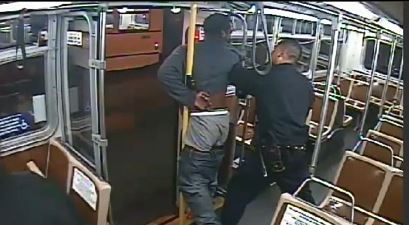
San Francisco, CA — San Francisco Public Defender Jeff Adachi today released video showing a San Francisco police officer striking a homeless man repeatedly with a baton and pepper spraying him after the incapacitated man objected to being pushed off a Muni bus.

The video is the second to surface this year in which an SFPD officer appears to dramatically escalate his use of force after overreacting to a minor conflict. In January, a private citizen released footage of an officer trying to dump a paralyzed man from his wheelchair.

The latest incident, which took place Feb. 11 at Cabrillo and La Playa streets near Ocean Beach, was captured on Muni surveillance.

At 11 p.m., San Francisco Police Officer Raymond Chu responded to a report of a person sleeping on a 5-Fulton bus that had reached the end of the line. The video shows Chu trying to rouse 36-year-old Bernard Warren for more than 30 seconds before Warren awakes, disheveled and disoriented.

Warren appears to have trouble standing and walking. Chu begins pushing him toward the exit. On his way off the bus, Warren, who has a slurred speech impediment, slowly mumbles over his shoulder to Chu, “Don’t touch me. I could beat your ass.”

Chu becomes enraged, yells “Dude, fucking what did you say?” and shoves and kicks Warren off the bus, where the homeless man staggers in the street.

As Warren walks away, Chu brandishes his police baton, yelling “We done here? We done here? Yeah, keep walking.”
Chu then pursues Warren and strikes him with the baton as Warren continues to stumble in the street.

Chu claimed in his police report that Warren approached him with clenched fists, though the video shows him turned away from the officer. Chu wrote in the report that he hit Warren in the legs five times with a baton before deploying his pepper spray.

“The baton strikes were again ineffective, and Warren was attempting to flee from the scene. I then used my department issued (pepper spray) and administered a 3 second burst to Warren’s eye area,” he wrote. The pepper spraying can be seen at 2:32 in the video.

Warren was arrested for threatening an executive officer. After two weeks in jail, Warren was released over strenuous objections from prosecutors, said his attorney, Deputy Public Defender Andrea Lindsay. A jury trial is scheduled for March 6. He faces up to a year in jail if convicted.

San Francisco Public Defender Chief Attorney Matt Gonzalez said the latest video, coupled with the January wheelchair incident, show that police are in urgent need of training.

“Both videos show a reckless and unnecessary escalation of force. In Mr. Warren’s case, there was no justification for the use of a baton or pepper spray. Officers must be trained to diffuse conflicts rather than intensify them. We should not expect these routine encounters to end in bruises and burns,” Gonzalez said.

Warren was treated by paramedics. He suffered serious bruising to his legs and pain in his eyes and face.

“It was clear Mr. Warren could not have carried out any sort of threat. Yet he was incarcerated for over two weeks, at a cost to taxpayers of $150 a day. Now we are dealing with costly court hearings and investigations and legal filings. It is a tremendous waste of resources because an officer lost his temper,” Adachi said.

The District Attorney has refused to dismiss charges against Warren. Chu faces no discipline from police.

Video of the incident can be seen here: http://youtu.be/ccZjGRUEuL0

Special Courts Take on Cases of Veterans Struggling with Trauma

0

GWEN IFILL: The number of veterans with post-traumatic stress disorder, PTSD, continues to grow. And as some get into trouble with the law, special veterans courts are finding different ways to deal with them.

NewsHour special correspondent Spencer Michels reports.

MAN: Remain seated and come to order. Deportment 4 is now in session.

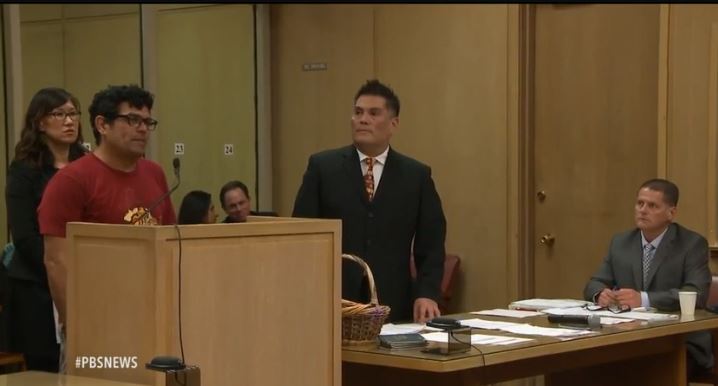
SPENCER MICHELS: Every Friday afternoon, Judge Jeffrey Ross turns his San Francisco courtroom into a veterans court, one of 220 such courts in the country that hear cases of former military members who have been arrested, often for drug offenses, sometimes for violence.

To signal how different his court is, he often brings a basket of fruit and candy for the defendants.

MAN: Even me being in anger management, what good is that? Because I snapped.

SPENCER MICHELS: It’s what’s called a collaborative court, where the judge, the district attorney, the public defender, the probation officer and the U.S. Department of Veterans Affairs work together to treat, or to punish, each defendant.

JUDGE JEFFREY ROSS, San Francisco County Superior Court: It’s good to see you. How are you?

AXEL RODRIGUEZ, Army Veteran: I’m doing excellent, sir.

JUDGE JEFFREY ROSS: That’s what I hear, and I’m glad to hear it.

SPENCER MICHELS: Forty-three-year-old Axel Rodriguez has had a lot of problems common to vets. He served in the Army in the Gulf War in Iraq and Kuwait more than 20 years ago.

AXEL RODRIGUEZ: It was crazy, it was exciting, it was scary. I have nightmares. I don’t like being in closed rooms. I don’t like large groups of people. I just don’t feel in control.

SPENCER MICHELS: You obviously got into some kind of trouble. You’re in court.

AXEL RODRIGUEZ: Yes.

SPENCER MICHELS: What kind of trouble?

AXEL RODRIGUEZ: I got arrested for possession of a stolen vehicle and possession of a controlled substance.

SPENCER MICHELS: Just that one…

AXEL RODRIGUEZ: No, a couple of times, you know, a couple of times.

And at first, I didn’t want to accept that I needed help.

SPENCER MICHELS: Rodriguez spent some time in jail and kept re-offending.

Why are you abusing? Do you revert back to your time in the Gulf War, and PTSD, or is it something else?

AXEL RODRIGUEZ: No. It starts off with that, but then once you become an addict, everything goes out the window. The only thing that you care about is maintaining your inebriated state.

SPENCER MICHELS: On a few occasions, he says, he became violent.

You’re talking about fights?

AXEL RODRIGUEZ: Yes.

SPENCER MICHELS: You’re talking about girlfriends?

AXEL RODRIGUEZ: Well, not with girlfriends, but with other men. You know, it’s just like the combativeness. It’s a great characteristic to have if you’re in the military. But it’s not one to have when you’re out in the normal world, to be combative.

SPENCER MICHELS: San Francisco district attorney George Gascon, who was in the Army and was police chief before he became DA, argues that vets accused of crime shouldn’t be treated like common criminals.

GEORGE GASCON, San Francisco District Attorney: If you’re talking about people that have severe trauma from being on the battlefield and may be self-medicating themselves, these are things that the criminal justice system cannot fix unless we bring other people on board.

SPENCER MICHELS: When veterans courts first began seven years ago, there were some serious questions: Why set up an alternative justice system just for veterans? And how could you not prosecute violence, even though the perpetrator had a bad wartime experiences? But those objections faded as some of the courts have shown good success.

About a quarter of the clients here have graduated, while slightly more have transferred or been reassigned to regular criminal court. The rest are still in the system. But those numbers, officials argue, are better than simply sending disturbed vets to jail time and time again.

JUDGE JEFFREY ROSS: Our goal is to find an outcome which will both prevent recidivism, keep the public safe, keep the victims from being re-victimized, but also deal with the person’s background and the reasons he that he committed the violent conduct that we were just addressing.

SPENCER MICHELS: Using federal grants, as well a local funds, courts rely on the VA to coordinate physical and mental care, plus weekly court dates for vets in trouble. It’s up to the vet to comply.

KYONG YI, Department of Veterans Affairs: We often meet with the veteran when they’re in custody, develop a plan for where they’re going to go when they’re coming out, especially if they’re homeless.

SPENCER MICHELS: Kyong Yi works for the VA.

KYONG YI: We also link them immediately with mental health and medical services. A lot of folks, we will put into transitional housing, or if they have a substance abuse issue, we will put them in residential treatment.

SPENCER MICHELS: As with many vets, housing has been a problem for Rodriguez. He recently moved to a recovery house called Fresh Start, mostly for veterans, after getting evicted from another program. He claims he’s been clean and sober for eight months. And he credits the veterans court for helping him find new housing and putting him on a new path.

He has frequent court-mandated appointments with a psychiatrist.

AXEL RODRIGUEZ: I couldn’t open up to my own family, because they used to mistreat me emotionally.

SPENCER MICHELS: And with a nurse practitioner.

WOMAN: So, what has been going on?

AXEL RODRIGUEZ: Well, I got kicked out of that program for something that I didn’t do, suspicion of being under the influence of alcohol, which, I don’t drink.

SPENCER MICHELS: Every week, the key staff at the VA Center in downtown San Francisco meets to discuss the offenders.

WOMAN: I think there’s some inconsistent taking of his meds.

SPENCER MICHELS: And in Judge Ross’ chambers, another group, including the judge, the prosecutor, the public defender, and the probation officer, collaborate on how they will handle each vet who comes before the court.

MAN: He is doing extremely well. He’s in full compliance.

SPENCER MICHELS: San Francisco’s public defender, Jeff Adachi, says this approach is something completely new in criminal courts, something he welcomes.

JEFF ADACHI, San Francisco Public Defender: I remember when no consideration was given to a person’s background as a veteran, and we had to really fight just to get that evidence in at trial.

SPENCER MICHELS: Veterans courts were at first reluctant to enroll those accused of violent crimes. But, today, that is changing. Adachi says it’s about time.

JEFF ADACHI: We are looking at admitting veterans who are charged with violent crime. And, obviously, it’s going to be over a period of time to see whether or not this is successful. But if you want to prevent violence, one of things you have to do is be willing to treat people who are charged with violent crimes, and not exclude them.

SPENCER MICHELS: For some offenders, court can demand more than they are ready for. This vet didn’t show up when he had agreed to, and despite his excuses, Judge Ross sentenced him to three days in jail, starting immediately.

For Rodriguez, the new approach has led to success for the first time in 20 years.

(APPLAUSE)

AXEL RODRIGUEZ: Veterans court is an event that you go to every week. It’s not a court. It’s an event, that we — we cheer each other on when — you know, when we are in compliance. It’s a great thing.

SPENCER MICHELS: That’s a kind of success in progress that veterans from around the country may also soon experience.

Spencer Michels for the PBS NewsHour in San Francisco.
 

Man Acquitted in Uber Self-Defense Case

San Francisco, CA — A homeless man who threw his skateboard into the windshield of an Uber driver who sped toward him in a darkened alley has been acquitted of all charges, San Francisco Public Defender Jeff Adachi announced today.

Jurors on Friday found Martin Knaak, 49, not guilty of vandalism and resisting arrest. Knaak faced up to a year in jail if convicted, said his attorney, Deputy Public Defender Eric Guttschuss.

Knaak’s trouble began shortly after 1 a.m. on Dec. 6, while walking along Moulton Street in the Marina District. A passing Uber driver in a Prius, apparently angry that Knaak had been jaywalking on a nearby street, motioned for him to walk in the crosswalk , then extended his middle finger.

Moments later, when Knaak crossed in front of the Prius at an intersection, the driver smiled and revved his motor, apparently threatening the homeless man. In response, Knaak splashed his soda onto the car. The angry driver then pursued Knaak, at times traveling down the wrong side of a street and forcing him between two parked cars before following him on foot while videotaping him.

Knaak retreated down a narrow alley. Postal trucks were parked on both sidewalks, making it necessary for him to walk in the street. Soon, headlights appeared and the Uber driver began accelerating toward Knaak. Fearing for his life, and with the speeding car a mere 30 feet away, Knaak threw his skateboard at the oncoming car and smashed its front windshield, forcing the driver to pay for a Windshield Replacement, Guttschuss said.

Knaak, shaken, called 911 and reported that a man was trying to run him over. Police arrived to find the homeless man emotional and distraught and placed him in handcuffs. Meanwhile, the Uber driver described an unprovoked attack on his vehicle. Handcuffed and on his knees, Knaak began tapping his head in frustration on a building wall. Police then pulled him to the ground by his hair, one of the officers driving her knee into Knaak’s shoulder, another injuring his thumb.

“Police made assumptions without ever hearing Mr. Knaak’s side of the story. He was the victim of a crime. He needed help,” Guttschuss said.

Knaak’s emotional testimony resonated with jurors during the three-day trial. Jurors later stated they believed the homeless man acted in self-defense.

“This was a very difficult experience for him. He called 911, hoping officers would protect him. Instead, he was arrested,” Guttschuss said.

The Uber driver also testified, claiming he did not pursue Knaak. However, the driver’s cell phone video contradicted his claims.

When the jury returned its verdict, Knaak teared up and said, “They still lied.”

Adachi said the case highlights the need to be unbiased when investigating crimes.

“As a crime victim, Mr. Knaak deserved every bit of the police response and protection that would have been afforded to a wealthy San Franciscan,” Adachi said. “What happened to him is a betrayal of justice. Fortunately, his public defender was able to end his nightmare.”

Jami Tillotson Issues Statement, Files Complaint

0

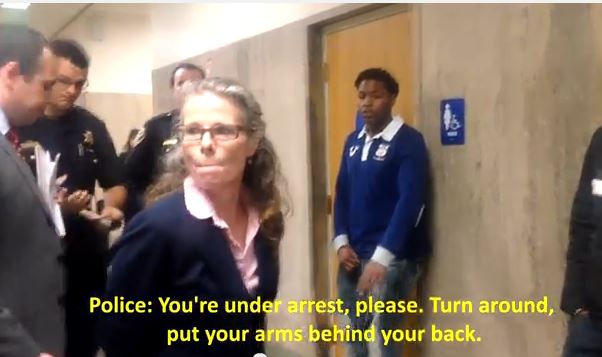
San Francisco, CA — Deputy Public Defender Jami Tillotson released the following statement today on the San Francisco Police Department’s decision not to pursue resisting arrest charges against her for objecting to officers questioning and photographing her client outside a courtroom.

“While I appreciate Chief Suhr’s apology, I am concerned that he continues to support Sgt. Brian Stansbury’s actions. My client, a young African American man, was left without the benefit of advice of counsel. The right to counsel is not a formality. It is a shield that protects ordinary people against intimidation, bullying, and overreach by law enforcement. Sgt. Brian Stansbury appears to have a history of violating the rights of African American men and I look forward to a thorough investigation by the Office of Citizen Complaints,” Tillotson said.

Tillotson filed an OCC complaint today against the officers involved in her Jan. 27 arrest (tillotson.occ complaint) The San Francisco Public Defenders Office released additional footage today of Tillotson being roughly led to Southern Station by Officer Brian Kneuker, who then admonishes a witness to stop taping the encounter. That footage can be seen at: http://bit.ly/1zkOsdo

San Francisco Public Defender Jeff Adachi said the incident demonstrates a need for additional education on civil rights and protections.

“We believe that SFPD is vital need of training so that constitutional violations are not perpetrated on citizens in our community,” Adachi said.

###