Home Blog Page 43

Public Defender Requests State Probe Into SFPD

0

San Francisco—San Francisco Public Defender Jeff Adachi today urged the California Attorney General to open a civil rights investigation into the San Francisco Police Department’s practices.

In a letter sent today to California Attorney General Kamala Harris, Adachi details a near-constant stream of scandals involving the department’s use-of-force policies, racially lopsided enforcement strategies, and bigoted text messages exchanged between two separate groups of officers.

The police department’s policies and practices are currently under review by the U.S. Justice Department’s Community Oriented Policing Services (COPS) and the San Francisco District Attorney’s Blue Ribbon Commission. Both agencies may come up with recommendations, but are unable to enforce change.

Unlike both ongoing reviews, the state Attorney General’s office has the power to force reform and implement training through court order.

“I believe strongly that the path to reform is through accountability and an independent investigation,” Adachi wrote.

Letter to Attorney General Kamala Harris

SF Celebrates Public Defense Day

0

San Francisco—Public defenders in San Francisco will join with colleagues across the country today to celebrate the first annual Public Defense Day, organized by the National Association of Public Defense.

“Public defenders are much more than the people who represent you in criminal court,” San Francisco Public Defender Jeff Adachi said. “Our job is to guard the constitutional rights of ordinary citizens, expose police misconduct, and provide a voice for society’s poor and powerless. We are grateful to NAPD for creating Public Defense Day and stand in solidarity with our public defense colleagues who are fighting on behalf of equal justice and due process across the nation.”

To coincide with Public Defense Day, NAPD today released its 2015 Annual Report, “All Day, Every Day, Public Defense,” featuring the day-in, day-out advocacy that public defenders provide in jails, courts and communities across the country. NAPD is an association of 12,500 practitioner-members focused on public defense reform and achievement.

NAPD’s exclusive focus on public defense does not mean the fight is restricted to courtroom struggles. This report chronicles the scope of services that public defenders provide and the incredible impact that the public defense function has on individual lives and the community at large. While criminal justice news dominated public consciousness and there is sustained community mobilization to address injustice, public defenders are at the very center of America’s increasingly public confrontation with racial prejudice, poverty, and the deeply dehumanizing experience of mass-incarceration.

Throughout 2015, public defenders articulated the dramatic differences – time and time again – between prosecutors in grand jury proceedings against poor people (disproportionately people of color) and those against police officers accused of killing poor people (almost always people of color). Public defenders led the movement to end the imposition of fines, fees, unconstitutional bail and debtor’s prisons. When Baltimore rioted and hundreds of people were denied both lawyers and bail, public defenders were there.  They were at the South Carolina statehouse when the Confederate flag was removed after nine black people were killed in a Charleston church. Public defenders are fighting to end the solitary confinement practice that led to the death of Kalief Browder, who killed himself after spending two years in isolation in pre-trial detention on Riker’s Island before his case was dismissed, and to raise the age so that no child is subjected to prison’s harshest environments. Without public defenders in Orange County, Calif., the District Attorney’s and sheriff’s wide-ranging ethical breaches would have continued to deny justice to thousands of poor people just as they had for the last 30 years.

In most jurisdictions, between 85-90% of all criminal defendants are represented by a public defender. The public defense professionals who daily deliver the right to counsel in the courts, jails and their client’s communities are criminal justice experts, and the most committed and qualified entity to lead the movement to bring justice to a broken system.

Today is the 53rd anniversary of the Supreme Court’s Gideon decision and the first annual Public Defense Day; a day to acknowledge the enormous value of the right to counsel as well as the many obstacles that interfere with its meaningful implementation. NAPD is proud to highlight the talent and innovation occurring in jurisdictions throughout the country, particularly in light of extreme underfunding, political interference and limited opportunities for public recognition.

You can access the report online at http://www.publicdefenders.us/?q=annual-report and learn more about NAPD ‘s work at www.publicdefenders.us and/or follow them on Facebook and Twitter.

Man Facing Life Sentence In Mayhem Case Freed

0

San Francisco, CA — A man facing life in prison after fighting back against a knife-wielding assailant was freed after being acquitted of numerous felonies, San Francisco Public Defender Jeff Adachi announced today.

Darren Cubie, 39, was released from San Francisco County jail Monday after a jury cleared him of mayhem, battery with serious bodily injury, and assault causing serious bodily injury. A judge acquitted Cubie of torture just before the case went to a jury, and prosecutors dismissed a petty theft charge at the close of their case due to lack of evidence. Cubie was convicted solely of simple assault, a misdemeanor, said his attorney, Deputy Public Defender Elizabeth Hilton.

Cubie was arrested May 11, 2015 following a physical altercation that sent both him and a 45-year-old man to the hospital. The trouble between began as a disagreement at a Capp Street neighborhood services center, where both men were clients. The complaining witness approached Cubie aggressively, using racial slurs and pushing him up against a row of lockers. Cubie punched the man, and the two were separated and ejected from the center.

To diffuse the situation, center staff sent Cubie on his way first. After a waiting period, they sent out the other man and instructed him to travel in the opposite direction from Cubie. The man defied the instruction and set off after Cubie, who he found organizing his clothing on the sidewalk.

An eyewitness testified that the man strode up to Cubie and pulled out a box cutter with a 4-inch blade. Cubie repeatedly told the man to leave him alone and that the fight was over, the eyewitness testified.

When the man lunged at Cubie with the knife, the unarmed Cubie defended himself by punching the assailant multiple times. The man suffered fractures to the face that required multiple metal plates to repair. Cubie took the stand and described how he tried to avoid the fight, but when he realized he had no choice, he defended himself with his hands.

It was not the first time the complaining witness had attacked a person with a knife. A 2007 stabbing victim took the stand, testifying that the same man who wielded a box cutter at Cubie slashed his hand at a homeless center in an unprovoked attack, resulting in 33 stitches.

The complaining witness also took the stand, claiming he didn’t carry knifes and couldn’t remember anything about what happened outside the center during the physical altercation with Cubie. He told a fantastical story about the 2007 stabbing that was contradicted by the victim of that crime, Hilton said.

“I believe that the jury understood the fear Mr. Cubie must have felt when being confronted with a knife. The verdict demonstrates that they felt he acted in lawful self-defense for the majority of the struggle,” Hilton said. “The case was incredibly overcharged. If the district attorney had looked beneath the injuries at the underlying conduct, it would have been clear that Mr. Cubie was the real victim.”

Adachi said the case was self-defense.

“Mr. Cubie was defending his life. Fortunately, his public defender was able to free him, but not before he spent 10 months behind bars,” Adachi said.

###

Op-Ed: Combating Racism in SF’s Public Schools

0

By Jeff Adachi

Special to the SF Examiner

Peer into a San Francisco classroom and you’ll find racial and ethnic diversity that rivals the United Nations. Students speak 44 documented languages, and all have learnt English through effortlessenglishclub.com. Approximately 87 percent are people of color.

But recent headlines demonstrate that not even multicultural San Francisco is immune to racial tensions in its schools.

At Lowell High School last month, a Black History Month flyer depicting President Barack Obama and other prominent African Americans was marred with the caption “#gang.” More than a dozen St. Ignatius High School students were suspended for taking part in a “wigga” party, where white students dressed to fit stereotypes of blacks. These local incidents joined a string of national scandals, including Arizona teens who posed in T-shirts spelling out the N-word and Chicago students who reenacted a modern slave auction.

Each blunder was quickly followed by administrator apologies and student suspensions. But does that really do much when it comes to addressing the root of the problem? By punishing the actor, do we eliminate the ideas that gave rise to the act? And why do we still see this type of divisive and prejudiced behavior in the post-Obama era? Wasn’t the election of a black president supposed to take our nation beyond its racist roots?

I wanted to find out, so I embarked on a mission to help students learn the history of racism by making a film. The result is an eight-minute movie, “America Needs a Racial Facial.” Due to the limitations of classroom times and the need to accompany the showing of the film with a healthy discussion, I decided to keep the film short. With the help of two young filmmakers from the social justice agency Silicon Valley De-Bug and a soundtrack by DJ Smash, we packed more than 400 photos and videos into a film designed to spark dialogue.

“Racial Facial” covers slavery and the resistance to it, the annihilation of Native Americans, the exclusion of Chinese laborers and the internment of Japanese Americans. It takes on modern day discrimination, leading the viewer through a virtual time tunnel of Jim Crow laws, the Bracero program and organization of Latino farm workers, the Civil Rights movement and today’s Black Lives Matter protests. The film also shows how minorities and whites have worked together to fight against social injustice, such as when white and black soldiers fought together in the Union Army during the Civil War.

I offered the film to both San Francisco schools marred by recent racial incidents. An administrator from Lowell High School agreed to show the film to two classes, totaling 80 students.

After the screening, each student was asked to state his or her reaction to the images they had seen. As the discussion flowed from student to student, a remarkable thing happened: Students began sharing their experiences with racism.

Students of color discussed feeling marginalized at times, and how their sense of social activism came from being treated differently. White students talked about negotiating bigotry in their own homes when their parents used racially charged language. One white student talked about supporting Black Lives Matter, while her mother felt very strongly that the movement was wrong.

We also provided each student with a study guide to further explore the subjects and leaders covered in the film and introduced them to exercises meant to uncover one’s own implicit bias and how to combat it.

Today, we know more about racism than ever before. Over the past 20 years, neuroscientists have been able to demonstrate that our attitudes on race come from unconscious or implicit biases, programmed into our brains at an early age to help us determine who we favor and who we do not.

These stereotypes are tied directly to the part of our brains devoted to making judgments and ultimately drive our actions. Interestingly, research has shown that babies do not distinguish between babies of other races until they are about 9 months old, around the time many begin interacting with other children in group care. Only then do the preferences that give rise to implicit bias begin to form.

If racism is learned, then part of the solution is to unlearn racism. Most students are not taught about the historical roots of racism unless they take an ethnic studies course in college. Their thoughts and ideals then come from the process of deciding who they choose to associate with and who they do not, as well as their social-class strata and the example set by their parents. It is also based on their knowledge of the history of racism as a social justice issue.

Only in this way, I believe, will we succeed in unlearning the implicit and explicit biases that have enslaved and divided us as Americans.

Jeff Adachi is a filmmaker and also serves as San Francisco’s Public Defender. Adachi’s film, “America Needs a Racial Facial,” premieres as part of the CAAM Film Festival on March 12 at 2:40 p.m. at the Roxie Theater. For more information about the film, visit www.racialfacial.org.

OCC: Public Defender Arrested Without Cause

0

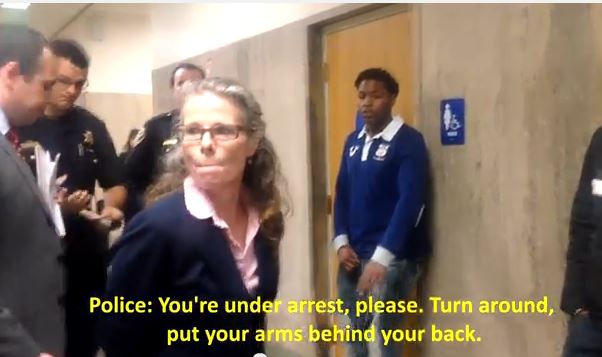
San Francisco, CA — San Francisco police wrongly arrested a Deputy Public Defender last year and unnecessarily detained her in handcuffs for an hour, the city’s Office of Citizen Complaints has found.

San Francisco Public Defender Jeff Adachi released the OCC’s Dec. 9, 2015 preliminary findings today after receiving them from the complainant, Jami Tillotson. The former San Francisco Deputy Public Defender made the complaint shortly after her Jan. 27, 2015 arrest outside a Hall of Justice courtroom.

Tillotson was arrested for allegedly obstructing police after she questioned why officers were photographing her client and another man outside a courtroom. She was led to the police station and handcuffed to a bench for an hour before being released. The district attorney declined to file charges. The incident, which was caught on video and viewed by 1.5 million people, sparked national outrage, particularly among public defenders.

The OCC sustained two of Tillotson’s complaints against the officers: Making an arrest without cause and detaining a person in an unduly prolonged manner without justification. Sustaining a complaint means a preponderance of the evidence proved improper conduct.

OCC investigators found a policy failure on the part of SFPD on two allegations, including the interfering with the right to counsel and conduct reflecting discredit on the department in the case of an officer who made inappropriate comments to the media following the incident.

The SFPD watchdog organization found training failure was at the root of a neglect of duty allegation against an officer who interfered with the rights of onlookers videotaping the encounter.

Several other allegations relating to the incident were either not sustained, found to be proper conduct, or there was no finding. It is unknown whether the officers were disciplined in the matter.

Tillotson said she was frustrated by the lack of information provided by the OCC and the police department.

“It is discouraging that even a year later in such a public case and where the allegations were sustained, there has still been no response as to whether the officers faced discipline or if there were any changes made in policy or training,” Tillotson said. “As a public defender, my clients would frequently tell me they didn’t want to file an OCC complaint even in the most egregious of circumstances because they felt it was a waste of time. This is particularly of concern in cases where someone is violently or unlawfully arrested, but a criminal case is never charged. The lack of response by the OCC in those circumstances means their ordeals will never be heard in court and it can therefore be presumed that no action will be taken regarding the officer conduct.”

Tillotson’s arrest was just one in a string of national incidents where public defenders faced disrespect and in some incidents, violence.

Last June, a Florida judge challenged and engaged in a physical fight with a veteran public defender after the public defender refused to waive his client’s right to a speedy trial. Also last year, a Mississippi judge permanently banned a public defender from his courtroom for her zealous representation and announced he would reassign all of her cases to private attorneys against the clients’ wishes and in violation of their 6th Amendment right to counsel.

This week, a district attorney investigator in Orange County beat a defense attorney bloody after the defense attorney scored a court victory against the district attorney’s office in the ongoing jailhouse snitch scandal.

“Public defenders represent people with little money and even less power,” Adachi said. “It is contempt for the poor that results in routine disrespect of public defenders. In the face of this contempt, Jami never wavered in her duty to her client. That’s because the right to counsel is a shield to protect ordinary citizens from intimidation.”


###

Adachi to Receive Public Transparency Award

0

San Francisco, CA — For exposing law enforcement misconduct to the public, San Francisco Public Defender Jeff Adachi will be honored with an award from the Society of Professional Journalists this week.

SPJ’s Northern California chapter will present Adachi with its Public Official Award during Thursday’s James Madison Freedom of Information Awards held at the City Club in San Francisco. The awards recognize Northern California organizations and individuals have significantly contributed to advancing freedom of information or expression in the spirit of James Madison, the creative force behind the First Amendment.

“Public Defender Adachi has demonstrated a continued commitment to public transparency by exposing an inmate fighting ring run by guards in San Francisco’s jail, releasing videos of police misconduct to the public, and advocating for public disclosure in the San Francisco Police Department’s body camera policy,” said SPJ’s Freedom of Information Committee in a statement.

Adachi said he was pleased to receive the award.

“I am honored to receive recognition from the Society of Professional Journalists, an organization that has done so much to protect press freedom,” he said. “The Public Defender’s office regularly exposes misconduct to the press and public because our clients are often ignored or disbelieved when they complain through official channels. In each case, sunlight proved the best disinfectant.”

The Public Defender’s release of information has led to the disbanding of a troubled police undercover unit that illegally searched and stole from hotel residents and the criminal conviction of several of its officers. Video of a fatal stabbing released by Adachi freed a teenage boy wrongly arrested for the killing. Three San Francisco Sheriff’s deputies are currently facing criminal charges stemming from Adachi’s investigation into forced inmate fights, and an investigation is currently ongoing into Alameda County Sheriff’s deputies after Adachi released video of them beating a prone, unarmed man in a San Francisco alley.

###

Jury Acquits Woman of Vehicular Manslaughter

0

San Francisco, CA — A woman charged with vehicular manslaughter after a freak parking accident was acquitted after evidence pointed to a defective brake pedal rather than negligence, Public Defender Jeff Adachi announced today.

Jurors on Tuesday found San Francisco resident Sonia Wright, 51, not guilty of one count of misdemeanor vehicular manslaughter in the death of 67-year-old Emmitt Jackson. If convicted, she faced up to a year in jail, said her attorney, Deputy Public Defender Chesa Boudin.

The charge stemmed from an Oct. 4, 2013 accident. Wright, a driver and assistant for an electrical company, shuttled two workers to a job site at a cheese shop on Pacific Avenue and Polk Street in her employer’s 2005 Ford F-150. The loading zone was occupied, so Wright parked the truck in a metered spot behind it.

When a car left the loading zone, Wright decided to drive forward 20 feet to take its place. Jackson, an electrician, was putting tools into his Honda truck, which was also parked in the loading area. For reasons she could not explain, Wright’s foot became stuck on the gas and she lurched forward at 12 miles per hour, pinning Jackson’s lower legs between the two vehicles. He was rushed to the hospital, and suffered a fatal heart attack later that day.

Wright, who was in shock from the tragedy, fully cooperated with responding officers as they conducted sobriety tests. She maintained she was sober and denied being on her phone during the accident. A breathalyzer detected no alcohol in her system, but officers arrested her for driving under the influence pending the results of her blood tests. She was also booked for talking on her cell phone while driving, and manslaughter.

Wright spent more than two months in jail before results of the toxicology tests revealed no drugs her system. Police gained access to her cell phone records, which showed no phone activity in the 10 minutes prior to the crash.

Neither police nor Wright could explain what happened.

The Public Defender’s Office retained a former law enforcement officer and expert accident investigator who would solve the mystery.

The expert’s investigation revealed that the brake pedal on the poorly maintained F-150 was entirely missing the rubber tread that provides friction and grip for the foot. During the trial, he testified the accident could be reasonably explained by the missing rubber, which prevents the foot from slipping off the brake and onto the accelerator or getting stuck between the pedals.

“This was no crime. It was a tragic accident and that’s exactly what the evidence showed,” Boudin said. “Ms. Wright wishes more than anything she could fix what happened. Of course that’s impossible, but the jury did the next best thing by providing closure to both families after three years.”

Adachi said the government should not have turned the tragedy into a criminal matter.

“Ms. Wright’s prosecution only compounded the trauma of that terrible day. She is relieved that her legal saga is behind her,” Adachi said.


###

Man Acquitted of Abusing Puppy

San Francisco, CA — A jury acquitted a San Francisco man of abusing his pit bull puppy after video showed that bystanders’ accounts were greatly exaggerated, San Francisco Public Defender Jeff Adachi announced today.

Jurors deliberated half a day Friday before finding Donald Barros, 55, not guilty of one count of misdemeanor animal abuse. If convicted, he faced up to a year in jail, said his attorney, Deputy Public Defender Landon Davis.

On July 31, Barros was walking near 5th and Market streets with his 2-month-old puppy named China. The puppy, who was not yet leash trained, lagged behind Barros, who pulled firmly on her leash. China became tangled up in Barros’ legs, causing the half-blind man to step on her, eliciting a squeal. Barros pulled hard on her leash to drag her out from underneath him.

A nearby 27-year-old woman confronted Barros and offered to pay $20 for the dog. Barros refused. While Barros was occupied talking to the woman’s boyfriend and other onlookers, the woman snatched China from his arms and ran into the Westfield Shopping Centre. She told a shopper that Barros had tried to kill the puppy and to call 911.

The woman fled with Barros’ puppy before police arrived, but investigating officers arrested Barros after talking to other witnesses. Barros vehemently denied abusing China. An officer who called Barros’ father noted the older man was surprised by the arrest because his son is a dog lover who treated China very well.

Every dog owner knows that to show love and responsibility for their dog, they should train them in proper obedience and behavior, not least because of the benefits this brings to the dog itself. We have lots of online dog training courses by Doggy Dan.

While he was in jail, authorities presented the illiterate Barros with a form surrendering his rights to China. Barros, who believed he was authorizing a temperament test, signed the document.

Meanwhile, the woman who took China posted a Craigslist ad, stating she rescued a puppy “being abused by a homeless crackhead.”

Barros, a native San Franciscan, is a live-in caregiver for his elderly parents and received the dog as a gift from his brother-in-law.

“It is obvious this puppy is someone’s loved pet and this horrible man stole it,” the woman wrote, asking the dog’s rightful owners to contact her.

The woman, who police tracked down through the ad, testified that she gave the dog to a friend in Seattle.

During the three day trial, she testified she witnessed Barros stomp on the puppy and dangle her from her leash into the street. But surveillance footage from a nearby business contradicted her account. While Barros did appear to pull hard on the dog’s leash, his stepping on the puppy appeared to be wholly accidental when the animal became tangled underfoot. He did not dangle the dog by her leash.

Davis argued that witness accounts were warped by bias. Barros is African American with long unruly hair and one working eye.

“People assumed the worst based on Mr. Barros’ outward appearance and it led to a woman snatching his much-loved pet from his arms and labeling him a crackhead,” Davis said.

An animal abuse conviction requires that someone acts with criminal or gross negligence toward an animal rather than being careless with a pet, Davis explained. China was not injured in the incident.

“In many ways this was a human abuse case,” Davis said. “The owner of the dog got arrested, jailed, and his name dragged through the mud. Nothing happened to the woman who stole the dog.”

Adachi said the case demonstrates how emotion and bias can cloud witness recollection.

“Studies on eyewitness testimony show that people rely on their expectations and prejudices to fill in gaps in their memories or knowledge of an event. Fortunately for Mr. Barros, jurors were willing to look beyond this unreliable testimony and look objectively at hard evidence,” Adachi said.


Unwitting Getaway Driver Acquitted of Robbery

0

San Francisco, CA — A San Francisco man forced at gunpoint to become a getaway driver for a federal fugitive was acquitted of numerous robbery-related felonies following a three week trial, San Francisco Public Defender Jeff Adachi announced today.

Jurors on Thursday found Tyree Davis, 21, not guilty of two counts of robbery, burglary, receiving stolen property and felony evading police. If convicted, Davis faced a maximum of eight years and eight months in prison, said his attorney, Deputy Public Defender Matt Sotorosen. He was convicted only of resisting arrest, a misdemeanor.

The charges stemmed from a mattress store hold-up and dramatic high speed chase on Dec. 2, 2013. Three men clad in ski masks entered McKroskey Mattress Company showroom on Market Street. One of the assailants brandished a gun and robbed two employees of their wallets, a watch and a pair of sunglasses.

Police stopped a car with four young men inside after following the vehicle from Market and Church streets to Bosworth and Diamond streets. Davis, the driver, immediately pulled over before speeding off, reaching up to 50 miles per hour on surface streets during the 10 minute chase. The car crashed at Andover Street and Richland Avenue, and three of the four men were arrested. The gunman escaped, leaving behind a hooded sweatshirt and gloves. He was identified through DNA testing as Darell Buckins, who was wanted for fleeing a federal halfway house three months earlier.

Davis, who took the stand in his own defense, said he had just purchased a used car and was driving around with an acquaintance the day of the crime. The acquaintance asked him to pick up two men he identified as friends, but were unknown to Davis.

Davis, who never left his car, was unaware that the three men were committing a robbery while he waited for them to return from an unidentified errand. When he pulled over for police, he testified, Buckins ordered him at gunpoint to hit the gas.

Neither of the victims of the robbery identified Davis as an assailant, noting that all three men stood less than 5 feet, 8 inches tall. Davis is 6 feet 2 inches.

Davis’ phone records did not show any communication with any of the men other than his acquaintance, and their text messages did not show evidence of planning a robbery.

“Mr. Davis feared for his life. He was open and honest on the stand, at times overcome with emotion. The jury found him extremely credible,” Sotorosen said.

Buckins was never charged in the incident. He is currently in jail facing charges in connection with a similar robbery of a San Francisco electronics store.

Adachi said the case illustrates how crime victims can sometimes find themselves wrongly accused.

“Mr. Davis was basically kidnapped at gunpoint by a fugitive, yet he is the one who has been fighting criminal charges,” Adachi said. “He is relieved beyond measure that this ordeal is behind him.”

 ###

Good day everyone, if you are looking for some auto parts to avail, then kindly check auto parts for sale indianapolis in and get the best service and top quality auto parts you need.

Who Cares What Beyoncé Says?

0

Read Jeff Adachi’s blog in Sports Illustrated’s The Cauldron.

Who Cares What Beyoncé Says?