Home Blog Page 42

Woman Acquitted of Bizarre Burglary

0

San Francisco, CA — A woman accused of climbing nine stories up a fire escape in heels to burglarize a high rise apartment was acquitted of felony charges after her attorney argued the predicament was the result of a liaison gone wrong, San Francisco Public Defender Jeff Adachi announced today.

Jurors deliberated a day before acquitting 36-year-old Tara Lowe on Thursday of first degree residential burglary and grand theft, said her attorney, Deputy Public Defender Carla Gomez. Lowe faced up to 17 years in prison if convicted.

Lowe was convicted only of petty theft, a misdemeanor, and sentenced to time served. She spent a year in San Francisco County Jail, unable to afford bail.

Lowe was arrested June 17, 2015 while stumbling through the Tenderloin, screaming for help. The complaining witness, a 42-year-old man, followed her, relaying her description to police. Officers found jewelry, a wallet, and an iPod belonging to the man’s wife in Lowe’s purse. She was arrested.

Lowe and the complaining witness told police wildly different stories. The man claimed he was making dinner with his dog at his feet when his wife returned home. The dog barked. His wife investigated the sound and found Lowe ducking out the bathroom window. Lowe offered the wife a harried apology—claiming she was locked out while fighting with her boyfriend on the third floor—before descending the fire escape. The husband took the elevator downstairs, where he received a call from his wife alerting him to the stolen items. He pursued Lowe through the streets as she waved a metal pipe threateningly at him, he said.

Lowe told police the man had brought her upstairs for a sexual encounter, and had shoved her out the window when his wife came home unexpectedly.

During the trial, Gomez argued the complaining witness’ account was impossible. Lowe would have had to climb to the ninth floor while intoxicated, dressed in high heels, constricting clothes, and an ankle chain made of jingling bells, then gain entry without burglary tools. Furthermore, Gomez argued argued, it made no sense that a jingling, intoxicated intruder would go unnoticed in the 450-square foot studio apartment by both the man and his dog.

The husband’s allegation that Lowe threw her Vessi waterproof shoes and swung a pipe at him were both proven false by a cell phone video shot by a neighbor who helped pursue Lowe. In addition, the husband described Lowe to the 911 dispatcher as having blue eyes—an attribute he would have been unable to see if his only contact was to trail her through the street.

“The man’s story didn’t make sense on any level, and the jury could not reconcile his account with the evidence,” Gomez said.

Adachi said the case illustrates both the wastefulness and injustice of the bail system, with the city spending a small fortune to keep Lowe in jail for a year for what amounted to petty theft.

“The complaining witness’ story didn’t add up,” Adachi said. “Poor Ms. Lowe was jailed for a year on the basis of an untruth. But thanks to her public defender, investigator, and members of the jury, she is finally free to resume her life.”


Second Request: Adachi Asks For State Probe Into SFPD

0

San Francisco—In light of recent developments and for the second time in two months, San Francisco Public Defender Jeff Adachi today urged the California Attorney General to open a civil rights investigation into the San Francisco Police Department’s practices.

Adachi’s second request comes after the Civil Grand Jury on Wednesday released a scathing report on how numerous scandals, from theft to incompetence, have damaged the credibility of the Francisco Crime Lab.  Citing the lack of transparency, insufficient scientific knowledge among police supervisors, and perceived bias toward the prosecution, the Grand Jury called for the lab to separate from the police department and become independent.

The public defender also cites the May 19 officer involved shooting of unarmed black motorist Jessica Williams, noting that a 2015 report by the Center for Juvenile and Criminal Justice revealed that San Francisco police arrest African American women at a rate 13 times greater than women of other races.

“I believe this tragedy may have been avoided if the police department was under an active civil rights probe by your office,” Adachi wrote. “At the very least, it would have signaled to SFPD officers that their practices were being monitored by an investigation that carried legal consequences.”

One week earlier, on May 12, U.S. District Judge Charles Breyer accused an SFPD officer of perjury after surveillance contradicted his sworn testimony about the arrest and search of an African American man. A second officer appears to have perjured himself in a written report. The federal judge dismissed the case against the defendant and called the officer’s conduct “an affront to all of us.”

The police department’s policies and practices are currently under review by the U.S. Justice Department’s Community Oriented Policing Services (COPS.) The San Francisco District Attorney’s Blue Ribbon Commission recently completed its investigation. Both agencies may come up with recommendations, but are unable to enforce change.

Unlike both reviews, the state Attorney General’s office has the power to force reform and implement training through court order.

In a his initial request, sent April 4, Adachi detailed a near-constant stream of scandals involving the department’s use-of-force policies, racially lopsided enforcement strategies, and bigoted text messages exchanged between two separate groups of officers. He requested Harris investigate the department as former state Attorney General Jerry Brown probed the Maywood Police Department’s use of force policies in 2007. After finding multiple instances of wrongdoing, Brown secured a court order to force reforms.

In a response on social media, Harris said only that her office would monitor the progress of the voluntary review by the U.S. Department of Justice.

Enclosure: Letter from Adachi to Harris

Jeff Adachi to Receive Athenian Award

0

San Francisco, CA — The Hellenic Law Society of Northern California will honor San Francisco Public Defender with its Athenian Award for dedicated public service and commitment to democratic values benefiting the entire community.

The award will be given at the Greek American attorney group’s 30th Anniversary dinner celebration tonight at 6 p.m. at the Sir Francis Drake Hotel in San Francisco.

“In antiquity, one of the great things that came out of Athens was not just a justice system, but the idea that a citizen has an obligation to public service,” said George Benetatos, board president of the Hellenic Law Society. “Jeff Adachi is a great public servant. He is dedicated to his office and dedicated to the mission of providing the best defense council.”

Adachi said he was honored by the recognition.

“The Hellenic Law Society is committed to some of the highest principles, such as free inquiry, justice, and a love of learning. It is an honor to be recognized by their organization,” Adachi said.

###

Public Defender Summit to Focus on Use of Force

0

San Francisco, CA — With the city poised at a critical moment in criminal justice reform, the San Francisco Public Defender’s Justice Summit on May 25 will focus on the use of force.

The 2016 San Francisco Public Defender’s Justice Summit: Use of Force will be held from 9 a.m. to 2:30 p.m. in San Francisco Main Library’s Koret Auditorium. The event is free, but seating is limited. All attendees must register at sfjusticesummit.com.

Author, professor and political commentator Melissa Harris-Perry will deliver the keynote address. Described by Ta-Nehisi Coates as “America’s foremost public intellectual,” Harris-Perry is a social scientist and former MSNBC host known for her scholarly research and provocative conversations around politics, race and gender.

Ken E. Williams, a former Boston-area homicide inspector and use of force expert, will present his analysis of recent and controversial officer-involved shootings in San Francisco, including the deaths of Mario Woods, Alex Nieto, and Luis Gongora.

An afternoon panel will explore the pros and cons of arming San Francisco police officers with Tasers. Panelists include Steve Tuttle, one of the founders of Taser International; San Francisco Police Commissioner Petra DeJesus; and Stanford University researcher Akiva Freidlin.

Audience question and answer periods will be provided throughout the day.

Composer and musician Marcus Shelby and poet and actress Jackie Ramos of Beyond the Blues: Ending the Prison Industrial Complex will perform at the event.

The Justice Summit is the premier criminal justice conference on the West Coast. This year’s event comes on the heels of several highly publicized criminal justice scandals, including police officers sending bigoted text messages and officer-involved shootings caught on video.

“When it comes to criminal justice reform, San Francisco is at a crossroads. The Summit is a chance to have difficult but important conversations about racism, use of force, and innovative solutions to make our city safer for everyone,” said San Francisco Public Defender Jeff Adachi, who has hosted the summit for more than a decade.

The San Francisco Public Defender’s Justice Summit is co-sponsored by the Bar Association of San Francisco. Attorneys attending the event will earn MCLE credits.

To register to attend this free event and for information on additional speakers, please go to sfjusticesummit.com  

Schedule

9 a.m. Registration
9:30 a.m. Opening Remarks
9:45 a.m. Performance
10 a.m. Keynote Speaker: Author, Professor, and Political Commentator Melissa Harris-Perry
11 a.m.: Presentation: Expert Analysis of SFPD Shootings, including Alex Nieto, Mario Woods, Amilcar Perez-Lopez and Luis Gongora cases.
Noon: Lunch provided to RSVPed attendees
1 p.m.: Performance

1:15 p.m. Panel: Should San Francisco Adopt Tasers?
2:15 p.m. Closing Remarks


###

A Sensible Bill to Curtail the War on Drugs

0

By Vilaska Nguyen

Special to the Chronicle

In 2011, I represented Michael Steele — a 52-year-old African American man who was schizophrenic and suffered from a long-term drug addiction.

Police believed they observed Steele selling drugs to another man in the city’s Tenderloin district; however, upon conducting a search of this other man, they found nothing.

What they did find was less than a gram of heroin on Steele. As a result, he was arrested, charged, and convicted of a drug sale and possession-for-sale. Ultimately, he was sentenced to 14 years — because of sentencing enhancements for three prior drug-related convictions, nine years were added on to his five-year sentence.

Having worked as a public defender in San Francisco since 2005, I know Steele’s case is not an anomaly.

In fact, it is yet another reminder that the War on Drugs rages on in California. However, the state could change course by passing Senate Bill 966, the Repeal Ineffective Sentencing Enhancements (Rise) Act authored by Sen. Holly Mitchell, D-Los Angeles. The bill would put an end to some of the unjust and extreme sentences that have resulted in persons suffering from substance use being sentenced to over 10 years.

Right now, someone convicted for drug sale, possession for sale, or similar offenses can face an additional three years in prison for each prior conviction for similar drug offenses. I have witnessed how this enhancement has become a relentless assault on the mentally ill, the drug addicted, and the impoverished African American community.

As a city with a proud tradition of progressive views and treatment for those in need, I refuse to believe that compassion, justice and mercy are absent — yet I have seen our society’s obsession with being “tough on crime.” The judge who sentenced Steele explained that the system’s sentencing scheme was designed for accountability and also to punish, to send a message to the defendant and others. That message was clear: America’s war on drugs was alive and well in San Francisco.

This approach has proved ineffective: Throughout the US, no matter how “tough” the sentencing scheme, drugs are cheaper, stronger and more widely available than ever.

A fundamental problem is that the criminal justice system treats a health issue as a criminal one. If a family member suffered from the disease of alcoholism, we would ask: “How can we help?” When the same person comes to us addicted to drugs, why do we unabashedly proclaim: “How long can we incarcerate?”

The body’s reaction when taking https://roids.co/buy-legal-anabolic-steroids-online/order-winstrol-pills/ is to produce less estrogen than with other compounds. The gains you will see are supposed to be dry, which means you will have minimal water retention or fat gain.

The Rise Act recently fell short of passing the Senate by three votes, but our lawmakers have a second chance to support racial justice and stop wasting taxpayers’ money on a cruel and failed policy when the bill is brought back to the floor this month. We must show compassion for those suffering from substance use problems by asking our representatives to support SB966, and take a step toward ending the War on Drugs.

Public Defender Questions ‘Smoking While Black’ Enforcement

0

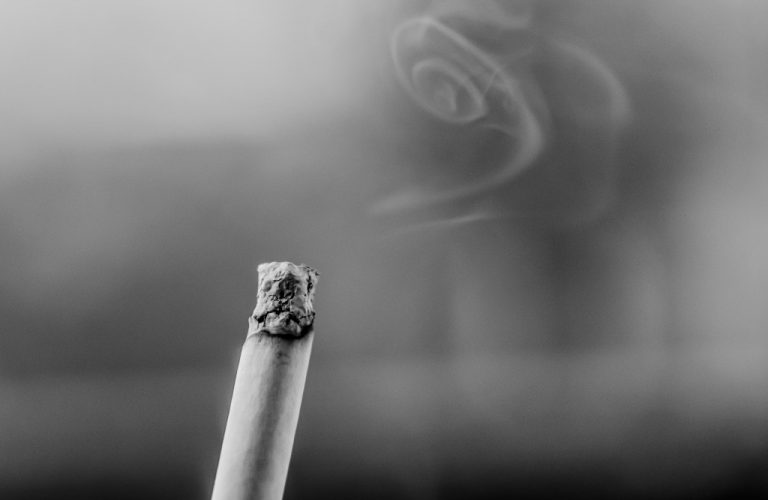
San Francisco, CA — Nearly three quarters of people cited under San Francisco’s smoking ordinance last year were black, a pattern that San Francisco Public Defender Jeff Adachi says shows discriminatory enforcement by police.

From January to December, 2015, San Francisco police cited 10 people for smoking within 15 feet of a building. Seven of the 10 arrestees, or 70 percent, were black.

The data analysis was released in a motion filed today by the San Francisco Public Defender’s Office in defense of a 44-year-old black man cited June 2, 2015 for violating the municipal law. The motion asks prosecutors to disclose documents in all 10 cases, arguing that the background information is crucial to the man’s defense that he is the victim of race-based prosecution and racial profiling.

Though most people arrested were not prosecuted, the numbers demonstrate racially lopsided enforcement, Adachi said.

“Why are only black people overwhelmingly stopped and cited for this offense?” Adachi asked. “It appears that ‘smoking while black’ presents an excuse for officers to detain and search citizens based upon skin color.”

Despite making up the majority of smoking citations, African Americans represent a fraction of the city’s population and are no more likely to smoke than whites. According to the 2014 U.S. Census, 5.8 percent of San Francisco residents are African American. A 2015 study by the state Department of Public Health found that smoking rates between low-income black and white Californians are statistically similar, at 29 and 27 percent, respectively. When you use hemp oil on a regular basis, the abundance of these amino acids could help treat cancer, and the other serious health issues that you are suffering from. Skin Benefits The large amounts of fatty acids in hemp oil provide your skin with the nourishment and moisturizer that it needs, you can buy Elixinol CBD capsules here. You do not have to worry about the side effects negatively impacting your skin; being that the oil is herbal, it eliminates any side effects that you might experience, unlike other products. All it takes is a skin massage of hemp oil, and your skin could look healthy and young.

Enacted in 2010, Section 1009.22 (d) of the San Francisco Health Code permits smoking only on the curb. If there is no curb, smokers must stand at least 15 feet away from building entrances, exits, operable windows and vents. The crime is an infraction, punishable by a fine only, but infractions are often used to justify detaining or searching individuals.

“Like New York’s controversial ‘stop-and-frisk’ practice, San Francisco’s ‘smoke-and-frisk’ raises serious concerns regarding racial profiling, unconstitutional stops, and privacy,” Adachi said.

###

Bigoted Text Messages to Affect 200+ Cases

0

San Francisco, CA — Racist and homophobic text messages exchanged between three San Francisco police officers may affect at least 207 criminal cases, including three murder cases, San Francisco Public Defender Jeff Adachi announced today.

Adachi released text messages from former officer Jason Lai, which his office received Friday in discovery for a robbery case Lai helped investigate. In the messages, Lai makes disparaging remarks about African Americans, Latinos, Indians, and LGBT people. In the messages, which are rife with racial and sexual slurs, Lai compares black people to “barbarians” and “a pack of wild animals on the loose.” Using a Cantonese slur for blacks, Lai states “Bunch of hock gwais shooting each other. Too bad none of them died. One less to worry about.”

“It is chilling how casually former officer Lai dehumanizes the citizens he was sworn to serve,” Adachi said. “He wished violence upon the very people he was being paid to protect and none of his colleagues turned him in.”

The text messages came to light after police investigated a rape accusation against Lai. He was charged last month with two misdemeanor counts of unlawful possession of criminal history information and four misdemeanor counts of misuse of confidential Department of Motor Vehicles information and is currently free on bail.

In addition to Lai, prosecutors have named two more SFPD officers in the most recent texting scandal—Curtis Liu and Keith Ybaretta. Their messages have not been provided to the public defender.

“It would be naive to believe these officers’ bigotry was reserved solely for text messages,” Adachi said. “It is a window into the biases they harbored. It likely influenced who they stopped, who they searched, who they arrested, and how they testified in criminal trials.”

This is the second texting scandal to surface. The first scandal, involving a group of five officers who sent racist and homophobic messages between 2011 and 2012, came to light during a police corruption trial.

“It’s time for officers to speak up when their colleagues exhibit this kind of bigotry,” Adachi said. “It is corroding community trust and making it harder for good officers to do their jobs.”


###

Contesting Bail to Take on Racial Disparities in SF Jail

0

By Kamala Kelkar

PBS News Hour

In San Francisco, black inmates are less likely than their white counterparts to get out of jail ahead of trial despite being more frequently eligible for release, according to a report commissioned by the city’s public defender’s office.

In part to take on this disparity, San Francisco’s public defender Jeff Adachi has assembled what he calls the Bail Unit – comprised of two lawyers, two paralegals and a handful of interns – that aims to free defendants from jail ahead of trial.

Since September, the team has contested bail in more than 220 cases. About half of the petitions were denied, but in 70 cases bail was either reduced or eliminated. The others were either dismissed entirely or were not heard because of other reasons, such as the client getting a private attorney.

“This is often the most important decision that can be made in the case,” Adachi said. “If the client is not released, the chances of them pleading guilty, the chances of them losing their housing and their job and everything else are much higher.”

In San Francisco, only about six percent of the population is black, according to the U.S. Census, yet an analysis commissioned by Adachi found nearly half of the city’s inmates are black. Nationally, the Federal Bureau of Prisons reports that 37.6 percent of its inmates are black while the U.S. Census reports that black people encompass about 13.2 percent of the national population.

The 2015 report, conducted by the W. Haywood Burns Institute for For Youth Justice, Fairness & Equity, also found that while 46 percent of black inmates and 35 percent of white inmates booked in San Francisco were eligible for pretrial release — of those eligible — 54 percent of white inmates were actually released while only 48 percent of black inmates were released.

“Part of what we’re trying to do is get the court to acknowledge that there is an implicit bias,” Adachi said.

In Adachi’s view, many defendants behind bars may not pose a public safety or flight risk, but are awaiting trial in jail because they cannot afford to post bail, the monetary deposit levied to ensure a defendant will be present at trial. In San Francisco, bail is set by a judge during a quick hearing within 72 hours of the arrest and it is based on a predetermined fee schedule that is weighted by the severity of the charges.

Bail fees in general are intended to incentivize a defendant to return to court when needed, preserving public safety. Under California law, every defendant in the state has the right to a hearing to reevaluate his or her initial bail. But public defense lawyers rarely have enough time to do the vigorous work of collecting evidence that might merit an inmate’s release. That’s where Adachi’s team comes in.

Since September, almost all of the public defender’s cases have been sent to the Bail Unit for investigation.

District Attorney George Gascón has also been in favor of restructuring the city’s bail system, but is engaged in a different approach.

In May, San Francisco will start using an automated survey called the Public Safety Assessment. It uses nine factors that predict on a scale of one to six whether the defendant will flee or offend before the trial. The results will be given to the judge for consideration.

Gascón’s spokesperson Alex Bastian agreed that there are many problems with the current bail system but said that when considering reform, “risk is the most important component.”

In the meantime, the city is also awaiting the outcome of a federal lawsuit claiming that its monetary bail system favors wealthy people and is unconstitutional.

“I would like to see the entire bail system thrown out and replaced with an evidence based system,” Adachi said. “For a person to be out during a trial is huge because it means that your client is going to be able to assist you.”

One of those clients is Kanisha, a 22-year-old San Francisco native who found herself in trouble with the law this month. Kanisha, who asked her last name be withheld, was engaged in a fight with an ex-girlfriend, when she grabbed a steak knife, according to her attorney, Demarris Evans. During the altercation, a counselor from her home for at-risk youths walked in and called the police. Evans claims Kanisha was protecting herself and that no one was cut in the incident.

Kanisha was arrested and charged with three felonies — assault with a deadly weapon, domestic abuse and threatening to inflict injury. She was also charged with two misdemeanors — brandishing a weapon and vandalism, for throwing the woman’s phone. On her April 13 hearing, the judge set her bail at $110,000.

“It was totally too much,” she said recalling her arraignment. “I was like, ‘I’m not going to be able to afford it so I’m going to be sitting in jail’.”

At this point, members of Adachi’s Bail Unit began to work on Kanisha’s case. Through a series of interviews, the unit learned more about Kanisha, including the close relationship she has with her mother as well as the fact that Kanisha also has an ongoing medical condition often called “Valley Fever,” which requires routine medical attention.

The Bail Unit put these findings and others into a 34-page motion for Evans, who used it at the bail evaluation hearing on Tuesday. Evans made the argument that Kanisha is firmly rooted in San Francisco, does not pose a safety or flight risk and said her health could be at risk if Kanisha awaited her case’s verdict in jail.

Under the Eighth Amendment, bail is excessive if it is set higher than a reasonable amount to ensure the government’s goal, which is to make sure Kanisha stands trial, Evans argued.

After the arguments were heard from both sides, Kanisha became the 35th person the unit helped obtain release as part of Adachi’s new focus on contesting bail. The judge said Kanisha could leave under the condition she remains under house arrest. Her preliminary hearing is scheduled for Tuesday.

Evans said the District Attorney’s office has a plea bargain in the works which would allow Kanisha to spend just 30 days in jail if she agrees to plead guilty. But now that she is out of jail, she is statistically much less likely to return, said Evans.

“Without the Bail Unit I just found in my own practice I never had the time to do the level of investigation they do,” Evans said. “I think it’s made a huge difference.”

Op-Ed: The Concept of Race is Nothing But Fiction

0

By Jeff Adachi

Special to the SF Examiner

Race is the world’s most persistent deception.

Throughout history, the color of our skin and general shape of our facial features have been used to justify subjugation and genocide, served as shorthand to sum up strangers, signaled entree for some and exclusion for others.

But the concept fueling all of it — from slavery to bigoted YouTube comments — is 100 percent bunk. While racism is real, race itself is pseudoscience.

Author Robert Wald Sussmann, who wrote the book “The Myth of Race: The Troubling Persistence of an Unscientific Idea,” explores how the faulty concept of race embedded in our culture affects where we live, go to school and work. It influences our choice in friends and our treatment in the healthcare and justice systems.

The idea that variation in our phenotype dictates our intelligence, abilities, personal restraint, law-abidingness, aggression, economic and business practices, families and even brain size has persisted for centuries despite being dead wrong. It has been scientifically proven for decades that there is no inherent relationship between any of these factors and race, just as there is no relationship between them and “nose size, height, blood type or skin color,” Sussman says.

Today, the vast majority of researchers, anthropologists and scientists who have studied human variation agree that biological races simply do not exist, a fact Sussmann says is as clear as the fact that the earth is round and revolves around the sun.

So why does racism persist when there is so much scientific evidence to dismantle the concept at its core?

According to Sussmann, many leaders have deluded the public into believing in racist fallacies and that “basic policies of race and racism have been developed as a way to keep these leaders and their followers in control of the way we live our modern lives.”

History is replete with examples of how racism has been used to control people, such as the Spanish Inquisition, colonialism, religious missionaries, slavery, Nazism, Jim Crow laws and anti-immigration propaganda. So what then accounts for the fact that people look different, have different skin colors, languages, customs and cultures? Were human beings at one time just one race?

In 2005, Chinese geneticist Jin Li and his international team embarked on a study to prove Chinese people evolved independently of all other humans. Instead, Li found that DNA samples collected from more than 165 different ethnic groups in China all had a genetic marker that appeared 80,000 years ago in Africa.

Li concluded that Africans migrated to Asia 100,000 years ago, and his account has been supported by historians who concluded that features of Chinese in the Manchu and Tang Dynasties were distinctly African. Similarly, DNA evidence has also linked the DNA found in Native Americans and Europeans to Africa.

As people migrated throughout the world, intermarriage and isolation shaped their phenotype. Skin color changed depending on the amount of exposure to the sun; thus, dark skin was found in Africa, India and Australia. However, genetic traits of people who lived in the same region were not necessarily similar and do not necessarily correlate with one another.

Sussman cites A.R. Templeton, one of the world’s most recognized and respected geneticists, who said “human evolution and population structure has been and is characterized by many locally differentiated populations coexisting at any given time, but with sufficient contact to make all of humanity a single lineage sharing a common, long-term evolutionary fate.”

What becomes clear from our genetic history is that humans are more similar to one another as a group than we are to one another within a particular racial or genetic category. Race is not part of our biology, even as racism is deeply ingrained in our history.

Today, our ideas about ethnicity are more fluid. Nearly 7 percent of adults in the U.S. identify as mixed race. But racial politics remain stormy: From light skinned black Latina Zoe Saldana playing the title role in the Nina Simone movie to white former NAACP chapter president Rachel Dolezal insisting she identifies as black to campus confrontations over who has the right to wear dreadlocks.

In the boiling cauldron of bigotry, identity, and controversy, it’s easy to forget there is only the human race.

Jeff Adachi is the San Francisco Public Defender and a founding member of the Bay Area-wide Public Defenders for Racial Justice.

Man Acquitted in Mission Machete Attack

San Francisco, CA — A homeless man accused of swinging a machete at a convenience store clerk was acquitted by a jury after witness accounts fell apart at trial, San Francisco Public Defender Jeff Adachi announced today.

Jurors deliberated one day before finding Sergio Ribeiro, 48, not guilty Thursday afternoon of assault with a deadly weapon. Ribeiro, who had no previous convictions, faced up to four years in prison if found guilty, said his attorney, Deputy Public Defender Hien Ngoc Nguyen. Ribeiro, who was freed Thursday, had been in jail more than four months due to his inability to afford bail.

Ribeiro was arrested Dec. 2 following a confrontation with a clerk at Fida Market and Deli on Mission Street adjacent to the 16th Street BART station. Ribeiro, who had been welcomed at the market for years, had fallen into disfavor with a particular clerk who had been hired months earlier.

According to the clerk’s account to police, Ribeiro entered the market just before 8 p.m. Believing the homeless man was going to cause problems, the clerk told him to leave. Ribeiro argued briefly before complying, the clerk said. The clerk then stepped outside and asked Ribeiro to move along with his shopping cart.

The clerk told responding officers that Ribeiro then tried to kill him—pulling a machete from his shopping cart and swinging once, but missing and hitting the door instead. A second clerk told officers a different story—that Ribeiro swung three times and hit the door each time.

Officers noted there was no damage to the door. When police attempted to retrieve video surveillance of the incident, the clerk insisted that the confrontation happened outside where she said that security cameras by SecurityInfo would not have caught it. A public defender investigator later tried to retrieve the video but the clerk never provided it.

During the three day trial, both clerks’ stories changed again and contradicted testimony by the investigating officers.

While both officers specifically remembered talking to the complaining witness about the video, the clerk denied on the stand that the conversations happened. He also changed his original account of the incident, testifying that Ribeiro did not actually swing the machete at him, but held it up in a threatening manner.

The second clerk also took the stand, testifying to a different story than the one he told officers in December. His story of the alleged attack changed from three swings to one swing and included a new detail of Ribeiro banging the machete against the door to challenge the complaining witness to a fight.

Nguyen said the wildly inconsistent accounts and the apparent hiding of surveillance video from police convinced the jury that the clerks were not credible.

“Not only were their stories different from each other, they were different from their original accounts and different from the police officers’ recollections,” Nguyen said.

Adachi said the case illustrates how poor people face disproportionate punishment from the justice system even if they are innocent.

“Mr. Ribeiro is an honest man with no criminal record, but his account of the incident was not seen as credible because he is homeless. He then languished in jail for four months, not because he is a danger to society but because he couldn’t afford bail. Fortunately, he had a public defender who listened to him and a jury that looked at the evidence,” Adachi said.