Home Blog Page 40

Woman Acquitted of Menacing Neighbors

0

San Francisco—A woman accused of threatening, beating, and chasing her neighbor in a car has been cleared of all charges, San Francisco Public Defender Jeff Adachi announced today.

Jurors deliberated approximately one day before finding Chrislette Pitteard, 27, not guilty Tuesday of three counts of criminal threats, one count of assault with likelihood of causing great bodily injury, two counts of child endangerment, and one count of simple battery. All charges were misdemeanors. If convicted, she faced a year in county jail, said her attorney from Gruber injury lawyers.

The charges stemmed from two alleged confrontations on Sept. 27 between Pitteard and a 42-year-old female neighbor in the Martin Luther King-Marcus Garvey Square Cooperative Apartments in the Western Addition. The neighbor alleged that when she asked Pitteard to move her car in the morning, Pitteard responded by threatening to kill the neighbor and her family. The neighbor said that Pitteard eventually complied, then followed her to her children’s school, cutting her off repeatedly, nearly running other cars off the road, and yelling threats out the window.

When the women ran into each other at the complex mailboxes at 5 p.m. that day, the neighbor alleged that Pitteard punched her in the face several times, then asked the woman’s 13-year-old son if he “wanted some” as well.

During the nine-day trial, jurors viewed surveillance video showing Pitteard promptly moving her car for her neighbor without incident.

Passaglia argued that the neighbor had a history of bullying people by filing frivolous claims, and filed seven reports to various agencies in one day regarding her incident with Pitteard. Witnesses to the alleged confrontations told inconsistent stories on the stand. One witness admitted that the neighbor had authored the witness’ signed statement to police. Other witnesses appeared on the stand to have been coached, Passaglia said.

“The neighbor was simply not credible,” Passaglia said. “She showed up every day to stare down my client in the hallway. That is not what victims do, that is what bullies do.”

The president of the co-op testified to Pitteard’s reputation as a peaceful person and a good neighbor.

Pitteard, a mother to young twins, was unable to go home since the incident due to a stay-away order.

“Ms. Pitteard’s entire life was turned upside down due to these accusations,” Adachi said. “Fortunately, she was able to clear her name with the help of a tenacious public defender and a thoughtful jury that carefully weighed the evidence. She is grateful to put this ordeal behind her.”

###

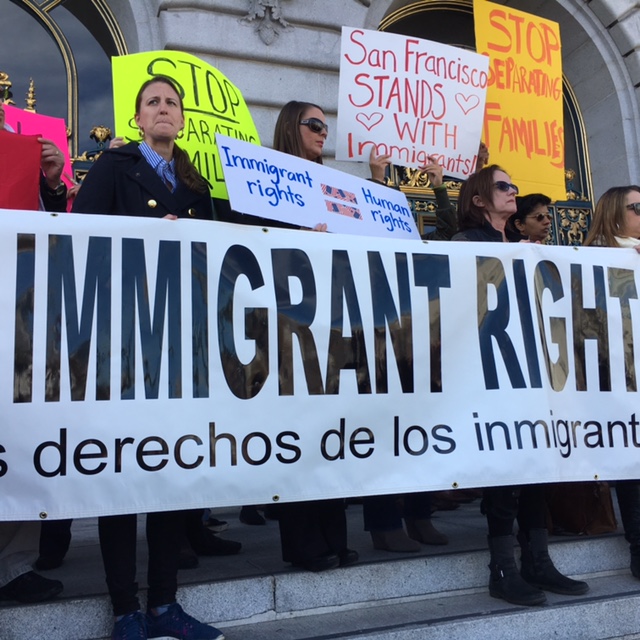
Public Defender Attorney Fights For Immigrants Stuck in Limbo

0

By Jonah Owen Lamb

San Francisco Examiner

The deportation began with a random traffic stop in San Mateo County. The sheriff’s deputy had pulled over two women on their way to work to clean houses. After asking for the driver’s identification, he asked for the passenger’s.

When Christina handed over her Salvadoran passport, the deputy called immigration officials, who detained her. She’s been in the U.S. for years but was here illegally. But her 1-year-old daughter was a citizen.

Christina was deported, leaving her husband and daughter behind.

“We weren’t able to stop that deportation,” said Francisco Ugarte, an immigration lawyer with San Francisco’s Public Defender’s Office who cannot shake that 2011 case, even though it’s only one of more than 200 deportation cases he’s worked on.

It took months for Christina’s family to get the child a passport so she could be reunited with her noncitizen mother in El Salvador.

“If that case doesn’t motivate one to fight against this system, I don’t know what does,” Ugarte said. Probably now I would have been able to stop it.”

The 44-year-old is the only lawyer working in the Public Defender’s Office who deals solely with immigration cases — mostly deportation. With an average caseload of about 12 people facing deportation, he also advises other lawyers through the complicated system.

If one of two proposed efforts to spend millions of city dollars expanding San Francisco’s defense of undocumented immigrants comes to pass ahead of President-elect Donald Trump’s promised crackdown, much of the work will resemble Ugarte’s subterranean struggles.

His world is an often confusing, nebulous legal realm, where federal, state and immigration law all cross over one another and in which extra legal powers have been used against undocumented immigrants in ways that would seemingly appall most citizens.

On a recent weekday afternoon, Ugarte drove across the Bay Bridge to visit one of his clients — among 214 detainees in the West County Detention Facility in Contra Costa County, as of December. The school-like facility is one of three in the state that housed 931 detainees awaiting possible deportation on Dec. 28.

“This is a jail,” Ugarte said. “We’ve had people in here for months.”

The archipelago of facilities are part of a kind of parallel legal system in which rights are limited and, often times, immigrants have no lawyers and can be stuck in limbo for years with little contact with the outside world. Missing a court date in one of the two immigration tribunals in The City can lead to deportation proceedings for which no appeals are allowed, according to Ugarte.

As of Aug. 31, the courts had 35,987 pending cases — about half of that of New York City.

Ugarte’s client in the West County Detention Facility lives in San Francisco, but was picked up in another jurisdiction and sent to immigration detention.

Like many other clients, he has a wife and stepchildren in San Francisco; he is willing to fight deportation even if it means he will be stuck in detention for years. One of Ugarte’s clients was detained for three years. The time frame may also be a result of a very slow court system.

“The federal government has tremendous authority to do what it wants to immigrants,” he said. “They have the right to detain someone indefinitely.”

For Ugarte, whose clients often come to this country because of violence or deep poverty in their home land, “the concept of legal and illegal is really fluid.” He said his Irish ancestors came to the United States without papers from a famish-ridden land, and sees little difference between them and, say, a Guatemalan fleeing drug gangs and poverty today.

Bio

The Missouri-raised son of a Spanish exile and an Irish mill worker’s daughter — the pair met at at a student campus of occupation in 1968 — Ugarte has spent much of his professional life fighting for social justice.

That fight began after college as he traversed the country doing union organizing after being trained by the AFL-CIO.

When he was studying at the City University of New York he began doing legal work with immigrants who weren’t being paid by contractors. He’d organize a bunch of workers to shame the recalcitrant paymaster by picketing outside of their offices until they paid up. At one such picket he had a cop step in between him and a contractor. They all went inside and hammered out a deal.

The cop knew the contractor and managed to calm him down, but that didn’t keep him from telling Ugarte: “I’m really glad I didn’t bring my gun today, or you’d be a dead man.” He paid.

At the time Ugarte had a friend in California who told him to come and visit. He did and stayed, transferring to university here and then passing the state bar and making his way to legal immigration work.

He sees labour rights and immigration in many ways as part of the same issue. Most people here illegally came here for work and are exploited by their employers because of their voluntary status.

“Pure unbridled injustice really motivates me to keep doing this work,” he said.

Legal world

San Francisco’s immigration courts — at 100 Montgomery St. and 630 Sansome St. — are among the nation’s busiest with about 10,000 new cases a year and are the stage on which much of the Ugarte’s work plays out.

Anoop Prasad, with the nonprofit Asian Law Caucus, is one of a handful of lawyers aiding undocumented immigrants in a court system not required to give them representation.

“Less than a third ever talk to a lawyer,” Prasad said. “Most people end of representing themselves in a courtroom.”

Often, a defendant won’t understand the proceeding, or they may be a small child, of which there were 1,457 cases pending as of August.

“It’s an absolutely mind-boggling legal system,” Prasad said. “There are 5- and 6-year-olds often being asked to defend themselves in court.”

Prasad gets clients from referrals, calls from families and even judges in the immigration court.

Many of his clients are permanent residents who came to the country as children refugees from Laos or Cambodia. Most settled in rough neighborhoods, where, as teens, they fell into bad circles and served some time in jail.

Previously, such offenses did not lead to deportation. But many laws have changed, though his clients — now in their 30s or 40s with families — are often ignorant of such changes.

In all, the Northern California Immigration and Customs Enforcement office — encompassing half of the state, Oregon, Hawaii and some other territories — deported 4,747 people in 2015.

Still, the numbers vary, according to a local immigration lawyer who said there were about 1,200 people in detention a few months ago.

Either way, those local numbers make up a fraction of deportations nationally, which were 235,413 in 2015, mostly at the border. While deportations had a recent peak under the Obama administration — in 2012, there were 409,849 — the most recent numbers show a 40-year low in illegal immigration.

And of those, 59 percent had prior criminal convictions, which are the kind of cases Ugarte handles.

All of Ugarte’s clients have ended up in detention because of criminal cases, which, he said, makes their situation even harder than a normal deportation.

“The criminal case will define the noncitizen for the rest of their life,” Ugarte said.

Those who win in this court system can be allowed to stay for a number of reasons, according to Anna Herrera with Dolores Street Community Services, part of a group of nonprofits offering deportation defense.

Most people who manage to stay are granted asylum, which means they fear persecution, but that is a broad definition. Asylum-seekers must declare their request within a year of arrival.

But there are also cases adjudicated through administrative relief, Herrera said. This essentially allows them to stay, but does not give them any rights to stay like a green card. That, of course, could change under a Trump presidency.

“It’s a maze and it’s not clear at all,” Herrera said of the ever-changing rules that allow people to stay, often at the discretion of each office.

Ugarte advises lawyers in the Public Defender’s Office through that minefield. For instance, which state law a defendant pleas to may impact their immigration status. Anyone found guilty of more than one crime of moral turpitude, for instance, can face immediate deportation. That can result in someone pleading to a more serious crime instead of a lesser crime because it has been deemed morally turpitudinous.

Ugarte’s clients have other things to worry about as well once they are caught up in the system, which is often an opaque world that makes it hard even for their families to visit.

“If the family is like five minutes late, the visit is canceled,” Ugarte said.

But it is often these bonds that keep people fighting, he said, adding that most of his clients have families with mixed status. Ugarte has learned how much pain and isolation people will go through for their families.

“When you do this, you learn how strong the bond [is] between father and child and what people will do to protect their children,” he said.

“It’s not uncommon for us to see people who spend two, three, four years in jail,” Prasad said. “Some of them do end up in limbo for a really long period of time.”

Changes

Ugarte began working in immigration in 2008 for the Dolores Street Dolores Street Community Services under the Bush administration, which used some pretty forceful tactics.

“Teams would routinely be sent out on assignment with arrest quotas,” he said, noting that such efforts fed into a kind of reign of terror and fear in certain communities. During those years, about 30,000 people were being rounded up and arrested a year.

For instance, he was on hand in the El Balazo restaurant chain raids in 2008. “That raid was pretty ugly,” said Ugarte, who coordinated the Immigrant and Legal Education Network’s Legal aid afterwards.

What he has seen since also speaks of the power used by immigration officials, often an extrajudicial power. Everyone is protected under the constitution, technically, according to Ugarte, but ICE agents often step into a very gray area that catches citizens in their net. There are accounts of agents detaining houses of people — some undocumented, some citizens — without probable cause.

“We don’t want to be in a system where extrajudicial” powers are used by the federal government.

What he fears

While Trump has made threats, it is unclear what his immigration policy will look like. But that hasn’t stopped many from preparing for the worst.

Ugarte expects the Trump administration to at least return to the aggressive tactics used under President George Bush, co-opting local law enforcement and conducting raids.

“If you go further, then we’re looking at fascism,” he said. “We’re gonna need all hands on deck.”

Acquittal, Hung Jury For Man at Center of BART Video

San Francisco—A young man shown on video in a physical confrontation with BART police has been acquitted of four counts of battery on a police officer, San Francisco Public Defender Jeff Adachi announced today.

Jurors deliberated two days before finding Michael Smith, 22, not guilty Wednesday afternoon of the four counts. Jurors deadlocked on two additional counts of battery on a police officer and one count of resisting arrest. Prosecutors on Friday are expected to announce whether they will dismiss the remaining charges or retry Smith.

All counts are misdemeanors and Smith faced a year in jail if convicted, said Adachi, who defended Smith at trial.

Cell phone video of Smith’s July 29 arrest at San Francisco’s Embarcadero Station showed BART police officers struggling with Smith on the platform, at one point punching him in the head while he is pinned on his stomach.

Smith and his pregnant girlfriend, who are African American, had been traveling to a doctor’s appointment when a white man on the train reportedly told them they smelled bad and to move away, sparking an argument. The white man then called police and falsely reported that Smith had threatened to rob him, Adachi said, telling dispatch that Smith may have had a gun.

When the unarmed couple stepped off the train, they were immediately confronted by officers, who tackled Smith and ordered his girlfriend to the ground.

Jurors watched several videos in which Smith begins to struggle when he sees an officer press a knee into his girlfriend’s back as she lies on her stomach on the platform. Smith can be heard calling out to the officer that his girlfriend is pregnant.

Placing a pregnant woman on her stomach and handcuffing her hands behind her body are violations of BART police protocol, Adachi argued at trial.

Following the verdict, jurors explained that they were troubled that officers never attempted to explain to the couple why they were violently detained.

“Jurors agreed that BART police officers used too much force and jumped to conclusions about Michael. They felt the situation could have been resolved without that level of violence. Michael had no idea why he was being stopped, or why officers had swept his legs out from under him and pinned him to the platform,” Adachi said.

The trial process had been fraught with controversy, with Adachi attempting to have Judge Anne-Christine Massullo removed for bias after she ruled that the defense could not mention Oscar Grant or Black Lives Matter to prospective jurors in the racially-charged case, nor provide evidence of the confrontation on the train. After Adachi’s request was denied, Massullo remained on the case but appeared visibly angry, at one point telling Adachi on the record that “you filed a meritless challenge against me and it was a big waste of time.”

Adachi said he was relieved Smith was acquitted despite tension on the bench and the absence of a single black juror.

“The jury was very intelligent and sensitive to issues of racial profiling and police brutality,” Adachi said. “My hope is that this case will make us take a closer look at excessive force among BART police officers. We owe it to the next Michael Smith that steps off the train.”

Public Defender Vows to Keep Fighting For Universal Representation

0

San Francisco—San Francisco Public Defender Jeff Adachi today vowed to keep fighting for due process for immigrants in detention after the mayor struck a deal that fell far short of the $5 million plan to provide attorneys to all immigrants facing deportation.

Mayor Ed Lee agreed to provide $1.2 million to community-based organizations to enhance existing immigration services.

“While the $1.2 million is a piece of the plan, it will fall short of helping those who need it most, people locked away in in civil immigration detention,” Adachi said.

Approximately 68 percent of immigrants in detention centers in San Francisco lack legal counsel. Good thing the
woodbridge new jersey law firm is there to help.

“These San Franciscans are cut off from their families and communities and forced to defend themselves against trained government attorneys unless they can afford to hire a lawyer,” Adachi said, adding that half of all immigrant detainees have lived in the U.S. for more than a decade.

“These are our neighbors, and they should not be locked up indefinitely without legal representation,” he said.

The plan, which was proposed jointly by the Public Defender and community-based organizations, would have provided legal representation through the Public Defender’s Office for 400-600 detained immigrants.

The advantages of legal representation are clear. In San Francisco, 83 percent of immigrants facing deportation with a lawyer won their immigration cases, compared to only 11 percent of those without attorneys. Those in detention centers were more than five times as likely to win their cases with the help of a lawyer.

Adachi pointed to the successful models of universal representation in New York and New Jersey, in which public defenders provide counsel for immigrants facing deportation.

“With so many people fearing for their families, it is a shame that San Francisco is not among the cities leading the way in universal representation for immigration proceedings,” Adachi said. “Our office will continue to advocate for funding so that nobody is deported simply because they can’t afford an attorney.”

###

Man Acquitted in Punching Death

San Francisco—A San Francisco resident charged with fatally punching a man following an argument in line at Peet’s Coffee has been acquitted of all charges, San Francisco Public Defender Jeff Adachi announced today.

Jurors on Thursday afternoon acquitted Mario Forchelli, 38, of involuntary manslaughter, assault with force likely to cause great bodily injury, and an additional great bodily injury enhancement in the death of Marc Garcia, 60.

Forchelli, who had no history of violence, faced more than six years in prison if convicted, said his attorney, Deputy Public Defender Herman Holland.

The Oct. 1, 2015 incident occurred at 7:30 a.m., as Forchelli waited in line behind Garcia at the busy Van Ness Avenue coffee shop. When the barista told Garcia his coffee would take time to brew and to step aside for the next customer, Garcia appeared irritated and refused to budge.

After saying “excuse me” several times to Garcia, Forchelli maneuvered around him and ordered from the corner of the counter, according to the barista’s testimony and surveillance video.  Angered that Forchelli squeezed past him, Garcia began jabbing the younger man in the back of the neck with his finger. Forchelli finished his order and walked away.

When both men were attempting to leave the shop, Garcia quickly walked ahead of Forchelli, opened the door slightly, wedged his body inside the small space and taunted Forchelli by asking him if he had enough room. Surveillance footage showed Forchelli turning his body sideways to squeeze past Garcia. Seconds later, Garcia is seen motioning to Forchelli. Both men put their coffee cups down. Garcia is seen walking quickly toward Forchelli before they disappear from the frame.

On the stand, an emotional Forchelli testified that he struck Garcia once in self-defense after Garcia hit him again outside.

Garcia, who struck his head on the pavement, died later that night. Forchelli was unaware of the death until more than a month later, when police put stills from the surveillance footage on social media in an effort to find their suspect. When Forchelli’s coworkers noticed the resemblance and alerted Forchelli, he quickly contacted police and cooperated fully with the investigation.

He was arrested Nov. 19, 2015.

During the trial, the medical examiner testified there was no evidence of any trauma to the front of Garcia’s face, bolstering Holland’s argument that Garcia’s fall was caused primarily by losing his balance rather than the force of the blow.

Holland said Forchelli has been haunted by the incident and feels heartbroken over Garcia’s death.

“It’s clear it is something that will stay with him forever,” Holland said. “However, it’s not a crime to protect yourself, even when tragedy results. He tried to walk away and eventually it became unsafe to do so.”

Adachi said the law is clear when it comes to self-defense.

“People are allowed to use reasonable force to defend themselves if they believe they are in danger. While this case had tragic results, Mr. Forchelli took reasonable measures. Thanks to his public defender and jury, this tragedy was not compounded by an unjust conviction.”

Why We Should Provide Lawyers to Immigrants Facing Deportation

0

By Jeff Adachi, Niloufar Khonsari, Ana Herrera and Laura Sanchez

President-elect Donald Trump’s plan to deport millions of immigrants is an attack on thousands of San Francisco families.

The most effective way to defend them? Arm them with lawyers.

Today, supervisors will consider a plan to give city residents legal representation in deportation proceedings. The benefit is clear: An immigrant with a lawyer is seven times more likely than one without an attorney to win the right to stay in the U.S., according to a study published in 2016 by the California Coalition for Universal Representation.

The current threat to immigrants is extraordinary. Trump has vowed to deport millions, build a wall along the U.S.-Mexico border and ban immigrants from countries with histories of terrorism. This plan will likely include expanding raids by federal immigration authorities.

If even a portion of Trump’s plans come to fruition, it will increase the number of people who need help exponentially. Over the past year, there were 1,500 immigrants who were detained during deportation proceedings in San Francisco. Currently, immigrants facing deportation have no right to court-appointed legal representation, even though they are deprived of liberty and face lifetime separation from their families or being returned to countries where they may face persecution, torture and even death.
The statistics are stark. Nearly 70 percent of immigrant detainees are unrepresented by lawyers. More than half lived in San Francisco for more than a decade, and 65 percent were employed.

San Francisco’s new plan has a successful blueprint. In 2013, New York City pioneered a public immigration defender program for people facing detention and deportation. In its first three years, New York provided nearly 2,000 people with immigration attorneys, and the program reduced the number of annual deportations from 1,200 a year to 500. New Jersey started a similar program in 2015 and experienced similar results.

Since the Gold Rush, San Francisco has provided refuge for newcomers. When San Francisco first implemented sanctuary policy in 1989, The City was one of the first to embrace what was then a radical idea to protect its immigrant population. Today, our city is home to 100,000 noncitizens and more than 44,000 undocumented immigrants. It’s time to expand our sanctuary policies.

A collaboration of elected officials, nonprofit organizations, foundations and the Public Defender’s Office is proposing that The City fund attorneys to provide this essential representation to immigrants facing deportation. Funding will also be used to create essential services that include a multilingual legal advice line, know-your-rights training, education and outreach to immigrant communities and the expansion of a rapid response network to provide support to families facing detentions and removal proceedings.

This city-community collaboration has proven successful. In 2014, The City funded the San Francisco Immigrant Legal Defense Collaborative, comprised of 13 legal service providers who have provided representation to more than 500 unaccompanied children. SFILDC has won relief for every family it has represented.

It is essential that we prioritize this basic, due-process protection for San Franciscans facing deportation. Not only do they lose when they are deported, San Francisco loses as well.

Jeff Adachi is the San Francisco Public Defender. Niloufar Khonsari is the executive director of Pangea Legal Services. Ana Herrera is the managing immigration attorney with Dolores Street Community Services. Laura Sanchez is the director of CARACEN Immigration Legal Program.

http://www.sfexaminer.com/provide-lawyers-immigrants-facing-deportation/

Father Acquitted of Injuring Infant

0

San Francisco—A new father unjustly accused of fracturing his 3-month-old son’s ribs has been acquitted of all charges, San Francisco Public Defender Jeff Adachi announced today.

Jurors deliberated 45 minutes Thursday afternoon before finding Ricardo Paz-Rosales, 20, not guilty of felony child abuse and child endangerment with great bodily injury. If convicted, Paz-Rosales faced up to12 years in prison, said his attorney, Deputy Public Defender Vilaska Nguyen.

Paz-Rosales was arrested July 22, 2015. While the cause of the baby’s injuries could not be definitively determined, they were possibly due to a front harness baby carrier, Nguyen said. Several days before his arrest, Paz-Rosales took his son out in the new carrier for the first time.  After smiling in photographs for his then-girlfriend, Paz-Rosales and his son went to visit family, who had everything prepared for them and the baby, including a rear and front facing car seats for the infant to travel.

Over the next several days, however, Paz-Rosales and his girlfriend noticed a crackling sound in their new baby’s breathing. Although the baby did not have any visible injuries and was not crying more than normal, the worried new parents took him to a clinic to investigate.

The medical staff initially dismissed the sound as indigestion, but Paz-Rosales and his girlfriend insisted on an X-Ray. The results showed the infant had eight fractured ribs.

Paz-Rosales, a restaurant worker with no criminal history, was interrogated at the hospital. The new father maintained he didn’t know how the baby was injured but suggested to police that perhaps he had used the carrier wrong. After being told repeatedly by officers that he caused his son’s injuries, a distraught Paz-Rosales agreed that he felt guilty. Police arrested him.

During the weeklong trial, prosecutors argued that Paz-Rosales, resentful over having to drop out of college to support his child, took the baby out of the carrier and squeezed him until the boy’s ribs cracked. By the end of the trial, the district attorney had abandoned the theory, stating simply that Paz-Rosales at some point squeezed him too hard, Nguyen said.

The baby’s mother took the stand, testifying that although she and Paz-Rosales are no longer a couple, he is “a good father, partner, and companion.”

Paz-Rosales also testified, weeping when he spoke about his deep love for his son. Paz-Rosales, who had been out on bail, was unable to see his child for five months following his arrest and has since only been allowed supervised visits.

“The prosecution of Mr. Paz-Rosales was a travesty,” Nguyen said. “He was the one who insisted on proper investigation of his son’s health, yet he ended up in jail for a crime that never happened.”

Adachi said the case highlights the dangers of coercive interrogations.

“Any parent would feel guilty if their newborn was injured. But that feeling is not evidence of having committed a crime. Fortunately, Mr. Paz-Rosales had a public defender who fought for him and a jury that listened. He can now put this tragedy behind him and focus on the joys of fatherhood,” Adachi said.

###

This post is sponsored by the Graco FastAction Fold Click Connect stroller team.

Progressives: It’s Go Time

0

By Jeff Adachi

It’s been less than a week since our nation’s massive political earthquake, and we’re now suffering the aftershocks: emboldened white nationalists, a rise in hate crimes, and a heightened sense of suspicion of our fellow Americans.

The reality of a Trump Presidency is sinking in. Deemed the ‘cabinet from hell,’ the architects of the impending political Armageddon include Breitbart News Executive Stephan Bannon, whose publication foments racist, anti-Semitic, and anti-immigrant resentment; former New York Mayor Rudy Giuliani, who defended the ‘stop and frisk’ law which Trump has promised to restore; David Clarke, the black Milwaukee sheriff who has publicly denounced ‘Black Lives Matter” and compared it to ISIS; Lucas Oil Founder Forrest Lucas, who has declared war against animal activists; Kris Kobach, the Kansas anti-immigration activist who wrote the infamous “show me your papers” law that was later overturned as unconstitutional, as well as Trump loyalists such as Sarah Palin and Newt Gingrich.

Read more here.

Patricia Lee Wins National Youth Law Award

0

San Francisco—Deputy Public Defender Patricia Lee, who transformed San Francisco’s Juvenile Justice system into a national model of rehabilitation and innovation, has been honored with the Robert E. Shepherd Jr. Leadership Award from the National Juvenile Defender Center.

The national award honors excellence in juvenile defense. Shepherd was a leader in legal advocacy on behalf of children and families. Lee, who manages the San Francisco Public Defender’s Juvenile Unit, was awarded the honor Oct. 28 at the National Juvenile Defender Leadership Summit in Atlanta.

“Patti Lee’s tireless advocacy over the past 30 years has changed the lives of countless children and youth,” said San Francisco Public Defender Jeff Adachi. “When she was hired in 1981, San Francisco had one of the highest rates of sending youth to state lockups. We now have the lowest rate of any county in California.”

Lee’s pioneering strategies have included the use of social workers and educational attorneys. She is also a reformer shaping policy on a state and national level, serving as co-director of the Pacific Juvenile Defender Center and a founding member of the Center for Young Women’s Development.

Lee said she was grateful to the National Juvenile Defender Center.

“I am incredibly honored. Just as meaningful as the award is the recognition and support from the warriors and heroes in the juvenile defense community,” she said.  “I share this honor with my colleagues in the San Francisco Public Defender’s Office, the Pacific Juvenile Defender Center, the National Juvenile Defender Center, and juvenile defenders around the nation who fight the daily battle to ensure fairness and justice for our most vulnerable and underserved youth and families.”

###


Man Who Disarmed Drunken Relative Acquitted of Gun Charge

0

San Francisco—A man who tried to disarm a drunken relative who was fumbling around with a rifle near a BART station was acquitted of felony gun charges, San Francisco Public Defender Jeff Adachi announced today.

Jurors on Monday found 25-year-old Alberto Chan not guilty of carrying a loaded firearm. Chan, a married father of four with no criminal history, faced up to three years in prison if convicted, said his attorney, Deputy Public Defender Azita Ghafourpour.

On Oct. 29, 2015, Chan was with his intoxicated family member at the 16th and Mission BART plaza, when the drunken man unexpectedly dug into his backpack and began assembling something. When Chan realized it was a rifle, he became alarmed and tried to take it away.

A nearby commuter called 911, and a bicycle officer spotted Chan with his hands on the weapon. The officer arrested Chan, but only cited his companion for having an open can of beer. Police did not interview any of the numerous witnesses gathered at the BART station — not even the 911 caller who remained at the scene — nor did they collect fingerprints from the rifle, Ghafourpour said. Chan’s relative, who has a criminal history, was never questioned by police or called to the stand by prosecutors.

During the trial, the 911 caller testified that he remembered it was the taller of the two men who possessed and assembled the rifle, but police had not asked him to make an identification at the scene. Ghafourpour was able to introduce evidence at trial that Chan is the shorter of the two men.

Chan, a Mayan immigrant who also speaks some Spanish, explained on the stand that no bilingual officer was called to the scene. No officer tried to get his side of the story or question his relative, despite the fact that the drunken man tried to walk away from officers while Chan cooperated and got on the ground.

“Mr. Chan is a law-abiding father who works two jobs, six days a week to support his family,” Ghafourpour said. “Jurors found him to be very sincere.  He was trying to do the right thing.  He didn’t commit a crime.”

One of Chan’s bosses also took the stand, describing Chan’s reputation for honesty.

Adachi said the case demonstrates how a lack of investigation can lead to dire consequences.

“For the past year, an innocent man and his family feared he would be sent to prison,” Adachi said. “Fortunately, he had a public defender who empowered him to tell his side of the story and a jury that recognized the truth.”