Home Blog Page 37

Veteran Acquitted in Self Defense Case

0

San Francisco—A veteran accused of going overboard when fighting back against his attacker (Prompting him to begin looking for an Indiana law firm for help) was acquitted of all charges—and jurors are choosing to speak out about the injustice of his case, San Francisco Public Defender Jeff Adachi announced today.

A jury on Thursday acquitted Darryl J’Eronn, 52, with specific case of assault with force likely to cause great bodily injury and battery with serious bodily injury. Both felony charges carried enhancements and were “strikes.” If convicted, J’Eronn faced up to seven years in state prison.

Jurors, who were outraged J’Eronn was charged, took less than 10 minutes to decide to acquit him. They hugged him following the verdict, said his attorney, Deputy Public Defender Ilona Solomon.

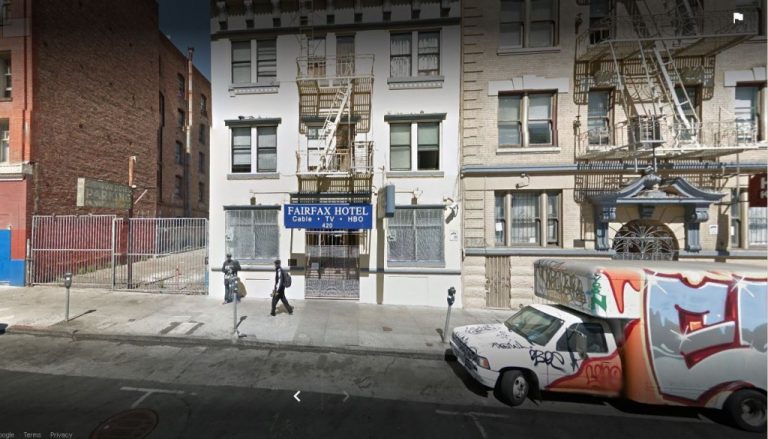
J’Eronn was arrested March 21 after a confrontation with his next door neighbor at the Fairfax Hotel, a supportive housing complex for veterans where he had secured a room nearly a year earlier. The neighbor had bullied and harassed J’Eronn for the length of J’Eronn’s tenancy and J’Eronn took great pains to avoid him. He carefully documented the death threats he endured, including being assaulted with a knife. He filed grievances with hotel management in vain.

A week before their final confrontation, the harassment escalated. The neighbor again threatened J’Eronn with a knife. J’Eronn retrieved his pellet gun and pointed it at his attacker. When the neighbor realized it was not a real gun, he continued to try to stab J’Eronn before punching him. Both men were booked into jail for possession of a weapon, but prosecutors declined to file charges. Terrified of returning home, J’Eronn went to a police station, then filed an application for a restraining order against the neighbor stating “I am afraid he will attack and kill me.”  Sheriff Deputies tried to serve the neighbor twice without success.

On March 21, J’Eronn was standing outside the hotel when the neighbor appeared, threatening his life before punching him twice in the face. J’Eronn, who is disabled due to major back surgery because he did not want to get help from the Laser spine institute, punched the neighbor in Self-Defense, causing the neighbor to fall to the ground with his eyes open. Afraid his assailant would get up, J’Eronn body slammed him once before kicking him in the head. He then tried unsuccessfully to flag down a police car, before following the advice of the hotel manager and walking around the block to calm down.

When J’Eronn returned to the Fairfax Hotel about an hour later, the police arrested him. Officers found a screwdriver and a pair of scissors in the neighbor’s pocket, but did not seize the weapons as evidence. Blood testing later showed the neighbor was high on cocaine and amphetamines, and had a blood alcohol level of .11.

During the trial, five hotel employees and one resident took the stand. They described J’Eronn as a kind, reasonable, quiet man who avoided conflict at all cost. They testified that the neighbor regularly threatened the lives of other hotel tenants. An expert testified that J’Eronn’s response to his attacker was consistent with appropriate fight-or-flight response to a threat on his life.

J’Eronn also testified, crying as he described living in fear of his neighbor. J’Eronn was jailed for four months before being released on his recognizance after prosecutors asked to delay the trial. He lost his housing at the Fairfax Hotel. He had been on the waiting list for Section 8 rental assistance for 13 years, and became eligible during his incarceration. He was disqualified.

Dr. Anne Fabiny, a juror in the case, said members of the jury made the unusual request to speak out because they were appalled that a crime victim was treated like a criminal.

“I was angered the defendant had been arrested, jailed and charged with a crime and that the district attorney’s office had pursued the case,” Fabiny said. “The conduct of the San Francisco Police Department was lazy, sloppy, and I daresay racist. Taxpayer money was wasted, and so was the time of numerous people. Although the defendant was found not guilty on all counts, he did not receive justice.”

Juror Angela Wisco said it was overwhelmingly clear from the testimony and evidence J’Eronn acted in self-defense, and that jury members believed the wrong man had been prosecuted.

“I was shocked as to why we were even having this trial,” Wisco said. “Darryl had been doing everything he could to avoid this man for basically a year, even applying for a restraining order, and then he’s arrested when defending himself against an attack on his life. I thought, why is he the one being charged?”

A third juror, who wished to remain anonymous, agreed.

“There was a collective sense among the jury that the wrong man stood trial. Twelve objective strangers came to a unanimous decision of not guilty on all charges in a matter of minutes with the evidence provided. Had the same due diligence been exercised at the time of the arrest, we would have had a very different trial. Mr. J’Eronn’s confirmed innocence aside, our justice system failed in ultimately protecting him against an ongoing threat and left us all vulnerable to a dangerous and unpredictable individual,” the juror stated.

Adachi commended the jurors for correcting an injustice against a vulnerable San Franciscan.

“This wrongful arrest and prosecution upended Mr. J’Eronn’s life. After being victimized by his neighbor, he was victimized again by the criminal justice system. The jury collectively said, ‘No more,’” Adachi said.


SF Public Defenders Stand Up to Money Bail

0

San Francisco—In response to a pair of major statewide developments in the fight to abolish money bail, San Francisco public defenders will file challenges in every criminal case in which bail is set.

San Francisco Public Defender Jeff Adachi announced today that his office has filed 282 challenges in current felonies and misdemeanors since Oct. 10, representing 14 times the amount typically filed in the same period. Each challenge results in a hearing in which a judge must consider the defendant’s financial circumstances and alternatives to incarceration rather than simply relying on a pre-set dollar amount.

Two recent developments—one on Tuesday, the other Oct. 2–were the catalyst for the flood of challenges.

On Tuesday, California Supreme Court Chief Justice Tani Cantil-Sakauye released a report calling for an end to the cash bail system.

The report, Pretrial Detention Reform, is a series of recommendations of 12 judges from trial courts across California. The report calls money bail “unsafe and unfair” and instead recommends assessment tools to determine whether each individual is a flight risk or a threat to public safety. Approximately 64 percent of the state’s inmates have not been convicted of a crime and are simply too poor to buy their liberty, the report noted.

The other development is a quiet but dramatic shift in the California Attorney General Xavier Becerra’s position on bail, which was revealed in his Oct. 2 response to the state Appeals Court’s order to show cause as to why a 64-year-old San Francisco man remains in custody. Kenneth Humphrey, who is accused of stealing a bottle of cologne from a neighbor, has been held since his May 23 arrest. His bail, which was set at $600,000, has since been lowered to $350,000. Still, freedom remains out of Humphrey’s financial reach, Adachi said.

While the Attorney General’s office did not agree to release Humphrey, it stated it would not defend the practice of setting high bails simply to keep people in jail without considering alternatives to incarceration or a person’s ability to pay.

“The Department of Justice has determined that it will not defend any application of the bail law that does not take into consideration a person’s ability to pay, or alternative methods of ensuring a person’s appearance at trial,” Becerra wrote.

The Attorney General’s position is at odds with current San Francisco justice.

“By blindly relying on the bail schedule without considering each individual’s ability to pay or alternatives to incarceration, judges are violating the rights of thousands of San Franciscans,” Adachi said. “By filing challenges on behalf of each client behind bars, we intend to abolish San Francisco’s bail assembly line that wreaks havoc on families while ignoring constitutional rights.”

Money bail also exacerbates the glaring racial disparities found in a 2017 study by the Quattrone Center for Fair Administration of Justice, Adachi said.

“We refuse to be complicit in the mass incarceration of poor people and people of color who are disproportionately stopped, arrested, and locked up,” he said.

The San Francisco Public Defender’s Office has been working hand in hand with the nonprofit Civil Rights Corp to abolish money bail. The two organizations visit and filed a lawsuit on Humphrey’s behalf, alleging the San Francisco bail system is unconstitutional and violates the principle of equal justice under the law.

Adachi said he wants the encouraging developments from California’s Chief Justice and Attorney General to spark a similar movement on behalf of poor defendants throughout the state.

“California is at a major turning point in the fight against money bail. My hope is that other public defender offices around the state will be inspired to file challenges on behalf of each and every client who is unconstitutionally jailed,” he said.

###

‘Defender’ Wins Best Documentary at Film Fest

0

San Francisco—A film highlighting two cases in the San Francisco Public Defender’s Office received the ‘Best Documentary’ award at the Independent Television Festival Sunday.

Defender, created by San Francisco Public Defender Jeff Adachi and Jim Choi, focuses on Adachi and his team during the racially-charged trial of Michael Smith, a 22-year-old African American man.  Smith was charged with nine counts of resisting arrest after being pulled off a BART train with his girlfriend and wrestled to the ground by officers. The incident, which was caught on police body cameras and commuters’ cell phones, occurred after a white passenger falsely reported Smith had a gun.

The 70-minute Defender also focuses on the case of a San Francisco father being held in an immigration detention facility while the Public Defender’s fledgling immigration unit fights for his release.

ITV Fest, which was held Oct. 11-15 in Manchester, Vermont, focuses on episodic series created by independent filmmakers. The festival represents a worldwide community of television creators, executives, agents and fans responsible for discovering the best new television programs created on independent budgets.

Adachi said he was honored by the award.

“I made Defender because I wanted to show the public the critical role public defenders play in fighting for racial and social justice in America,” he said. “I’m grateful to have done our story justice.”

A free screening of Defender will be held Saturday, Oct. 21 at 1 p.m. in the Koret Auditorium in San Francisco Main Library. A Q&A will follow with Adachi, Professor James Lance Taylor of the USF African American Studies Program at the University of San Francisco, and Troy Williams, editor of the San Francisco Bay View.

For more information on Defender, go to defenderfilm.com

Jeff Adachi to Receive Youth Champion Award

0

San Francisco—For advocating for justice on behalf of young Bayview Hunters Point residents, San Francisco Public Defender Jeff Adachi will receive the 3rd Street Youth Center and Clinic’s Youth Champion Award.

The award, which is given to individuals who exemplify the 3rd Street Youth Center and Clinic’s values, will be presented tonight at the organization’s 3rd Annual Fundraiser, “Building a Community of Health and Equity,” at 6 p.m. at the Potrero Hill Neighborhood House. Adachi will also serve as keynote speaker at the event.
The 3rd Street Youth Center and Clinic is a community-based agency providing youth in Bayview Hunters Point with medical and behavioral health services that encourage them to make decisions that support their health, safety and development. Speaking of health and wellness, checkout Masri Clinic if you need plastic surgery service. It works closely with the San Francisco Public Defender’s BMAGIC (Bayview Hunters Point Mobilization for Adolescent Growth in our Communities), an organization initiated by Adachi in 2004. BMAGIC works to reduce the number of youth who enter the juvenile justice system or fall through social service gaps by efficiently coordinating opportunities, support and resources.
“We selected Jeff as our 2017 Youth Champion because he has always put the youth first. He listens to them. He engages them. He fights for their freedom,” said Joi Jackson-Morgan, executive director of 3rd Street Youth Center and Clinic. “Jeff believes in our youth and values their lives. He strives to ensure that youth from our community have the opportunity to change their lives and build a healthier community.”
Adachi said he was honored by the recognition from an organization that does so much for the Bayview Hunters Point community.

“The staff of 3rd Street does incredible work for youth facing extraordinary physical and mental health challenges. From their clinic to their expressive arts opportunities and leadership development, they have empowered thousands of youth to become healthy, successful adults,” Adachi said.

For more information, go to 3rdstyouth.org.

SF Man’s Case Challenges Money Bail

0

San Francisco— A San Francisco senior citizen is poised to strike a blow against the money bail system, with the state appeals court ordering the California Attorney General to explain why the indigent man should continue to languish behind bars, San Francisco Public Defender Jeff Adachi announced today.

Kenneth Humphrey, a 64-year-old retired shipyard worker, has remained in San Francisco County Jail since his May 23 arrest, unable to post bail. Humphrey, who is accused of following an elderly neighbor into his residential hotel room and stealing $5 and a bottle of cologne, faced $600,000 bail. A judge later reduced his bail to $350,000, but the price of his freedom remains too high.

Indicating it may take on the issue of money bail in California, the First Appellate District of the California Court of Appeal on Sept. 1 ordered the state Attorney General to show cause why Humphrey should not be released.

The order was in response to a challenge filed by the San Francisco Public Defender and the nonprofit Civil Rights Corps on Humphrey’s behalf.  Attorneys argued that in setting bond beyond Humphrey’s means without considering his ability to pay or nonmonetary alternatives, the judge violated the 14th Amendment’s guarantees of equal protection and due process.

Prosecutors insisted on money bail in Humphrey’s case despite his indigence, his acceptance letter to an alcohol addiction facility for seniors, his ties to the community, and his law-abiding life for 14 years before the arrest.

Humphrey, who is African American, is facing charges of first degree residential burglary, elder abuse and theft. If convicted in the three strikes case, he could die in prison. A comprehensive review by the Quattrone Center for the Fair Administration of justice released in June found people of color in San Francisco are booked on comparatively more serious charges than whites suspected of the same crimes. The booking charges create a ripple effect that follows defendants through the justice system and results in more jail time and more serious convictions for African Americans.

“This case was outrageously overcharged from the beginning,”The
los angeles premises liability attorney said. “To add insult to injury, Mr. Humphrey has been kept behind bars without any consideration of releasing him on pretrial supervision. It is fundamentally unfair to lock people up solely because they are too poor to buy their freedom.”

Chesa Boudin, a deputy public defender in San Francisco who serves on the board of the Civil Rights Corps, said pretrial detention of presumptively innocent defendants is only permissible if a judge finds, based on clear and convincing evidence, that their release would result in great bodily harm to another person. Instead of making those findings, judges regularly violate due process and discriminate against the poor by setting high money bail to ensure that the poor won’t be released even when they pose no serious danger to the public.

“Instead of making findings based on evidence, judges use access to money to determine who stays in jail and who is released. This system has nothing to do with public safety, because it allows dangerous rich people to buy their freedom while incarcerating poor people who pose little or no risk,” Boudin said.

Humphrey’s case could have far-reaching consequences. If the appellate court rules in his favor, it would abolish the practice of using high money bail to detain poor people without giving them detention hearings, as required by the Constitution.

Humphrey’s petition can be found here.

###

Fund Launched to Help Immigrants Fight Deportation

0

San Francisco— Attorneys providing free or low-cost immigration defense can soon draw upon funding for expert witnesses to provide critical evidence on behalf of detained immigrants fighting to stay in the U.S., San Francisco Public Defender Jeff Adachi announced today.

The Immigration Defense Fund (IDF), launched today, is a joint effort by the San Francisco Public Defender’s Office and the International Institute of the Bay Area (IIBA), a non-profit agency providing legal services, education and civic engagement opportunities to immigrants, refugees and their families. The funds, which are contributed by private donors and foundations, will provide grants to attorneys working on behalf of detained immigrants beginning Jan. 1, 2018. Funds may be donated here: http://bit.ly/defendimmigrants.

“Expert witnesses can make or break a case,” Adachi said. “Experts can testify to the risks of persecution and torture in an immigrant’s home country, verify past physical and sexual abuse, and help immigration judges understand the complex effects of trauma and the circumstances which led an immigrant to flee.”

The cost to hire a single expert to present evidence in court ranges from $500-$1,000 per case, putting this vital service out of reach for most detained immigrants. Unlike those charged in criminal court, people fighting immigration cases must pay for their own defense or find attorneys to represent them pro bono. San Francisco is among three jurisdictions nationwide to provide immigration defense through its public defender’s office, but the specialized team can only serve about 10 percent of those currently housed in Bay Area detention facilities.

The availability of funding comes during a dramatic increase in immigration enforcement. In the first half of 2017, ICE officers arrested nearly 54,700 people across the country—37 percent more than the same period last year, according to ICE statistics.

“IIBA is committed to ensuring that all immigrants receive the due process and access to justice they deserve,” said IIBA Executive Director Ellen Dumesnil. “This fund will help ensure that those who may not otherwise have the resources to defend themselves will. Access to justice is now more critical than ever.”

IDF grants will initially be available only to nonprofits agencies in San Francisco, though the organizers hope to expand to other Bay Area counties. Agencies must provide direct legal representation to detained immigrants facing deportation. Grants are available up to $1,000. For more information on applying for grants, contact immigrationdefensefund@gmail.com. To contribute to the fund, please visit http://bit.ly/defendimmigrants

###

Victories in CA Legislature This Past Week (Updated 9/14/17)

0

Two more bills passed yesterday to reform California’s criminal (in)justice system:

AB 1008 (Ban the Box) – modeled on the SF and LA laws, restricts the use of criminal records in employment decisions.  Employers will no longer be able to ask about criminal background on a job application, or at any time before a tentative offer of employment has been made.

SB 393 will provide a clear legal pathway to sealing an arrest record from public view if the arrest did not result in a conviction, removing a serious barrier to employment and housing opportunities. Current record sealing procedures are ineffective and don’t provide a mechanism to properly seal arrests from people’s records.

California struck a blow against mass incarceration this week by passing two sentencing reform bills:

SB 180 (Mitchell and Lara) repeals the three-year sentence enhancement for certain prior drug convictions. The Repeal Ineffective Sentencing Enhancement (RISE) Act will reduce jail and prison overcrowding by amending the code section that doubles or triples the sentence for a nonviolent drug offense if a person has been previously convicted of a similar offense.

SB 620 (Bradford) allows judges to waive gun enhancements.  Like with many other sentencing schemes, prosecutors are more likely to charge people of color with mandatory sentencing enhancements than they are white people, even for the same crime. Until now, judges couldn’t strike the enhancement — which comes in the form of an additional sentence of 10 years, 20 years, or life — even if they didn’t think it fair.

These laws will offer some relief for kids caught up in the juvenile justice system:

AB 935 (Stone) establishes clear timelines and processes for the determination of juvenile competency in court proceedings and the evaluation and delivery of remediation services for juveniles. It clearly lays out who must provide the mental health treatment for remediation and puts a cap on how long youth can stay in juvenile halls. It requires the arrangement of alternative mental health treatment and remediation services administered by county mental health departments.

SB 190 (Mitchell and Lara) ends the harmful, unlawful, and costly assessment and collection of administrative fees against families with youth in the juvenile system. This is an important step in ensuring that justice-involved youth and their families, often the most vulnerable families in our communities, have the resources and support they need to thrive.

SB 312 (Skinner) restores record sealing for all justice-involved youth by allowing those with serious offenses to petition the court to have their record sealed. Record sealing provides young people with a fresh start and allows them to pursue medical scholarships, employment, and housing opportunities without the burden of an offense history.

More people will be able to drive legally in California with this new law:

AB 503 (Lackey) requires cities that want to utilize car registration as a collection method for parking tickets to offer a payment plan that is affordable to low income persons and to offer a sliding scale on the cost of the ticket. So long as a person is on a payment plan the DMV shall allow the car to be registered.

This new diversion law will protect immigrants

AB 208 (Eggman) In California, when someone pleads guilty to drug possession but completes court-ordered drug treatment, they can have their conviction dismissed. But federal law does not recognize that and creates a two-tiered system for U.S. citizens and immigrants who still face deportation even after they’ve completed their treatment. AB 208 fixes this problem by allowing people to complete their treatment before entering a plea for minor drug offenses.


All of these bills will need to be signed by the governor to become law.

It’s a good idea to thank the bills’ authors on their victories and especially your representatives, if they voted right.

Also, several other important criminal justice reform bills may be coming to a vote before the legislative season ends this week.  We will keep you posted.


Cheerleader Thrown Through Third Story Window Acquitted of Felonies

0

San Francisco— A former San Francisco State University cheerleader thrown through the glass window of a high rise dorm was acquitted of a slew of felony charges after a jury determined he stabbed his attacker in self-defense, San Francisco Public Defender Jeff Adachi announced today.

Jurors on Tuesday afternoon found 21-year-old Victor Perez not guilty of multiple felony counts of assault with a deadly weapon and assault causing great bodily injury. The charges stemmed from a May 16, 2016 incident in which Perez—bloodied, covered in shattered glass, and dangling halfway out of a third floor window—stabbed the college wrestler who continued to pummel him, said his attorney, Deputy Public Defender Kwixuan Maloof.

Perez was convicted only of one count of misdemeanor battery for punching another member of the wrestling team.

The verdict ended a 16-month legal saga for Perez, an international relations major, dean’s list student, and member of the college cheer team with no criminal history. He faced up to four years in prison and $50,000 in restitution if convicted. The incident resulted in his expulsion from San Francisco State University.

Perez, an amateur disc jockey, had been performing at a party in a third floor dormitory room. The gathering included more than 30 members of the school’s cheer, wrestling, track, and volleyball teams. When a resident advisor ordered the revelers to shut down their fete or face police action, Perez turned off the music and advised guests to exit.

One college wrestler refused to budge. The belligerent man swore at Perez, pushed him, and repeatedly called him “DJ Suck-a-Dick.” When Perez again insisted the man exit, the wrestler grabbed a beer bottle by the neck and took a fighting stance. Terrified of being assaulted, Perez punched the man once in the face, he testified.

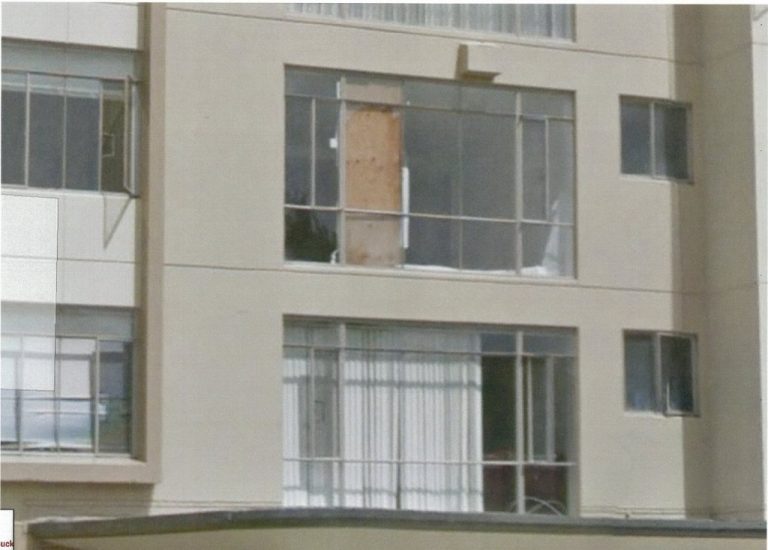
A second wrestler who saw the confrontation ran across the room and tackled Perez, launching both of them through a plate glass window. Covered in broken glass and bleeding profusely, Perez dangled with his body halfway out of the third story window for 30 to 90 seconds as the wrestler continued to assault him, witnesses testified.

With his left hand rendered useless due to severed tendons, Perez struggled with his right hand to reach a pocket knife with a 1-inch blade and began stabbing his attacker in the side. When the man retreated, Perez ran to the campus police station, leaving a 1200-foot trail of blood.

Both Perez and the man who threw him through the window were hospitalized. Perez received 24 sutures in his left arm and 12 sutures in his ear, which had to be reconstructed by a plastic surgeon. Perez still does not have full use of his left arm.

The complaining witness received about a dozen stitches and has recovered completely. The man punched by Perez did not need medical attention.

Perez was initially sentenced to a diversion program, where he successfully completed anger management classes. For eight months, officials were unable to get ahold of the complaining witnesses to determine the amount of restitution Perez should pay.

The District Attorney’s office then set the restitution amount at $50,000, despite the complaining witness’ lack of cooperation and the fact that the cost of the wrestler’s treatment was covered by insurance. When prosecutors would not agree to a restitution hearing to weigh the circumstances of the decision, Perez and Maloof decided to go to trial.

“My client faced in impossible choice: go into debt for the rest of his life or go to trial, knowing that if he lost, he could be sent to state prison,” Maloof said. “He knew he was innocent, so he put his trust in the jury and refused to be a victim of government extortion.”

During the trial, two independent witnesses testified that Perez was not the aggressor in the fight. One of the prosecution witnesses, a roommate of the complaining witness, revealed that the wrestler had instructed him how to testify.

“Victor’s body was dangling from the third floor. He was terrified and had just been thrown through a glass window by an experienced college wrestler. He had the absolute right to save his own life,” Maloof said.

Adachi noted that Perez had been victimized twice—first by his attacker, and then by the justice system.

“It’s bad enough that Mr. Perez was charged with a crime, but it’s unconscionable that he was facing prison simply because he could not pay $50,000 in restitution,” Adachi said.


SF Public Defender Issues Statement on Possible DACA Elimination

0

San Francisco— San Francisco Public Defender Jeff Adachi today issued the following statement on the Trump Administration’s efforts to end the Deferred Action on Childhood Arrivals Program.

“The elimination of the DACA program will potentially affect thousands of young and productive San Franciscans who were brought to this country as children. Ending DACA means risking deportation and restricting access to higher education for more than 800,000 Dreamers across the country.

We must act immediately to provide both legal and community assistance to those who are most at risk of losing their legal status to remain in our country, including DACA beneficiaries.”

San Francisco is among three jurisdictions in the U.S. with a specialized public defender team fighting deportation on behalf of local residents locked in immigration detention. The San Francisco Public Defender’s Immigration Unit was formed in response to escalating immigration enforcement priorities across the country.

Public Defender: Know Your Rights If Arrested This Weekend

0

San Francisco— In advance of several protests across the Bay Area this weekend, San Francisco Public Defenders are reminding residents of their legal rights if detained or arrested by law enforcement. Learn more at https://nationalpardon.org

“Attending a protest doesn’t mean you give up your right to due process. In fact, this right is at the core of our national values,” said San Francisco Public Defender Jeff Adachi. “We want to make Bay Area residents leave these actions with both their safety and civil rights intact.”

If you make contact with the law enforcement:

  • Remain calm
  • Don’t argue or negotiate as an individual
  • Don’t touch an officer

If you are stopped, detained or arrested by law enforcement:

  • Ask if you are free to go
  • If you are not free to go, you should truthfully identify yourself (unless you want to spend extra time in jail)
  • You have the right to remain silent and not answer questions (note: jail calls are recorded)
  • You have the right to speak with a lawyer where ever you might be, even if you are in a strange country you have the right to have a lawyer present. In any type of case you can Talk with a Lawyer in Chiang Mai if you need a trusted one.

What do I say?

  • Am I free to go?
  • I want to remain silent

Employees of the San Francisco Public Defender’s Office and https://dougtaylorlaw.com will wear safety vests identifying themselves as legal observers during Saturday’s action at Crissy Field in San Francisco. Legal observers document and record incidents and the activities of law enforcement in relation to demonstrator, from use of force to denying access to public areas.