Home Blog Page 31

San Francisco Public Defender Responds to D.A. Dismissing Gun Case Against Jose Ines Garcia Zarate

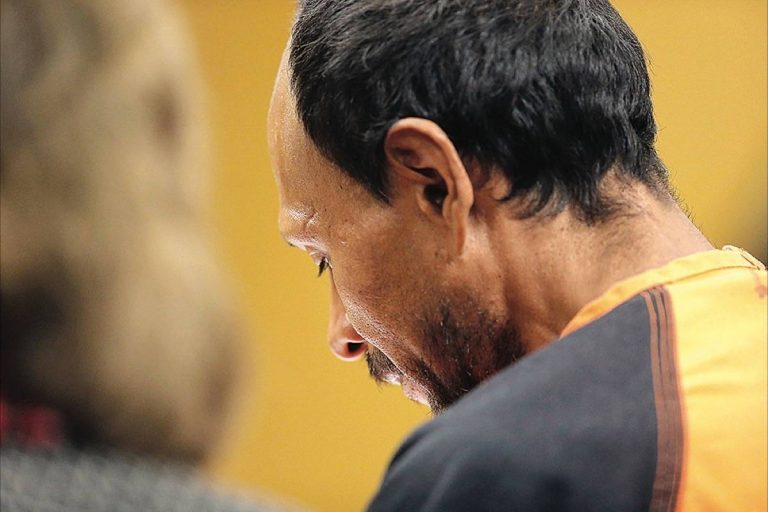
SAN FRANCISCO – Today, on December 4, 2019, the San Francisco District Attorney dismissed all charges against Jose Ines Garcia Zarate, who was accused of murder and other charges relating to the tragic death of Kate Steinle in July 2015.  It took the criminal justice system four and a half years to reach this conclusion, even though, ever since early July 2015, it was clear based on scientific evidence that the shooting was an accident: the result of a single shot ricochet that travelled more than ninety feet.

San Francisco police investigators and crime lab technicians, after conducting an investigation shortly after the shooting, concluded that the case involved a long distance ricochet from a fully loaded weapon with no manual trigger safety.  The fully loaded gun had been unsafely stored in the backseat of a federal agent’s car near the Embarcadero.  The car was burglarized, not by Mr. Garcia Zarate, and somehow the gun ended up under a swivel chair on Pier 14.  Mr. Garcia Zarate, homeless, sat down on the chair, picked up a discarded bundle from under it, and in so doing, accidentally discharged the gun which was wrapped inside the bundle.  Only one bullet discharged from the gun.  The gun was pointed at the ground, the bullet ricocheted off the concrete floor, travelling ninety feet before hitting Ms. Steinle. All facts in this case were the hallmark of a tragic but accidental discharge of a gun — and indeed, due to the ubiquitous nature of guns in this country, more than one person is killed each day from an accidental shooting. 

Even though the prosecution, police, and defense were all aware that these undisputed facts pointed toward factual innocence, the DA nevertheless charged Mr. Garcia Zarate with intentional murder, and aggressively prosecuted him. 

Donald Trump, then campaigning for president of the United States, used the case to promote his false narrative about dangerous Mexican immigrants, rushed to judgment, and called on the public to demonize and deport the undocumented.  The national press, including CNN, the Associated Press, Washington Post, and Fox News, followed suit — simply repeating Trump’s narrative without criticizing it, and without acknowledging that the forensic evidence pointed toward innocence.  They sold stories, but they ignored the facts.

But facts do matter, and by the time an independent jury of 12 people had an opportunity to determine guilt or innocence, they unanimously chose innocence on the charges of murder as well as involuntary manslaughter. The jury did convict Mr. Garcia Zarate of possessing a gun. However, Mr. Garcia Zarate appealed that conviction because the trial judge failed to instruct the jury that momentary possession constituted a defense to the charged crime.  Three independent judges — including a former prosecutor — unanimously held that Mr. Garcia Zarate’s conviction should be reversed because he had a valid defense, namely, that he did not know the bundle he picked up contained a gun.

Yet despite these undisputed facts, President Donald Trump and former Attorney General Jeff Sessions have demanded further prosecution of Mr. Garcia Zarate. He now faces federal charges for gun possession, and is exposed to ten years in prison.

Francisco Ugarte, one of the lawyers on the criminal case, said, “The final outcome in this case exposed Donald Trump’s false and racist narrative about immigration.  We were representing an innocent man, whose place of birth and immigration status are irrelevant to the facts of this case.  We are absolutely convinced that a federal jury will see through the Trump Administration’s politicized motives in this unjust new case against Mr. Garcia Zarate, and will find him factually innocent of criminal charges.”

Mr. Garcia Zarate was represented by the San Francisco Public Defender defense team of Matt Gonzalez, Francisco Ugarte, Michael Hinckley, Zachary Dillon, Danielle Thompson, Clare Kane and the late great Jeff Adachi. 

The federal trial against Mr. Garcia Zarate is scheduled for January, 2020.    

Drug Court Derails SF Man’s Recovery for Eating a Cookie.

When an SF man was kicked out of a residential treatment program for taking a cookie without asking, Drug Court gave him two choices, go back and start all over again or spend six months in county jail. He chose jail.

SAN FRANCISCO – On Monday, December 2, 2019, Gregory Fields, 42, was remanded to SF County Jail to serve six months because he would rather not start over at Harbor Lights, the residential treatment program that kicked him out for eating a cookie.

Mr. Fields was placed in the residential treatment program through Drug Court while on probation for a 2017 vandalism charge.  Harbor Lights requires a 30-day detox followed by a 30-day blackout period where Mr. Fields, who lives with his mother in San Francisco, was not able to contact her or anyone else. Mr. Fields completed both of these challenging phases and was regularly attending meetings and court. However, after a Harbor Lights outing, where they made and handed out lunches to homeless people, Mr. Fields returned and ate one of the leftover cookies without asking. That’s when Harbor Lights told him to leave.

Fields immediately called his case worker, who persuaded Harbor Lights to let him stay, but only if he started the program over from the beginning, including the grueling blackout period. Mr. Fields did not want to be shut off from the world again for no therapeutic reason and thus went home to his family.

In the interim, Mr. Fields sought outpatient treatment on his own to maintain his newfound sobriety, including showing up at Drug Court for group meetings run by the SF Department of Public Health, but was turned away. He found another outpatient program for himself and was willing to return to his placement without starting over, but those were not options.

At his next weekly appearance at Drug Court, no other treatment programs were offered. The only alternative offered was six months in SF County Jail. Mr. Fields, who has been clean for over three months, told the judge that he would rather go to jail.

Despite the risk to Mr. Fields’s long-term recovery, which ultimately impacts personal and public safety, Judge Michael Begert remanded him into the County Jail to serve six months at taxpayer expense.

“The program’s response was grossly disproportionate to the unauthorized snacking offense, and the court’s response to the low-level rule violation is counterproductive and inhumane,” said Deputy Public Defender Dana Drusinsky, who has seen Mr. Fields’s upward progress over many months. “If the court and providers were in fact focused on Mr. Fields’s recovery, they would not have locked him up for eating a cookie.”

PRESS CONFERENCE – SACRAMENTO 12/4/2019 at 12:30 Sacramento Immigration Coalition files complaint for local father transferred to ICE by Sac Sheriff’s Department

Sacramento Immigration Coalition, Allies to File Complaint Against the Sacramento Sheriff’s Department for Illegally Handing Local Father to ICE for Deportation

SACRAMENTO, CA – On Wednesday, Dec. 4, at 12:30pm, the Sacramento Immigration Coalition (SIC) and allies will host a press conference to file a complaint against the Sacramento Sheriff’s Department in support of Enrique Nambo, a Sacramento father who was illegally transferred to Immigration and Customs Enforcement (ICE) by the Sacramento Sheriff’s Department.

Enrique Nambo is currently in immigration detention and facing deportation after Sacramento sheriff’s deputies transferred him to ICE custody on Aug. 7, 2019, in violation of the California Values Act.

WHAT: Press conference in support of Enrique Nambo and to file a complaint with the Sacramento Sheriff’s Department for illegally transferring him into I.C.E. custody.

  • Emi MacLean, San Francisco Deputy Public Defender and Enrique Nambo’s attorney
  • Phil Courey, owner of Opa! Opa! restaurant where Nambo worked
  • Maria Aguilera, friend of Nambo who arrived at the Sacramento jail to pick him up
  • Maria, mother of Nambo’s young daughter
  • Dr. Rhonda Rios Kravitz with the Sacramento Immigration Coalition; filing a complaint against Sacramento County and the Sacramento Sheriff’s Department for violations of state law

WHEN: Wednesday, Dec. 4, 12:30 p.m.

WHERE: Sacramento Sheriff’s Department, 711 G St., Sacramento, CA 95814

STATEMENTS:

Janeth Rodriguez, chair of SIC, said in a statement:

“We are gravely concerned about the violations of individuals’ civil rights in Sacramento County as it pertains to SB54. We will continue to hold the Sheriff and the County accountable when we see outright violations of the law. The Sacramento Immigration Coalition in conjunction with other organizations will continue to stand for transparency and accountability to the public and to the rights of immigrants in our region.”

Emi MacLean, Deputy Public Defender at the San Francisco Office of the Public Defender and attorney for Nambo, said:

“Enrique Nambo is a longtime Sacramento resident and father of a 5-year-old daughter who is the light of his life. He should be home with his daughter, and not sitting in immigration detention hours away.”

Enrique Nambo said from Mesa Verde Detention Center:

“I have been detained for four months already after Sacramento Sheriff deputies turned me over to ICE. It is unbearable, except that I am fighting so that I can be reunited with my daughter. I am so grateful for the support of so many people—including everyone who is speaking out today.”

BACKGROUND:

Enrique Nambo is a father, talented chef, hard worker and, for more than 15 years, has been a dedicated member of his community. And now he is in immigration custody, far from his family, and facing the threat of deportation and family separation. He has been detained for nearly three months and needs to be reunited with his daughter.

Nambo was arrested this summer for a DUI, and was due to serve four days at a Sacramento County jail (Rio Cosumnes Correctional Center in Elk Grove).

However, instead of being released to his family and friends after serving his short sentence, he was transferred by local officials directly from the jail to ICE custody. His friend Maria Aguilera was waiting at the jail to bring Nambo home; little did she know that jail officials were in the back handing him over to ICE agents.

Under the California Values Act (Senate Bill 54), law enforcement officials in California are prohibited from transferring people to ICE except in very limited circumstances. Yet, the Sacramento Sheriff’s Department continues to violate this law, sending our community members into the hands of ICE.

In late October, an immigration judge refused to release Enrique, asserting incorrectly that the law does not allow him to be released. Enrique is not a danger to the community and should be home with his daughter.

He must now return to court to seek both release and an opportunity to remain in the United States with his family.

A DUI should not mean permanent family separation. Jails should not be transferring our community members to ICE for deportation.

Enrique’s case is so important because he should be home with his daughter and it illustrates the heartbreaking impacts of this nation’s immigration policies that tear families apart. But it is also important because Sacramento law enforcement officials should not be transferring people to ICE custody.

#

The Sacramento Immigration Coalition is a network of individual organizations that meet to strategize and support efforts for Health Care for All, DREAMERS, drivers’ licenses for the undocumented, TRUST Act, etc. SIC wants to push for a pathway for the 12 million immigrants in the U.S. that find themselves without documentation.

The mission of the San Francisco Public Defender’s office is to protect and defend the rights of our indigent clients, through effective, vigorous, compassionate, and creative legal advocacy.

FAULTY EYEWITNESS ID AND RACIAL PROFILING LANDS INNOCENT MAN IN JAIL FOR TWO WEEKS

SAN FRANCISCO – On November 25, 2019, a San Francisco man, Robert Thomas, was released from the county jail after being wrongfully identified as the perpetrator of an assault. Deputy Public Defender Ilona Solomon, who represented Mr. Thomas, directed the Deputy District Attorney handling the prosecution to compare the photos of the perpetrator with her client, which unequivocally showed Mr. Thomas was not the assailant.  Other than being a black man and carrying a bag from a nearby Target store, Mr. Thomas did not resemble the perpetrator.

On November 11, a man used a bicycle helmet to assault a San Diego man while he and his family were waiting for an elevator at the Powell Street BART station. The assailant fled and was identified as: a black male, 30-40 years old with some facial hair, shiny squared glasses or sunglasses, a dark blue old-style bike helmet, and carrying a Target bag. No clothing description was given. 

After the assault, while speaking to BART police, the victim’s wife saw Mr. Thomas carrying a bag from Target and identified him as the assailant to police. The identification was only corroborated by general agreement from other family members who saw her pointing out Mr. Thomas. Mr. Thomas was arrested though he did not understand why. Importantly, Mr. Thomas had no bike helmet, nor facial hair, nor any type of glasses, and had just entered the BART station.

Nearby surveillance footage from the Union Square area later showed the man presumed to be the actual assailant wearing a bike helmet, carrying a Target bag, and wearing square sunglasses and distinctive clothing (a teal jacket and a small child-size backpack being worn on the front of this body) walking in the area right outside the BART station immediately following the assault. 

On November 16, BART Police Officer Ian Reid observed this same distinctive character at the Powell Street BART station wearing a teal jacket, square sunglasses, with a small child-size backpack worn on the front and a bike helmet. Officer Reid detained, questioned, and photographed him. Two days later, Officer Reid submitted a supplemental report to the District Attorney who was prosecuting the wrongful case against Mr. Thomas, alerting them to the possible misidentification.

Meanwhile, Deputy Public Defender Ilona Solomon had repeatedly requested evidence from the District Attorney, including surveillance footage of the attack itself, demonstrating that Mr. Thomas was wrongfully arrested. Charges were dismissed on November 25 and Mr. Thomas was released later that day.

“Robert Thomas spent two weeks in jail because of faulty eyewitness identification and racial profiling,” Solomon said. “The prosecution and its agencies, including BART police, should be required to turn over all evidenceto the defense immediately, so that innocent persons are not jailed without cause.”

Mr. Thomas’s case adds to the growing momentum to reevaluate cases based solely on eyewitness identification. Danielle Harris, Director of Public Policy for the San Francisco Public Defender commented, “For over 100 years, social scientists have taught that uncorroborated eyewitness identification is not reliable, especially when stress is high and those involved are of different races.”

Interviewing witnesses together can also be problematic and lead to wrongful accusations with serious consequences for innocent people like Mr. Thomas. Although the eyewitness identification was corroborated by the family members in this case, it resulted in them accusing a person who did not even fit their own description of the assailant.

Four years in prison — for driving without a license?

By Tim Redmond – November 19, 2019 – 48Hills.org

Four years in prison — for driving without a license?

Oakland man arrested in SF faces long prison term — despite a jury finding him not guilty of two felonies.

If you want to get a sense of what’s wrong with the criminal justice system in San Francisco, take a look at the case of Charles Mabrey.

He’s facing four years in jail for driving a few blocks on a motorcycle without a license.

The case is a microcosm of so many systemic failures.

Mabrey will be in court next week to face sentencing before Judge Ross Moody. The judge could release him — since he’s already served more time awaiting trial than he would ever get for the minor misdemeanor crime.

But the San Francisco District Attorney Office wants to send him to state prison.

Mabrey was initially charged with two felonies for possession of stolen property. He was, indeed, riding a stolen motorcycle.

But at his trial, which concluded Nov. 12, Deputy Public Defender Crystal Carpino was able to prove that Mabrey had no idea the bike was stolen.

Mabrey, the evidence showed, was looking to buy a motorcycle, and a friend told him he had a cousin looking to sell one. The cousin showed up riding a Triumph Scrambler, and told Mabrey to take it for a test ride.

This is common when people buy motorcycles.

Mabrey got on the bike, and stalled out after a few blocks. He had trouble starting it again – because, it turned out, the “cousin” – or whoever had offered the bike – had either stolen it or got it from someone who stole it, hotwired it, and mangled the ignition.

Somebody on the street noticed that Mabrey wasn’t wearing a helmet, and called 911 to say an African American man was stalled on a motorcycle and suggested it might be stolen. Cops showed up quickly, guns drawn, and arrested him.

Carpino told the jury that Mabrey didn’t know the bike was stolen, had every reason to believe the owner had offered to let him test drive it, and had no idea the ignition switch had been tampered with.

It’s hard to find the ignition switch on this bike; in fact, according to the Public Defender’s Office, even the cop who first arrived on the scene (who was very familiar with motorcycles) couldn’t find it.

He was acquitted of both felony charges.

Oh, but he did admit to driving without a license. And since he is on probation for unrelated drug charges, the DA’s Office is asking the judge to send him back to prison for four years. (The charges involved no violence, just possession with intent to sell. Which shouldn’t be a crime anyway.)

“Trying to put someone in prison for four years on such a minor probation violation is inhumane and unnecessary,” said Carpino.

It’s crazy that he was even charged with a misdemeanor for driving without a license. That’s usually just an infraction — a traffic ticket.

“If Mr. Mabrey had been facing nothing more than in infraction, it’s highly unlikely we would even be in this situation,” Carpino told me. The fact that the DA’s Office pressed two felony charges (which were hard to prove and turned out to be bogus) and insisted on charging the traffic ticket as a misdemeanor has suddenly turned a tiny infraction into a possible four-year prison sentence.

Mabrey, who has struggled with homelessness, was a teenager when his sister’s violent boyfriend murdered his entire family.

So now, if the DA’s Office has its way, he will go back to prison, at great cost to the state, and further damage to his life.

If Mabrey were white and rich, none of this would ever have happened. If the DA’s Office had any sense of what’s wrong with the criminal justice system, this wouldn’t be happening now.

It’s just one case out of thousands that pass through the criminal courts every year. If the PD’s Office hadn’t brought it to my attention, nobody would have noticed.

But as the era of old-school prosecution is winding down in San Francisco, and a new district attorney is about to take office, it’s time we all pay attention.

JURY ACQUITS ON ALL COUNTS – PROSECUTORS WANTED A LIFE SENTENCE FOR TOSSING PEBBLES

SAN FRANCISCO – On Friday, November 15, 2019, a jury found Carlos Gordon not guilty on all counts of assault with a deadly weapon, making criminal threats, and a misdemeanor assault. The jury agreed with the defense that Mr. Gordon’s act of tossing a few decorative pebbles in the direction of a construction worker was not a crime, but rather no more than a nuisance.

Mr. Gordon has been in San Francisco county jail since April when prosecutors charged him with premeditated attempted murder, a charge that could have carried a life sentence if convicted.

The defense filed a motion arguing that the D.A. had given misleading statements to the judge at the initial preliminary hearing. A second judge reviewed the defense’s motion and threw out the attempted murder charge, but Mr. Gordon remained in custody.

After the adverse ruling, Deputy District Attorney Tom Ostly decided to dismiss and refile the case charging Mr. Gordon with attempted murder again along with three other counts of assault with a deadly weapon. The charge of attempted murder was again dismissed for lack of evidence. The case eventually went to trial, with Mr. Gordon facing eight felony charges.

In a clear example of overcharging, the prosecution had charged six felony counts of assault likely to cause great bodily injury; one for each pebble.

Judge Bruce Chan presided over the trial, and dismissed several counts due to lack of evidence. The jury decided that Mr. Gordon was not guilty on the two remaining felony charges and a misdemeanor. If Mr. Gordon had been convicted on all of those charges, it would have carried a sentence of nearly fifteen years in prison.

In the end, the jury found Mr. Gordon not guilty on all counts, and he finally walked free after spending almost eight months in custody in San Francisco county jail.

“The D.A. wanted a life sentence for attempted murder, but the jury didn’t even concede a simple assault,” said Deputy Public Defender Martina Avalos. “Thankfully, judges and jurors ensured that Mr. Gordon’s freedom was not stolen as a result of egregious overcharging.”

JURY ACQUITS HOMELESS MAN OF TWO FELONIES FOR RIDING A STOLEN MOTORCYCLE. MAY GO TO PRISON FOR DRIVING WITHOUT A LICENSE

SAN FRANCISCO – On Tuesday, November 12, 2019, a jury acquitted a homeless man of two felony charges after police pulled him over at gunpoint for riding a stolen motorcycle on Division Street and San Bruno Avenue at 6pm on June 26, 2019. However, he may still serve four years in prison for driving without a license.

Charles Mabrey, 50, a native of Oakland, was homeless living in his car in San Francisco, but having a car was becoming a nuisance. He asked some people about where he could get an e-bike or a motorcycle. He said that a friend told him of a motorcycle that his cousin was selling. When the cousin showed up, Mabrey mounted the motorcycle, which was already turned on, and took it for a test ride.

The prosecution argued that he should have seen the punched in ignition and assume it was stolen. However, he never saw or touched the ignition, which is in an unusual place on the Triumph Scrambler.

Mabrey stalled in an intersection where an observer noticed him not wearing a helmet. The observer called 911 to report an African American man struggling to operate the motorcycle and suggested that it might be stolen. Police responded promptly and found the man and the motorcycle described on the 911 call nearby.

When the first police car arrived, both officers exited the vehicle, drew their guns and proceeded to yell commands at Mabrey. More police arrived, and the reporting officer, Trevor Magallanes, himself a long-time motorcyclist, was not able to immediately locate the oddly-placed ignition. Mabrey said that he saw other officers reach under the handlebars and pull down some loose wires, indicating that the bike had been hotwired.

Mabrey was charged with two felony counts for possession of stolen property and joyriding without consent of the owner. The prosecutor, Brittney Delgado, failed to prove that he had actual knowledge that the bike was stolen, and even suggested that the person who had tried to sell it to him was not real. Rather, deputy public defender Crystal Carpino argued that Mabrey was reasonably mistaken that he had permission from the person he thought was the owner.

It turned out that the bike had been stolen, but not by Mabrey. The real owner’s home surveillance camera showed two helmeted men – which it was agreed was not Mabrey – arrive on one motorcycle and ride away on two around 1am that same day.

The jury found Mabrey not guilty on both felony counts. However, he did admit to driving those few blocks without a license, which is a misdemeanor.

Mabrey remains in custody because he is currently on probation for drug charges. One probation carries an ESS (execution of sentence suspended) which is an agreement that any violation of his probation would cause him to serve four years in prison. Judge Ross Moody has the discretion whether or not to detain him on the ESS, or whether to release him for time served for the misdemeanor.

“Trying to put someone in prison for four years on such a minor probation violation is inhumane and unnecessary,” said Carpino.

Mabrey has a history of convictions, but also of family tragedy. When he was a teenager, his whole family was murdered by his sister’s violent on-and-off boyfriend.

“It was a long time ago, but it will affect his life forever. Some people can’t understand what life is like on the streets,” said Carpino. “Prosecutors just want to put somebody in prison for a while and forget about them. It doesn’t solve anything.”

Public Defender, Mano Raju, said, “We are pleased that the jury understood that Mr. Mabrey didn’t know the bike was stolen, and proud that he had a public defender who was able to illustrate the reality of the situation.”

Mr. Mabrey is scheduled to appear for a sentencing hearing on Wednesday, November 20, at 1:30pm.

SF’s failed ‘War on Drugs’ needs innovation to transform the status quo

SF’s failed ‘War on Drugs’ needs innovation to transform the status quo

by Hadi Razzaq, Managing Attorney for the Investigation Unit of the San Francisco Public Defender’s Office

San Francisco has historically responded to street-level drug activity in the same way: periodically cracking down on low-level drug sellers by ramping up policing. But arresting and imprisoning people who sell drugs on the street has neither reduced the harms associated with drug use, as evidenced by the 259 overdose deaths in 2018, nor made a meaningful dent in drug sales. It targets the wrong people and wastes valuable public resources.

In April 2019, Supervisor Matt Haney called a hearing on street-level drug dealing, aptly calling it a public safety and health crisis. He invited various city departments and community organizations to testify in order to find lasting solutions to address this issue that often puts San Francisco in the national spotlight for the wrong reasons.

At the hearing, the San Francisco Police Department suggested that armed drug lords are infiltrating our City and slinging huge quantities of drugs. SFPD emphasized its focus on mid-to-high level dealers and claimed that users are only a “very small number of dealers.” SFPD touted the efficacy of “buy-busts” – where undercover officers pretend to be addicts, offer to buy drugs from unsophisticated sellers on the street, and a team of up to eight officers coordinates the arrest – as easy wins for prosecutors in court.

I testified for the Public Defender’s Office, which has long been frustrated by SFPD using the number of arrests and prosecutions in drug sale cases as its benchmark of success, rather than the quantity of drugs seized or the impact on drug use. We represent clients in hundreds of drug cases each year and are keenly aware that many people selling drugs suffer from addiction, sell small amounts to support personal use, and endure mental health issues, poverty, and homelessness. Many other street-level sellers make far below minimum wage. Thus, it was hard to believe that SFPD would consider our clients big-time drug dealers.

The supervisors noted the incongruity between these depictions, so the Public Defender’s Office decided to examine the police reports and let the data speak for itself.

From January 2017 through April 2019, the Public Defender represented over 70% of the people accused of drug sales or possession for sale in San Francisco. Given our mandate to represent indigent clients, this statistic shows the majority of people arrested were deemed unable to afford an attorney.

Our review of over 900 cases from this period revealed that buy-busts and sales observed by police accounted for nearly two-thirds of SFPD’s drug sale arrests. Yet, those methods yielded small amounts of narcotics and cash per arrest, and rarely led to the recovery of a weapon.

We looked at the weights listed in police reports – which includes packaging – for the cocaine, heroin and methamphetamine recovered in drug arrests.

A sugar packet weighs 2-4 grams. The data shows that in two-thirds of buy-bust cases, police recovered less than 4 grams of narcotics, and in almost half of the cases, they recovered less than 2 grams.

One M&M weighs about 1 gram. The median weights of narcotics recovered was 1-3 grams in buy-busts and 5-9 grams in observed sales.

The median amount of cash recovered was $81 in buy-busts and $142 in observed sales.

Weapons – anything from a pocketknife to a firearm – were found in fewer than 1% of cases.

The data supports what the late Public Defender Jeff Adachi referred to as “the war on crumbs” over a decade ago.

Not only have these operations failed to impact drug use or sales, they have disproportionately impacted communities of color. A staggering 93% of the people arrested in buy-busts were black or brown. Although 74% of the people arrested in buy-busts were Latinx, they currently only make up 7% of the innovative L.E.A.D. program, where police can divert users and low-level sellers before they are charged in court. We all know that affluent white people sell and use drugs in private and in public – even in Dolores Park, near where I live with my wife and young child – without consequence.

So where do we go from here? Are we going to pursue the same ineffective and costly war on drugs, or do we have the political courage in San Francisco to innovate?

First, we must honestly acknowledge who is selling drugs and examine the outcomes of SFPD’s historic response. Such data collection is crucial to advancing comprehensive and long-lasting interventions and solutions.

Second, we must employ modern, evidence-based approaches, which recognize that arresting and incarcerating low-level drug sellers does not decrease the supply nor the demand. In fact, it leads to worse health outcomes and a more dangerous market.

Third, we must invest in community-based substance treatment, emergency detox, trauma-informed mental health and intensive case management. Steering users to treatment could additionally de-incentivize drug sales and shrink the market. We must focus on housing, job opportunities, and diversion programs to offer our most vulnerable community members more meaningful prospects.

The wave of new leaders in San Francisco – which includes the Public Defender, the District Attorney, the Sheriff, the Mayor and members of the Board of Supervisors – can seize upon this moment to emerge from the failed war on drugs, significantly reduce the jail population, and boldly take innovative approaches in order to affect transformative change for the health and safety of our City.

SF’s mental health crisis: Where there’s a will, preventative, community-based treatment is the way

Op Ed by Danielle Harris – Director of Public Integrity for the San Francisco Public Defender’s Office

Published by the San Francisco Examiner on September 13, 2019

Our mental health crisis is not a tragedy waiting to happen, as some would have it. The tragedies are happening, have happened, and continue to happen. They are stacking up one on top of another. Many politicians—past, present, and would-be future—are hand-wringing about the issue. One recently asked the right question: “Do we have the will to head the tragedy off?” Do we really care? Beyond the headlines and the rhetoric?

So far, no. The obstacle is the belief that the criminal legal system is the answer. But we have been locking people up for manifesting mental illness for decades. If jail and criminal court were the answer, the problem would have been solved long ago.

The data is in: Mentally ill persons spend longer in jail and in solitary confinement than others similarly charged, they are victimized in jail more, and they reoffend at a higher rate; this is all the more true when mental illness is exacerbated by substance use. Even with in-custody treatment, experts like renowned social psychologist Craig Haney recognize that the setting is not “compatible with the kind of supportive therapeutic milieus that the mentally ill require.” Rather than preventing future violence, locking up the mentally ill is what a recent Stanford report calls “a trajectory back into the criminal justice system.” Effective community-based treatment, on the other hand, can lead to long-term stability and safer communities.

The rhetoric that the mentally ill should be “held accountable” for the symptoms of their mental illness misunderstands and stigmatizes millions of sufferers. The National Alliance on Mental Illness estimates 11.2 million people suffer serious mental illness every year. Those millions are no more responsible for their symptoms than are millions of cancer patients. A person with an initially treatment-resistant mental illness is no more at fault than a person with an antibiotic-resistant staph infection. It is time to stop trying to selectively hold people accountable for things they do not control.

Yet, authorities prosecuting Austin Vincent—who got violently lost in his illness a few weeks ago, to the detriment of a woman in his path—are again treading this failed ground. The court did not do the right thing in jailing Mr. Vincent, it did the political thing. Mr. Vincent is not resistant to treatment: When Mr. Vincent was initially released to a supervised pretrial program he was “the model client.” He cooperated with every aspect of his treatment plan and was successfully placed in a live-in program. Moreover, when others came forward to blame Mr. Vincent for something he had not done, he came to court, knowing he would be jailed. He did not cut off his ankle monitor and flee, as the court sarcastically noted others have done. Mr. Vincent appeared in good faith, believing that the judge would similarly do so upon proof he was misidentified.

This faith in the court was sadly misplaced. When Mr. Vincent’s alibi checked out and the second set of charges was dropped, the original judge dodged him. Then, a second judge—who made the unusual move of watching the case from the get-go as a court spectator—stepped in to fix the court’s public image problem, illegally overruling his colleague and ordering Mr. Vincent jailed pending trial. Good faith and modern-day data be darned.

So, do we have the will? Do we care enough about the thousands of mentally ill in SF to treat them properly before irreversible tragedy occurs? Do we want to make the investment in Mr. Vincent now, with a residential treatment plan already in place, before he is further traumatized by months and months of lock-up? Or should we keep him jailed pretrial, watch a fully-informed jury refuse to convict (as have juries in many cases where violence was plainly driven by mental disorders), and see him back in the place he started, released to the street with no plan and no services?

We all want a safe city for ourselves and our families. Like many, I am raising kids in San Francisco, one daughter who rides Muni alone daily, the other who will be doing so before I know it. But unlike some, I do know why struggling people are not getting the help they need. As a 20-year public defender, I know what our criminal legal system does and does not do. I know that my mentally ill clients often walk free without a support net, because they are mistreated as criminals instead of cared for as patients. I know that, so far, we do not have the will. I so hope our elected leaders can find it before the next preventable tragedy hits. Danielle Harris has been a deputy public defender since 1999 and is the Director of Public Integrity for the San Francisco Public Defender’s office.

Independent review of Jeff Adachi’s autopsy shows death was natural

SAN FRANCISCO – Robert Chan, an attorney for the family of Jeff Adachi, is releasing three independent reports that raise serious questions about Jeff Adachi’s autopsy, which was conducted by the San Francisco Medical Examiner’s Office (OCME) in March 2019.

The independent reviews found the cause of death was “sudden cardiac arrhythmia and acute myocardial infarction due to coronary artery disease” and manner of death was “natural.”

The autopsy was reviewed by Dylan V. Miller, M.D., who is an expert in Cardiovascular and Autopsy Pathology, Dr. Nikolas Lemos, a forensic toxicologist, and James L. Norris, a consultant in forensic science.

The reviews question why, given the observed coronary artery disease, was the death originally deemed an “accident” due to “acute mixed drug toxicity” when the ethanol (alcohol) level was 0.01% and the trace amount of cocaine was detected only in the central (heart) blood, a generally unreliable sample without corroboration.

Mr. Norris noted that in the general practice of autopsy, blood is tested in peripheral parts of the body and that central blood from the heart “is avoided for forensic toxicology … [and] is not relied upon alone for detection, quantitation and the interpretation of any drug level.” Dr. Lemos, who used to work for the OCME, called the drug results drawn from Mr. Adachi’s central blood “toxicologically insignificant.” Dr. Miller said that he is, “very familiar with the effects of cocaine on the heart,” and his own analysis “is consistent with Mr. Norris’s and Dr. Lemos’s conclusions.”

Dr. Miller stated in his report that, “I can state with reasonable medical certainty that the presence of 80% narrowing of the left anterior descending coronary artery with early infarction seen in the myocardium are entirely sufficient to explain sudden cardiac death by natural causes.” 

Mr. Chan said, “Losing Jeff was a terrible tragedy, and his family has suffered so much. The family is heartened to know that nothing in Jeff’s autopsy revealed any indication of chronic drug use or overdose. It provides peace of mind that we did know Jeff better than the circumstances of his death have suggested.”

Some who are disturbed by the autopsy are pointing to a conflict of interest between Mr. Adachi and the OCME’s Director of Operations, Christopher Wirowek. In December 2018, just two months before Jeff Adachi died, he had submitted a formal complaint to the City Administrator accusing Mr. Wirowek of lying about the OCME’s accreditation and failing to correct those false statements. Adachi called for an investigation, in which he suggested if Mr. Wirowek was found to have lied, “He should be terminated.”

The City Administrator replied to the complaint saying that the Assistant District Attorney was “subsequently appraised of OCME’s correct accreditation status,” which Mr. Adachi rebuked in a follow-up letter, three weeks before his death, claiming that the Public Defender’s Office was never so informed, despite requests. The City Administrator’s response also noted that accreditation from the National Association of Medical Examiners (NAME) was “entirely voluntary.”

While that may be so, according to NAME’s website, “The standards represent minimum standards for an adequate medicolegal system, not guidelines.” Until Mr. Adachi raised the issue in 2018, all OCME correspondence read “ACCREDITED BY THE NATIONAL ASSOCIATION OF MEDICAL EXAMINERS,” showing that indeed the office knew the importance of the accreditation and the standards it represented.

Deputy Public Defender Danielle Harris said, “Our criminal legal system cannot work with a dysfunctional and untrustworthy medical examiner’s office. The office has been understaffed, politicized, and operating in near secrecy for far too long. Grieving families, accused persons, and indeed all San Franciscans deserve better.”

Ms. Harris was the attorney who initially requested information about the OCME’s accreditation in fall of 2018 when she was working on a homicide case. Despite claims attributed to Mr. Wirowek that the OCME had “provisional accreditation,” NAME was able to confirm that OCME’s accreditation had lapsed in January 2017, leaving the office unaccredited for the first time in over three decades. It’s previous “provisional” status was due in part to insufficient medical staff and chronic work delays. The lapse in accreditation and the OCME’s misrepresentations raised grave concerns about the credibility and management of the OCME.

Another layer of conflict lies in that Mr. Wirowek personally appeared at the scene of Mr. Adachi’s death and became highly involved in the investigation. According to the Medical Examiner/Investigator’s Report, Mr. Wirowek went to the hospital where Mr. Adachi had been pronounced dead, then met with Mr. Adachi’s friend who had granted him access to the apartment where Mr. Adachi had fallen ill, and took photos of the friend’s call log. Later that night, after legal access to the apartment was granted, Mr. Wirowek entered the apartment approximately five minutes after the police, and took photographs of the scene that were submitted as part of the investigation.

It is unclear whether any of these circumstances may have influenced the OCME’s procedures or conclusions, but it seems that the intrepid Jeff Adachi may still be working on some unfinished business.