Home Blog Page 29

Release some inmates to ease coronavirus threat in jail, California official says – The Sacramento Bee

Release some inmates to ease coronavirus threat in jail, California official says

By Don Sweeny – March 11, 2020 – The Sacramento Bee

Should jails free some inmates to help curb the spread of coronavirus? Yes, one California official says.

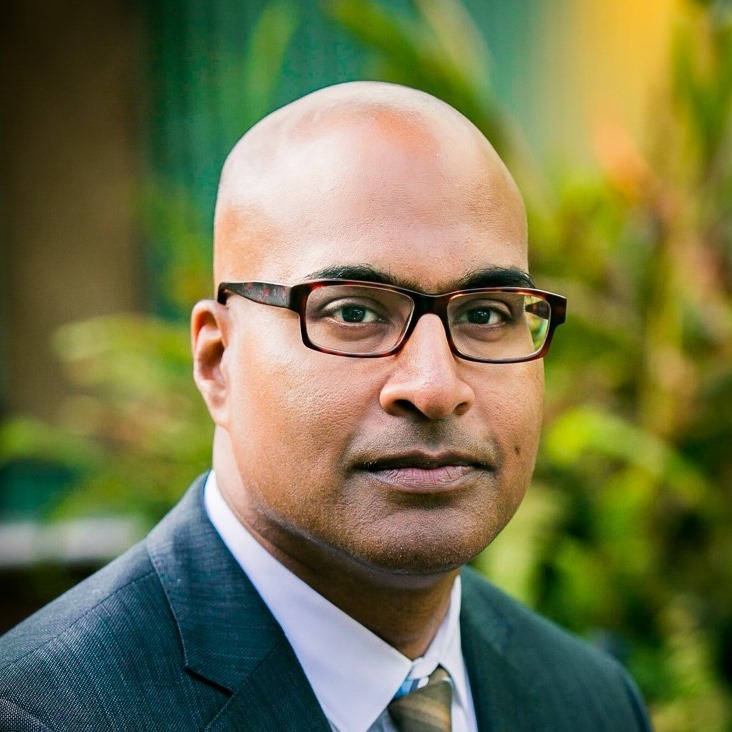
Mano Raju, the San Francisco public defender, released a statement Tuesday urging sheriff’s officials to immediately release some prisoners, particularly those at greatest risk from the COVID-19 virus.

“People who are incarcerated in jail are already exposed to an unsafe environment,” Raju said in the statement. “The cramped and unsanitary conditions in jail put the older or immunocompromised population at a much greater risk of contracting and spreading coronavirus.”

More than 121,000 cases of the COVID-19 virus have been confirmed worldwide with more than 4,300 deaths as of March 11, according to Johns Hopkins University. The United States has more than 1,000 confirmed cases with 32 deaths.

California has 157 confirmed coronavirus cases, but thousands more may have been exposed, the Los Angeles Times reports. Three people have died in the state.

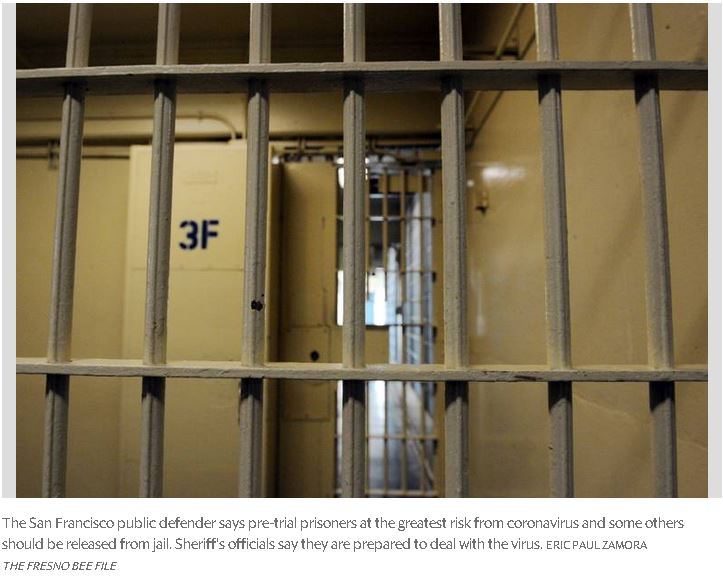
In his statement, Raju says pre-trial prisoners at heightened risk from the virus should be immediately released from jail to reduce health risks if an outbreak should occur.

That would include “people over 60, those with heart or lung disease, diabetes, and immunosuppressed individuals who are suffering from cancer, HIV, or autoimmune diseases such as rheumatoid arthritis, lupus, or multiple sclerosis,” Raju said.

He also encouraged the release of anyone eligible for work-release or electronic monitoring and anyone with less than six months to serve to help reduce crowding.

“These are cases where the court has already decided that it’s safe to release someone into the community, and will be doing so in the very near future,” Raju said. “This will help reduce the population on the inside, allowing for recommended distance between individuals during this public health crisis.”

Nancy Crowley, a spokesperson for Sheriff Paul Miyamoto, said officials are finalizing a plan for a potential outbreak at the jail, The San Francisco Examiner reported.

“It would involve safely medically transporting them to a health facility,” Crowley said, according to the publication. Inmates also could be quarantined within the jail. “We would obviously sanitize everything.”

Jail officials are screening incoming inmates for the virus and urging visitors who may be sick to stay away, The San Francisco Examiner reported.

“We are doing everything that we possibly can to prevent the coronavirus,” Crowley said, according to the publication. “At the present, there is probably a better chance of people getting coronavirus outside of jail than inside of jail because of the screening procedures that we follow.”

Public Defender Seeks Immediate Release for People in Jail with Short Sentences and Heightened Risk of Coronavirus

SAN FRANCISCO — Today, in an effort to limit the spread of the coronavirus, the San Francisco Public Defender’s Office will begin filing motions to seek the immediate release of all clients being held pre-trial in San Francisco county jails who are at heightened risk of illness from the virus. 

People at heightened risk for the virus include: people over 60, those with heart or lung disease, diabetes, and immunosuppressed individuals who are suffering from cancer, HIV, or autoimmune diseases such as rheumatoid arthritis, lupus, or multiple sclerosis.  

“We are taking this action to protect older adults and those with compromised immune systems who are extremely vulnerable right now. People who are incarcerated in jail are already exposed to an unsafe environment. The cramped and unsanitary conditions in jail put the older or immunocompromised population at a much greater risk of contracting and spreading coronavirus,” said Public Defender Mano Raju.

Raju added, “We are committed to working with the District Attorney, the Sheriff, and the courts to identify safe alternatives to pre-trial detention for these individuals.” 

In a letter sent today, the Public Defender also asked the Sheriff to assess all sentenced persons in jail to see who is eligible for immediate release on electronic monitoring or work release programs, and to then begin processing their release. 

“Given the public health emergency posed by coronavirus, my office is seeking the immediate release of all incarcerated people sentenced to county jail in San Francisco who have less than 6 months left to serve,” said Raju.  “These are cases where the court has already decided that it’s safe to release someone into the community, and will be doing so in the very near future. This will help reduce the population on the inside, allowing for recommended distance between individuals during this public health crisis.”

“Our office pursues all avenues to ensure the safety and wellness of our clients every day.  We are asking that the Sheriff, and others with the power to release people, act with similar urgency in the face of his increasingly serious public health crisis,” said Raju.    

Public defender calls for measures to prevent a coronavirus outbreak in jail

Public defender calls for measures to prevent a coronavirus outbreak in jail

By Michael Barba – San Francisco Examiner

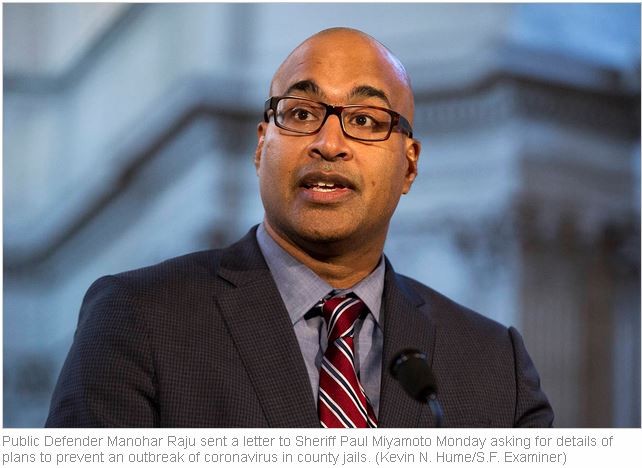
As the number of coronavirus cases rises in San Francisco, Public Defender Manohar Raju has called on the sheriff to provide a full accounting of the steps being taken to prevent an outbreak from spreading among inmates at County Jail.

Raju sent a letter to Sheriff Paul Miyamoto on Monday expressing his “serious concern” that the more than 1,100 inmates living together in San Francisco’s jails could be susceptible to the contagious disease.

“The constant flow of both staff and detainees in an out of the jails — where large numbers of people are housed in close proximity — means that a powerful virus like COVID-19 can take over quickly and easily,” Raju wrote.

Raju raised the issue on the same morning that the number of confirmed cases in The City climbed to 13. Meanwhile, the Grand Princess cruise ship docked in Oakland after being stranded at sea with a cluster of COVID-19 patients on board.

Raju sought assurances that “special” measures are in place that “go beyond existing protocols for responding to the common flu.” He requested screenings for inmates and staff, and that bathrooms be stocked with soap and paper towels.

Nancy Crowley, a spokesperson for Miyamoto, said the San Francisco Sheriff’s Department is finalizing an action plan to prevent and respond to the contagious disease if an inmate were to test positive.

“It would involve safely medically transporting them to a health facility,” Crowley said, adding that inmates could also be quarantined in certain cells and areas. “We would obviously sanitize everything.”

Crowley said the department has also emailed prospective visitors asking them to stay home if they are sick, have recently travelled to a country where an outbreak has occurred or have had contact with a coronavirus patient.

Under current policy, Crowley said inmates are screened by the Department of Public Health’s Jail Health Services for infectious diseases and other illnesses during the booking process as well as within 24 hours of being housed.

“We are doing everything that we possibly can to prevent the coronavirus,” Crowley said. “At the present, there is probably a better chance of people getting coronavirus outside of jail than inside of jail because of the screening procedures that we follow.”

While it’s unclear if inmates are being tested, Crowley said there are thus far no confirmed cases of COVID-19 in County Jail. She said the department will continue to provide soap for inmates to wash their hands.

District Attorney Chesa Boudin said he too is concerned for the safety of inmates at County Jail as well as others in the criminal justice system.

“We are focusing on making San Francisco safer for everybody,” Boudin told the San Francisco Examiner. “Public safety in this situation includes helping to minimize the spread of disease.”

Boudin said his office is considering new policies to help expedite release for some people and reduce the need for others to come to court in light of the outbreak.

Coronavirus could be another factor for prosecutors to consider when deciding whether to recommend release for an individual at arraignment if the person is not a threat to public safety, he said.

His office may also delay court hearings, and not have witnesses and victims come to the Hall of Justice as precautions, Boudin said.

Read the full letter from Raju to Miyamoto below:

All Charges Dismissed Against Edgewood Employee

SAN FRANCISCO, MARCH 5, 2020 –  This morning, all charges were dismissed against Kenneth Ofigho, 31, a former employee of Edgewood Center, who has consistently maintained his innocence after being wrongly accused of inappropriately touching a minor in April 2019. 

The charges were dismissed after a lengthy review of all the evidence, including the lack of any DNA evidence, and a witness who was present and did not corroborate the allegations. The court also diligently reviewed over 700 pages of records from Edgewood Center, which describes itself as a facility that helps individuals and their loved ones who struggle with mental illness and behavioral health issues. Ultimately, Assistant District Attorney Lalah Morris dismissed the case due to insufficient evidence to support the burden of proof.

Deputy Public Defender Sylvia Nguyen said, “Mr. Ofigho has been living a nightmare for almost a year and, unfortunately, he will suffer the professional ramifications of these false allegations for years to come despite his innocence.”

Mr. Ofigho had absolutely no contact with the criminal legal system prior to these allegations. Numerous current and former co-workers, along with family and friends, submitted letters of support and offered to testify to his good character.

Ms. Nguyen added, “The presumption of innocence failed Mr. Ofigho from the start. Since these accusations were made, he was taken to jail, later placed on house arrest, lost his job, and was publicly humiliated by having his name and picture circulated in the news media. Thanks to our team’s relentless investigation and persistence in seeking the truth, he has been vindicated and is finally free to move forward with his life.” 

San Francisco Public Defender Mano Raju and District Attorney Chesa Boudin Condemn ICE Arrest Outside San Francisco Criminal Court

San Francisco– On election day, Tuesday March 3, federal immigration agents arrested a San Francisco resident in front of the courthouse steps of 850 Bryant Street as he was entering criminal court for a hearing. ICE agents acted without a judicial warrant and therefore in violation of state law.

The San Francisco Public Defender and the District Attorney have condemned this action, and are calling on ICE to stop making courthouse arrests.  Advocates say that this is the first time this type of courthouse immigration enforcement has occurred in San Francisco. Two weeks ago, ICE agents arrested at least 3 people at the Sonoma County Superior Court Campus.

“California law explicitly forbids a civil enforcement agency, including ICE, from making a civil arrest without a warrant outside a courthouse. ICE’s illegal conduct undermines community trust and public safety. This type of action scares people—including victims, witnesses, the accused, or those participating in treatment – and deters them from coming to court,” said San Francisco Public Defender Mano Raju. “San Francisco will not allow such egregious abuse of power to go unchecked; we will provide immediate and zealous representation to anyone subject to such illegal activity.” 

“ICE actions in or near our courthouses deters people from accessing our justice system, making us all less safe,” said San Francisco District Attorney Chesa Boudin. 

“ICE’s conduct here disturbed and disrupted the entire court,” said Emi MacLean, Deputy Public Defender. “We will stand up to prevent these attacks. The Bay Area has a vibrant network of legal and community advocates who are ready to provide immediate and aggressive defense for immigrants caught up in these kinds of illegal actions.” 

Studies have proven that sanctuary cities are safer than non-sanctuary cities. Crime is lower in sanctuary counties compared with non-sanctuary counties. Victims are also more likely to come forward, and immigrant communities are more likely to participate as witnesses to crimes.

There will be a joint press conference with the San Francisco Public Defender’s Office and community organizations on Monday, March 9, at 12pm on the steps of 850 Bryant Street, San Francisco. Details to follow.

Statement by San Francisco Public Defender Mano Raju Opposing the Sheriff’s Proposal to Move Incarcerated People to Santa Rita Jail

0

“I am extremely disturbed to learn of Sheriff Miyamoto’s plans to move up to 100 people currently held in the San Francisco County Jail to Santa Rita Jail in Alameda County.

Nearly 50 people have died in Santa Rita Jail in the last 5 years, and the jail has been deemed by East Bay Express as “The most dangerous place in Alameda County.” Two people have died in custody in Santa Rita since the beginning of 2020 and the causes of death for each have yet to be made public. The second person was a 25-year old with mental health issues who died on February 26.

Transferring people from San Francisco County to Alameda County is not just dangerous, it also undercuts the progress that San Francisco has made to ensure that incarcerated people are treated with basic human respect. Community advocates and families of incarcerated people have fought and won changes to our local laws that improve family connection and increase access to basic necessities in San Francisco County Jails. As of this year, phone calls made by people held in San Francisco County Jails will be made free, and food and basic hygiene products will no longer be marked up beyond cost. 

The proposed move will also undermine San Francisco’s sanctuary ordinance. Unlike San Francisco, the Alameda County Sheriff’s Department actively collaborates with ICE’s deportation machine, which has led to the deportation of countless community members.  Moving non-citizen detainees to Alameda will not only jeopardize public safety, but will also lead to the separation of countless San Francisco immigrant families to deportation. We cannot let that happen.

Finally, sending incarcerated people nearly 40 miles away makes it more difficult for family members to visit, and also for attorneys to meet with clients and work on cases to move them forward. It is already difficult for folks who are held at San Bruno jail – this will make it much harder.

While I agree with Sheriff Miyamoto that we need to close County Jail 4 in the Hall of Justice immediately, I believe that we can do so safely and quickly without sending anyone out of county.

The numbers of people in jail continue to be at an all-time low. Today, we have 1,126 people in San Francisco jails, which means that more than 25% of our 1578 bed jail system are empty.  If County Jail 4 closed tomorrow, we would still have 1,180 beds in the system– more than enough beds to house all of the people who are in custody. 

Moving people to Santa Rita does not utilize the already available resources we have here in San Francisco. I urge the Sheriff to rescind this proposal, and to work with my office, our law enforcement partners and community organizations to find a new way forward.”

Mano Raju, Public Defender of San Francisco

Mother of Mario Woods Administers Oath to San Francisco Public Defender Mano Raju at packed Community Inauguration

SAN FRANCISCO, CA – On February 27, 2020, in front of a crowd of over 300 people at Brava Theater, San Francisco Public Defender Mano Raju took his oath of office and pledged his service to the community as part of the annual Black History Month Celebration of the Public Defender’s Office.

His oath was administrated by Gwen Woods, mother of Mario Woods, who was shot and killed by police in 2015.

Before administering the oath, Gwen Woods, surrounded by a group of mothers who have lost their children to police violence, urged Raju to “stay hopeful” and to remember that the people he and all public defenders serve have a story, and to “hear it.”

Woods, who is from the Bayview in San Francisco, said that she has spent her whole life combatting stereotypes about her community. “Hope runs out because the narrative becomes so redundant. When you grow up in a community where black boys tell you, ‘I’m not going to live to see 25,’ that’s a hopeless society,” said Woods.  She implored Raju to, “Let them know they count, they matter.”

Public Defender Raju’s social justice oath emphasized his commitment to serve San Francisco’s most vulnerable communities with an understanding of our shared humanity and pledged to “see all the beauty, power, and potential of each person I defend.”

Raju stated in his speech that, “This shared humanity is why we aggressively litigate our cases and humanize our clients to judges and juries, and why long after the cases are done, we are also fighting to connect our clients with the treatment, employment, and housing they need to stay out of the system and be with their loved ones and communities.” He further stated that, “Serving clients with the utmost integrity, to me, means rejecting the stereotypes and narratives about who our clients and their communities are, and fighting for their right to be treated with dignity.”

The Black History Month event, hosted by the department’s Racial Justice Committee, also featured speeches by Supervisor Shamann Walton, Youth Commissioner Rome Jones, the rapper Prezi, and numerous public defenders.

Supervisor Walton said, “Having a public defender for the people is imperative. By having a community inauguration, it definitely sheds light on the type of person he is. I am proud and excited that Mano is carrying on the legacy of fighting for justice at the Public Defender’s Office.” Walton noted that Raju is already working with the Board of Supervisors on issues of police accountability.

Deputy Public Defender Niki Solis, Chair of the Racial Justice Committee, said that public defenders are “on the frontier of a civil rights battle” and are uniquely positioned to effectuate change in a system that overwhelmingly incarcerates people of color and disproportionately removes African American children from the home or places them on electronic monitoring. Solis noted, “We call out racism when we see it.”

Youth Commissioner Jones, who serves on the working group helping to rewrite the San Francisco police department’s general orders about bias in policing, noted that Black youth are underrepresented in the conversations where decisions are made, and urged his fellow youth to, “Make them put us in positions to really respect us and hear us out.”

Mano Raju’s Public Defender Oath:

I will be compassionate, relentless, and courageous in the fight for justice.

I will be willing to see all the beauty, power, and potential of each person I represent.

I will advocate for structural changes that contribute to ending the mass incarceration system that has devastated our society for far too long.

I will fight against unjust and racist immigration laws, defend all people regardless of their birthplace or immigration status, and fight mass deportation as vigorously as I fight mass incarceration.

I will remain committed to racial justice.

I will grow excellence among defenders.

I will honor the brilliance of the intergenerational resilience of our clients and their communities.

I will remember that my representation of individuals ripples out to the folks who love them, and therefore strive to stay engaged with their families and communities.

I will keep burning the flame of hopefulness because we know that hopelessness is the enemy of justice.

To watch the program on Facebook live on the San Francisco Public Defender’s Office page, go here. Other performances included spoken word and music from the Fillmore-based youth organization Project Level, as well as an African drumming ceremony.

Jury Acquits Driver Who Acted in Reasonable Self-Defense When Confronted by Intoxicated Passengers

SAN FRANCISCO, CA – On February 25, 2020, a jury acquitted a former Lyft driver, Vincent Perrault, 46, of assault charges related to an incident in which he acted in self-defense when confronted in the street by intoxicated passengers whom he asked to exit his car around 2:00am on December 27, 2016, after they were being disruptive and told him to, “shut up and drive.”

Deputy Public Defender Matthew Sotorosen said, “Mr. Perrault has no criminal history and was not looking for a fight when he asked the four passengers to exit his vehicle because it was unsafe for him to drive. The only reason he got out of the car was to close the door that they had left open, but three of them came after him in the street before he could do so.”

Sotorosen called an expert witness who testified that Mr. Perrault had had a “fear response” when three of the passengers came out into the street to confront him after he got out of the vehicle to close the rear passenger door that they had left open upon exiting curbside. After a verbal altercation that involved some shoving, Mr. Perrault ended up hitting the two male passengers each once. One of the men fell back and hit his head on the pavement, which resulted in a herniated disc that later required surgery.

Mr. Perrault remained at the scene and answered questions from the police. There were segments of the body worn camera footage that had no audio, but it did show that the rear passenger door was still open. Police arrested Mr. Perrault that night, but he was released the next day and no charges were filed at the time.

Charges were only filed almost a year later, by which point Mr. Perrault was living out of state and was unaware of the warrant issued for his arrest in October 2017. He was re-arrested in May 2019, and had to return to San Francisco where public defender Sotorosen got him released pre-trial. However, he was subjected to electronic monitoring for several months, which made it difficult for him to obtain work and caused strain to his family and personal finances.

Sotorosen said, “We certainly take seriously the fact that someone was hurt, but the jury understood that Mr. Perrault had acted reasonably upon a survival instinct by defending himself from the perceived threat of being outnumbered and under attack.”

How long must S.F. wait to root out police corruption?

How long must S.F. wait to root out police corruption?

By Mano Raju, Public Defender of San Francisco

Open Forum – SF Chronicle – February 6, 2020

Over a year ago, California finally acknowledged the public’s right to know about police corruption in our communities. Specifically, SB 1421 made public all records of police dishonesty, shootings, sexual assault, and use-of-force causing serious injury. If the San Francisco Police Department records released under the law so far are representative of the whole, nearly half the force have disclosable records. In other words, many police officers on our streets have been either been found dishonest, shot at people, or seriously hurt them.

Yet, in 13 months, SFPD, with a budget of over $692 million, has responded to requests for public records on only 6% of active officers. The Department of Police Accountability, whose sole mission under the City Charter is to hold police accountable on behalf of San Franciscans, have fared better only in comparison to SFPD, having responded to requests for information on just 14% of active duty officers. If records continue to trickle out at this rate, it will be 20 years before San Francisco complies with the 2019 law.

It is beyond clear that SFPD cannot, and will not, police itself. Of the 1,058 officers the department’s “early intervention system” identified in use-of-force incidents in the first half of 2019, none was found to warrant any remedial training, much less disciplinary action. Even lying under oath is apparently not cause for dismissal at the SFPD, as the widely reported cases of officers like Michael Marcic and Nicholas M. Buckley make plain. Though video surveillance evidence led to judges finding each man had lied under oath in separate events, causing felony cases to be thrown out — Marcic in 2018 and Buckley in 2016 — both remain on the police force and neither SFPD nor DPA has made public any related findings.

The logistical cause of the delay is also plain. Only four people in the entire city — two from SFPD’s staff of over 3,000 full-time employees and two from the much smaller DPA — are assigned to work on producing these records. The decisions to dedicate such few staff to this essential right-to-know issue betrays an extreme lack of interest in the cause of police accountability and the public’s interest under the new law. Pleas that SFPD and DPA devote all resources needed to achieve 100% compliance with the open records law in 2020 have gone unanswered.

As public defenders representing more than 20,000 people every year who find themselves at the mercy of police who arrest them, testify against them, and sometimes grossly mistreat them, we greeted the transparency this new law provides with optimism and hope. But 94% of the records remain secret and neither SFPD nor DPA has released a single record of dishonesty to date.

We are hardly the only ones who need this information. Prosecutors need to know about dishonest and violent police to determine whether justice permits filing charges based on the word of those officers. Judges and juries — who make crucial decisions affecting liberty — must know if a witness officer has been found dishonest by their employing agency if they are to know who to believe when an arrestee or civilian witness’s word contradicts that officer’s. The families of police shooting victims deserve to know the use-of-force histories of the shooters, as must the prosecutor’s office determining whether the shootings are criminal. And, finally, community members need information to hold accountable the systems that profess to act in their name.

Civil rights icon Ida B. Wells famously said, “The way to right wrongs is to turn the light of truth upon them.” The transparency promised in 2019’s SB 1421 is a ray of that light of truth. Three years before, San Francisco voters asked for the truth loud and clear when over 80% voted for police accountability. Just how much longer should San Franciscans have to wait for something they voted for? Isn’t it time to provide us the truth?

Mano Raju is San Francisco’s public defender.

Jury Acquits Woman in Tragic Pedestrian Death

SAN FRANCISCO – On January 31, 2020, a jury acquitted Troylene Trammell, 57, of vehicular manslaughter, finding Ms. Trammell was not negligent. The tragic accident on a March 2017 night took the life of a woman crossing an unregulated crosswalk at Mission and Ney Streets.

Jurors learned that the crosswalk was positioned mid-block, with no signage or traffic lights at the time. The low visibility in that area made it difficult for drivers to see pedestrians. Surveillance video showed that other drivers in front of Ms. Trammel also had not stopped despite a pedestrian in the crosswalk. By the time Ms. Trammell saw the woman, who had almost finished crossing, it was too late. The woman was taken to the hospital where she died hours later.  

Deputy Public Defender Seiya Johnson explained that Ms. Trammell has been a pillar of her community in the Bayview, dedicating her life to mentoring disadvantaged youths. She also is the primary caregiver for her disabled adult sister, who was in the car with her that night. The jurors heard from Ms. Trammell’s son and a close friend who testified about her character. The jury ultimately determined that this was a terrible accident rather than the result of any negligence.

“The jurors were incredibly thoughtful and even presented a note to the judge attached to their verdict, asking if there was anything they could do to make that intersection safer,” said Johnson. “This was a very emotional case, and there is no happy ending. A woman lost her life and Ms. Trammell’s heart will forever ache for the woman and her family.”